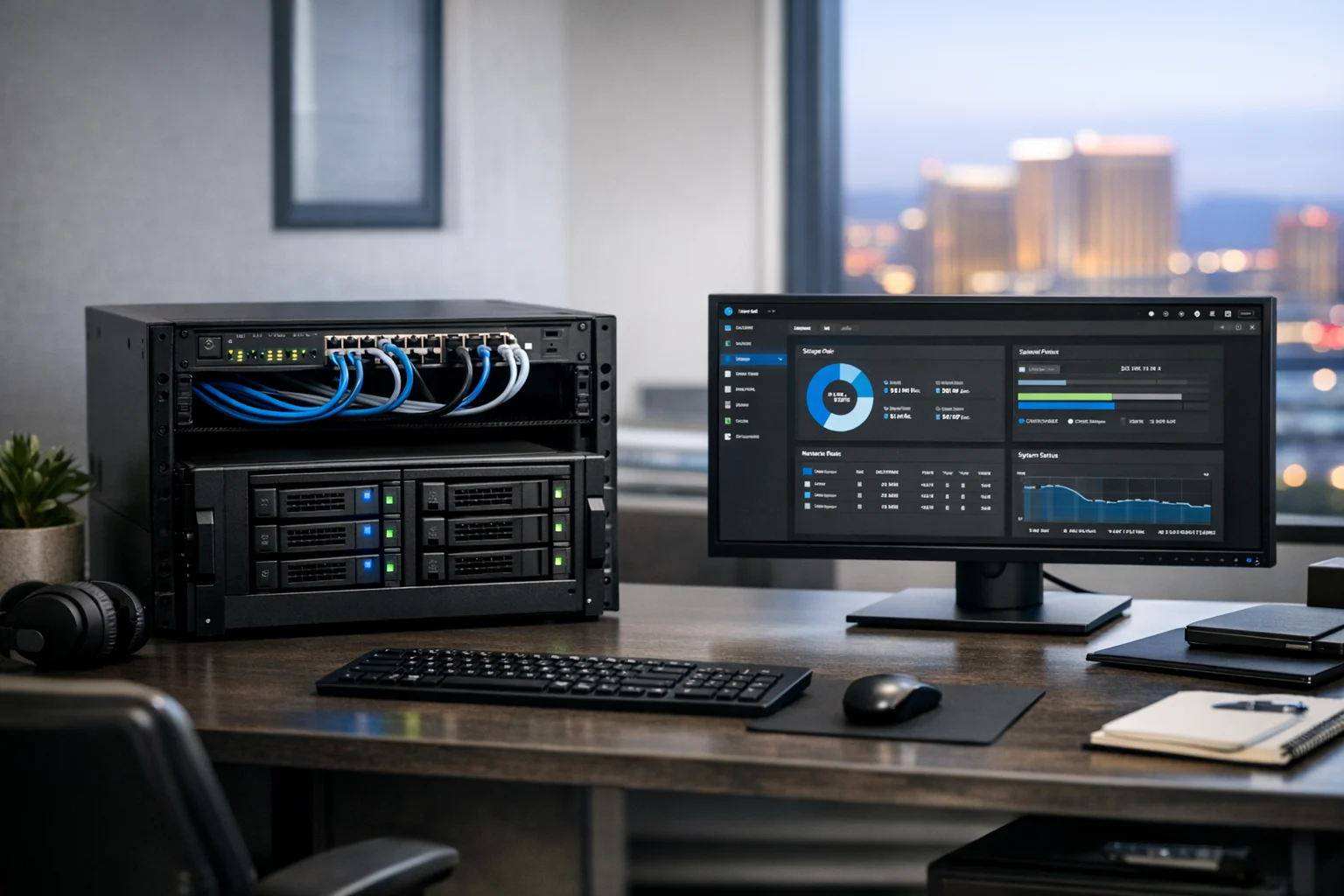
A good home lab storage server should do three things well: protect data, stay predictable, and avoid turning into a weekend repair project. That is why TrueNAS comes up so often in serious home lab conversations. It is powerful, mature, and built around ZFS, still one of the best filesystems available when reliability matters more than flashy features.
I have seen plenty of people treat storage like an afterthought, then find the weak spot when a drive fails, permissions break, or a rushed backup plan turns out to be no plan at all. If you run a business, manage marketing assets, host local files, or keep website backups on hand, dependable storage is not just an IT hobby. It supports daily operations. For business owners in Las Vegas and across the country, that matters even more when teams are balancing redesign planning, spring marketing pushes, content expansion, and infrastructure cleanup at the same time.
This guide walks through how to use TrueNAS for a reliable home lab storage server in a way that fits real workloads. Not just media libraries, but website backups, technical SEO exports, creative assets, virtual machine storage, and the everyday files that keep work moving. If you are exploring setting up TrueNAS for home and business storage, this will help you avoid the mistakes that make storage fragile.
Why TrueNAS makes sense for a home lab
TrueNAS is popular for good reason. It gives you enterprise style storage concepts without enterprise level spending. Its biggest strength is ZFS. ZFS checks data integrity, supports snapshots, and gives you flexible pool designs that are far more robust than tossing a few drives into a basic RAID card and hoping for the best.
In a home lab, that means you can centralize file storage, run scheduled snapshots, share data over SMB or NFS, and build a system that is much easier to recover when something goes wrong. For a business owner or marketing manager, it means your local archive of client files, campaign exports, website maintenance backups, and media assets can live in one place with clear policies around access and retention.
TrueNAS SCALE is usually the version I recommend for most new builds because it is flexible, Linux based, and easier to fit into modern home lab environments. If you want more of a pure storage appliance feel, TrueNAS still handles that well. The key is deciding early whether this server is only for storage or whether it also needs to support app and virtualization adjacent workflows.
Choose hardware like uptime matters
The fastest way to make TrueNAS unreliable is to install it on random parts you had lying around and call it done. TrueNAS is forgiving in some areas, but storage reliability still starts with sensible hardware.
CPU and memory
You do not need a monster CPU for file serving. A modest modern Intel or AMD processor is often enough. Memory matters more than people think because ZFS benefits from RAM for caching and metadata. Start with at least 16 GB for a serious home lab, and go higher if you plan to serve multiple users, store virtual machine images, or run apps alongside storage.
ECC RAM is ideal if your board supports it. Is it mandatory for every home setup? No. Is it a smart choice when reliability is the goal? Absolutely.
Drives and controllers
Use matching drives whenever possible. Mixing old consumer disks with unknown hours is asking for uneven performance and a rebuild headache later. For the boot device, use a dedicated SSD, or better yet, mirror the boot device if your budget allows. For data, buy NAS grade or enterprise grade drives from reputable lines and keep a spare on hand if uptime matters.
Avoid fake RAID. TrueNAS wants direct access to disks. Use an HBA in IT mode if you need additional ports.
Network and power
One gigabit Ethernet works for many homes, but 2.5 GbE or 10 GbE is worth considering if you move large video files, backups, or VM images. Pair the server with a UPS. If you are in Las Vegas, do not ignore heat. I have seen otherwise solid home lab builds become unstable because they were tucked into a hot closet with poor airflow. Desert climate and dust are real operational issues, not edge cases.
- Start with known good drives
- Use a UPS and enable clean shutdown behavior
- Keep the server cool and dust controlled
- Prefer wired networking over WiFi for any serious storage role
Install TrueNAS with a long term plan in mind
The installation itself is straightforward. What matters is the planning before and after it. Give the server a static IP address, document the hostname, and decide how you want it to fit into your network. If this box will become the home for backups, website copies, campaign reports, or client assets, treat that first day like production planning, not a quick experiment.
Create a separate administrative account and store credentials securely. Keep firmware and BIOS up to date before you build the pool. Do not wait until after the system is in use to document disk serial numbers, network settings, and pool layout. The people who skip documentation are usually the same people scrambling during a drive replacement.
If your home lab includes virtualization, many teams run TrueNAS alongside Proxmox or another hypervisor. That can work very well, but only if you secure the rest of the stack too. If that is your setup, take the time to secure a Proxmox server before regular use so your storage does not become the most protected part of an otherwise exposed environment.
Design the pool for reliability first, capacity second
This is where many builds go off track. People chase maximum usable space and forget that recovery time, drive failure tolerance, and rebuild risk matter more. Your pool layout is the foundation of the server.
Mirrors vs RAIDZ
If you want the simplest path to resilience and faster rebuilds, mirrored vdevs are hard to beat. You lose more raw capacity, but you gain easier expansion and often better performance. For many home labs and small business use cases, that tradeoff is worth it.
RAIDZ1 can look attractive on paper, especially with three or four drives, but I am cautious with large disks. Rebuild stress is real, and a second failure during recovery is not some far fetched scenario. RAIDZ2 is a better choice if you need parity and more fault tolerance. The right answer depends on your budget, performance needs, and how painful downtime would be.
For business owners storing active project files, client documents, local SEO Las Vegas reporting, and backup archives, I usually lean toward reliability instead of squeezing every last terabyte from the chassis.
Use datasets from day one
Do not dump everything into one giant share. Create datasets for different workloads so you can set permissions, snapshots, and replication policies cleanly.
- Backups
- Marketing assets
- Website exports
- Finance or admin files
- Virtual machine storage
- Media and archive content
That separation pays off quickly. A marketing folder may need broad read access for a team. A website backup dataset should be more restricted. VM storage needs different performance expectations than static design files. If you want a more detailed walkthrough, SiteLiftMedia also has a guide on how to create storage pools and shares in TrueNAS.
Set up shares and permissions before users touch the data
Permissions problems are one of the most common reasons a fresh TrueNAS deployment feels unreliable. The storage is fine. The access design is not.
For most mixed Windows and Mac office environments, SMB is the right place to start. Create users and groups that match how people actually work. Do not assign everything directly to individual accounts if the files are shared by role. Build group based access for marketing, admin, leadership, and contractors.
Test each share from a client device before putting real files on it. Open, save, rename, and delete from a non admin account. I cannot count how many times a share looked correct in the TrueNAS interface but failed the second a real user tried to collaborate on it.
Good structure might look like this:
- A read and write marketing share for design files, social media marketing assets, and campaign exports
- A restricted web share for custom web design project files, staging site packages, and website maintenance backups
- An executive share for finance and private business documents
- A backup target that ordinary users cannot browse casually
If you run an agency or internal marketing team, this matters more than it seems. Your SEO reports, raw crawl exports, backlink building services documentation, paid media screenshots, and website revision files all have different access needs. The cleanest system is the one that anticipates that complexity before someone drags the wrong folder into a public team share.
Use snapshots, scrubs, and alerts like you actually want to recover data
TrueNAS becomes much more reliable when you stop treating it like a file box and start treating it like a managed storage platform. That means regular snapshots, scrubs, SMART testing, and notifications.
Snapshots
Snapshots are one of the best features in ZFS. They protect you from accidental deletion, bad edits, and some ransomware scenarios. They are not a full backup strategy, but they are an excellent first line of recovery.
A practical snapshot schedule for active business data could look like this:
- Hourly snapshots kept for 24 hours
- Daily snapshots kept for 14 to 30 days
- Weekly snapshots kept for several months
That gives you fast rollback options without creating a messy retention footprint.
Scrubs and SMART tests
Run regular ZFS scrubs so the system checks data integrity across the pool. Schedule SMART short and long tests on your drives. If a disk starts reporting trouble, you want to know before the rebuild window becomes urgent.
Email and alerting
Configure alerting immediately. An alert you do not receive is worthless. Send notifications to an email address someone actually monitors. If a drive starts failing during a holiday weekend, you want to know before Monday.
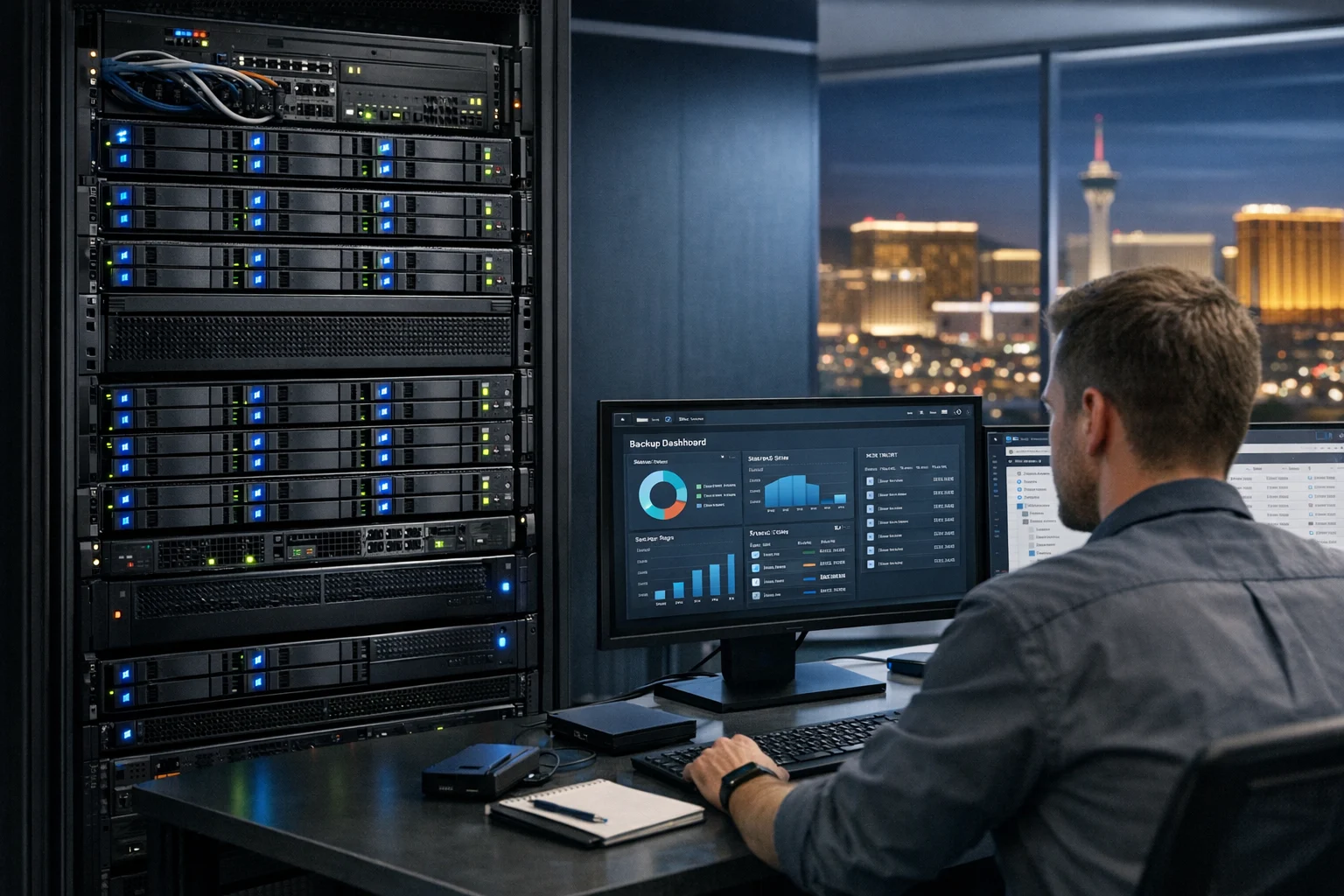
For backup strategy, keep one rule in mind: snapshots are not enough by themselves. Replicate important datasets elsewhere, whether that is another NAS, external storage, or cloud. If you need a deeper backup plan, review how to back up important data with TrueNAS and test restores before you trust the policy.
Know what improves performance and what just adds complexity
TrueNAS can be tuned, but not every tuning tip makes sense in a home lab. I have seen plenty of builds get less stable because someone added complexity they did not need.
Compression is usually a win. LZ4 is light and often helps performance instead of hurting it. That is an easy default for many datasets.
Specialized devices like SLOG or L2ARC can help in certain workloads, but they are not magic upgrades. If you do not understand the write pattern you are trying to improve, skip them at first. Spend on better primary storage, more RAM, and faster networking before chasing niche tuning.
If your main workload is SMB file sharing for documents, creative files, SEO exports, and backups, the biggest gains often come from simpler choices:
- Use SSDs for workloads that need low latency
- Upgrade from 1 GbE if transfers are a bottleneck
- Keep datasets organized by workload
- Do not overload the box with unrelated services
That last point matters. Just because TrueNAS can do more does not mean your storage server should become your everything server.
Harden the server so reliability includes security
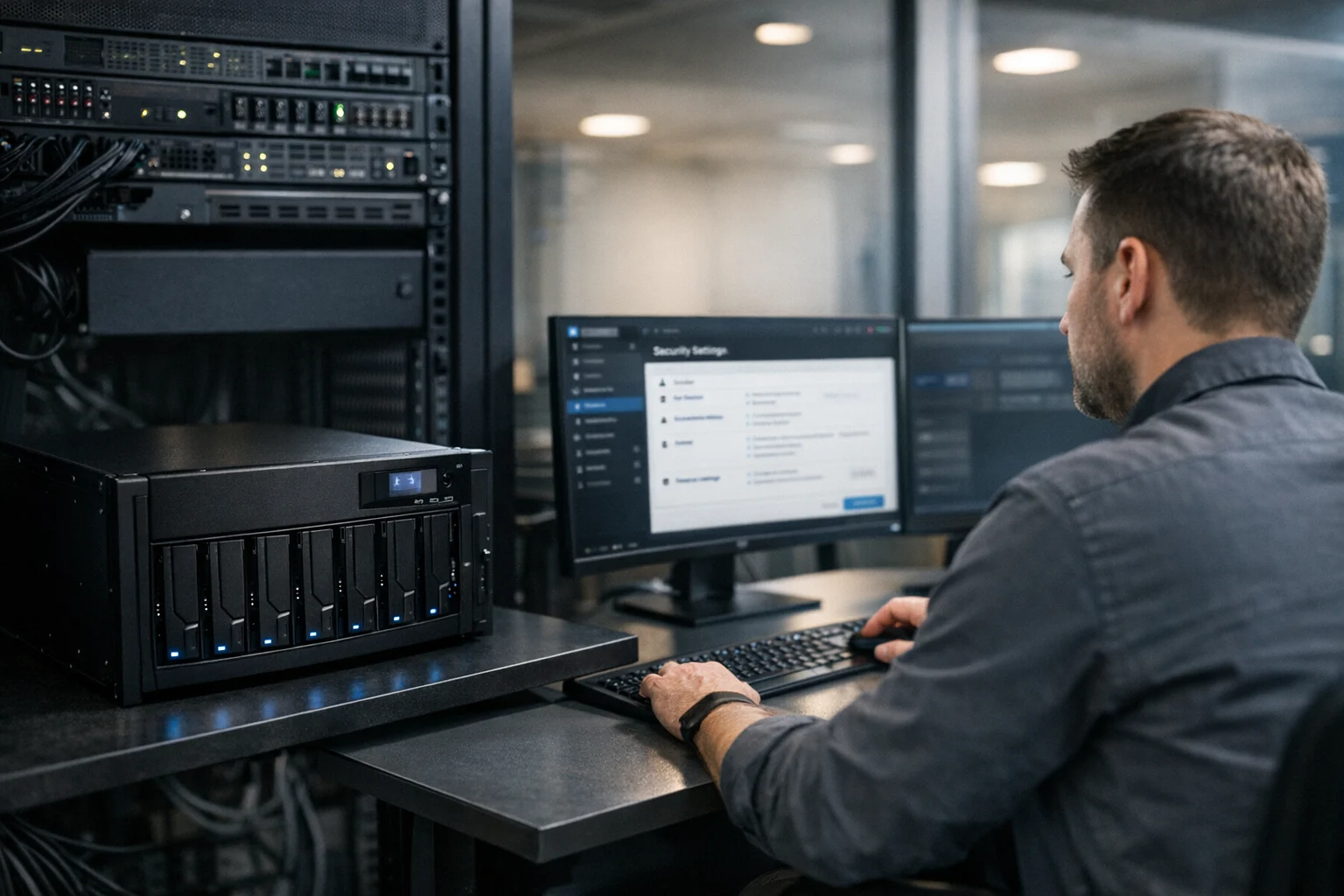
Reliable storage is not just about surviving drive failures. It is also about reducing exposure. If the NAS is reachable from the public internet, you are taking on unnecessary risk. In most cases, TrueNAS management should stay internal and remote access should happen over VPN, not by exposing the web interface directly.
Keep the system updated, disable services you do not use, and follow least privilege for users and shares. If you have a separate VLAN or management network, use it. Restrict who can access the admin interface. Review logs regularly. A quiet system is easier to trust.
This is where home lab practice and business reality overlap. A NAS may hold website backups, CRM exports, internal planning documents, and design assets. That makes it part of your security footprint. The same thinking that applies to server hardening, business website security, and cybersecurity services applies here too. If your company has sensitive data, treat storage as a security project, not just an IT chore.
At SiteLiftMedia, we often see infrastructure problems show up as marketing problems later. Missing backups delay a redesign. Poor permissions slow content approvals. Weak security puts client trust at risk. Storage, websites, and growth operations are more connected than most teams realize.
Where TrueNAS fits in a modern business workflow
Even when the server starts life as a home lab project, it can support real business operations surprisingly quickly. A small office or remote team can use TrueNAS to centralize creative assets, archive campaign files, store website builds, and keep copies of analytics exports or technical SEO crawls.
For example, a Las Vegas business working with an SEO company Las Vegas brands trust might want a reliable place for monthly reporting archives, call tracking exports, local landing page media, and development backups. A retailer preparing for a seasonal campaign may need quick access to ad creatives, product photos, and old site versions. A company planning a new custom web design project may need structured storage for drafts, approvals, and staging packages.
This is also useful for internal operational hygiene. When teams finally get around to infrastructure cleanup, they usually uncover files spread across laptops, cloud folders, and old USB drives. TrueNAS gives you one place to organize that mess, set retention policies, and stop relying on luck.
If your stack includes content production, local SEO Las Vegas reporting, social media marketing assets, and ongoing website maintenance, a well planned storage server becomes a quiet asset in the background. That is exactly how it should feel.
Common mistakes that make a TrueNAS build less reliable
- Building the pool without a backup plan
- Using mismatched or aging drives with unknown history
- Choosing capacity over fault tolerance
- Creating one giant share instead of separate datasets
- Skipping a UPS
- Ignoring email alerts and SMART testing
- Exposing the management interface to the internet
- Assuming snapshots replace offsite backups
- Adding extra services until the storage server becomes unstable
- Never testing a restore
That last one deserves emphasis. The only backup that matters is the one you have actually restored from. Test a file restore. Test a dataset restore. If you replicate to another device, test that too. Reliability is proven during recovery, not during quiet weeks.
When it makes sense to get help
If you enjoy infrastructure work, building a TrueNAS server can be rewarding. If you do not, it is easy to lose a lot of time chasing permission oddities, network performance bottlenecks, or backup policies that looked solid until the first recovery test.
That is especially true when the storage server is supporting revenue generating work. If your team depends on design files, website backups, analytics archives, or campaign assets, downtime has a business cost. For companies in Las Vegas and nationwide, SiteLiftMedia helps connect the dots between infrastructure, security, and growth. That can mean setting up a solid storage workflow, improving system administration, tightening cybersecurity services, helping with server hardening, or supporting the website side through technical SEO, redesign planning, and ongoing maintenance.
If you want a TrueNAS setup that is reliable enough for real business use, start with the pool layout, permissions, backup policy, and security model before you copy the first file. If you would rather have that mapped out by a team that understands both infrastructure and digital operations, contact SiteLiftMedia to plan it properly from the start.
Photo Gallery