Your website is not just a digital brochure. For many Las Vegas businesses, it is the front desk, the sales rep, the intake form, the booking tool, and the first impression all at once. When that site goes down, gets infected, or starts redirecting visitors to spam pages, the damage adds up fast. You lose leads. You lose trust. You can even lose rankings that took months of Las Vegas SEO work to build.
That risk is bigger than many business owners realize. Local service companies depend on contact forms and calls. Restaurants depend on menus, reservations, and accurate local visibility. Medical and wellness brands need secure forms and a stable online presence. Contractors, attorneys, accountants, and neighborhood focused brands in places like Spring Valley need a website that stays live, loads fast, and protects customer data. Good cybersecurity services and real server hardening make that possible.
At SiteLiftMedia, we treat website security as part of growth, not a separate technical add on. A secure site supports Las Vegas website design, technical SEO, conversion tracking, paid traffic, and long term local visibility. It also protects the work your team has already put into content, Google Business Profile optimization, and map pack rankings.
Why website security matters so much for Las Vegas businesses
Las Vegas is a highly competitive market. Even smaller local categories can get crowded quickly. If you are trying to show up for searches related to a plumber, dentist, med spa, HVAC company, or restaurant, your site has to be reliable. Google wants to send users to pages that are safe, usable, and consistently available. If your site is hacked, blacklisted, slowed down by malware, or serving spam pages, your local SEO Las Vegas strategy can unravel in a hurry.
That problem is not limited to large brands. Smaller businesses often get hit because attackers assume they are less protected. We have seen neighborhood companies with outdated plugins, weak admin passwords, or cheap shared hosting become easy targets. A Spring Valley business with a strong offline reputation can still lose online trust overnight if visitors see browser warnings, broken forms, or strange redirects.
Security also affects revenue in less obvious ways. If a customer lands on your site from a Google ad, a map listing, or an organic result and the page feels off, they bounce. If checkout breaks, a form fails, or a booking request disappears, that marketing spend is wasted. A conversion focused website has to be secure to work the way it should. That applies whether you are investing in Las Vegas web design, PPC landing pages, or AI SEO Las Vegas content strategies.
How business websites usually get compromised
Many website breaches are not dramatic, movie style hacks. They are routine, preventable issues that build up over time.
Outdated CMS files, plugins, and themes
This is one of the most common entry points. A site gets launched, everyone is excited, and then updates get ignored for months. WordPress core, plugins, themes, form builders, page builders, e-commerce add ons, and custom integrations all need active maintenance. Once a known vulnerability becomes public, bots start scanning the web for exposed sites. They do not care if you are a small law firm, a Spring Valley restaurant, or a healthcare office.
Outdated software can lead to spam page injections, hidden admin users, malicious scripts, or a full site compromise. It can also hurt performance, which then affects user experience and technical SEO.
Weak passwords and sloppy access control
Too many businesses still have shared logins, recycled passwords, and admin accounts that should have been removed months ago. A former vendor still has access. A front desk employee has more permissions than necessary. Two factor authentication is not enabled. These are simple gaps, but they create real risk.
Server hardening is partly about software and infrastructure, but it is also about discipline. The fewer unnecessary access points you have, the harder it is for someone to get in and stay there.
Cheap hosting and poor server configuration
Not all hosting environments are equal. If your site is sitting on a low quality server with weak isolation, poor monitoring, outdated PHP versions, or misconfigured permissions, you are exposed before traffic even starts growing. A lot of businesses shopping for web design Las Vegas services focus on visual design and price, then overlook the hosting and security stack that keeps the site running.
We often tell clients that a great looking site on a weak server is like a nice storefront with a broken lock. The design may be strong, but the underlying setup is asking for trouble.
Insecure forms and integrations
Contact forms, payment systems, chat widgets, CRM connections, and booking tools are common weak spots. If they are misconfigured or not maintained, they can expose customer information or open the door to abuse. For medical and wellness brands, that risk is even more serious because the business may be handling sensitive intake details or appointment requests.
What server hardening actually includes
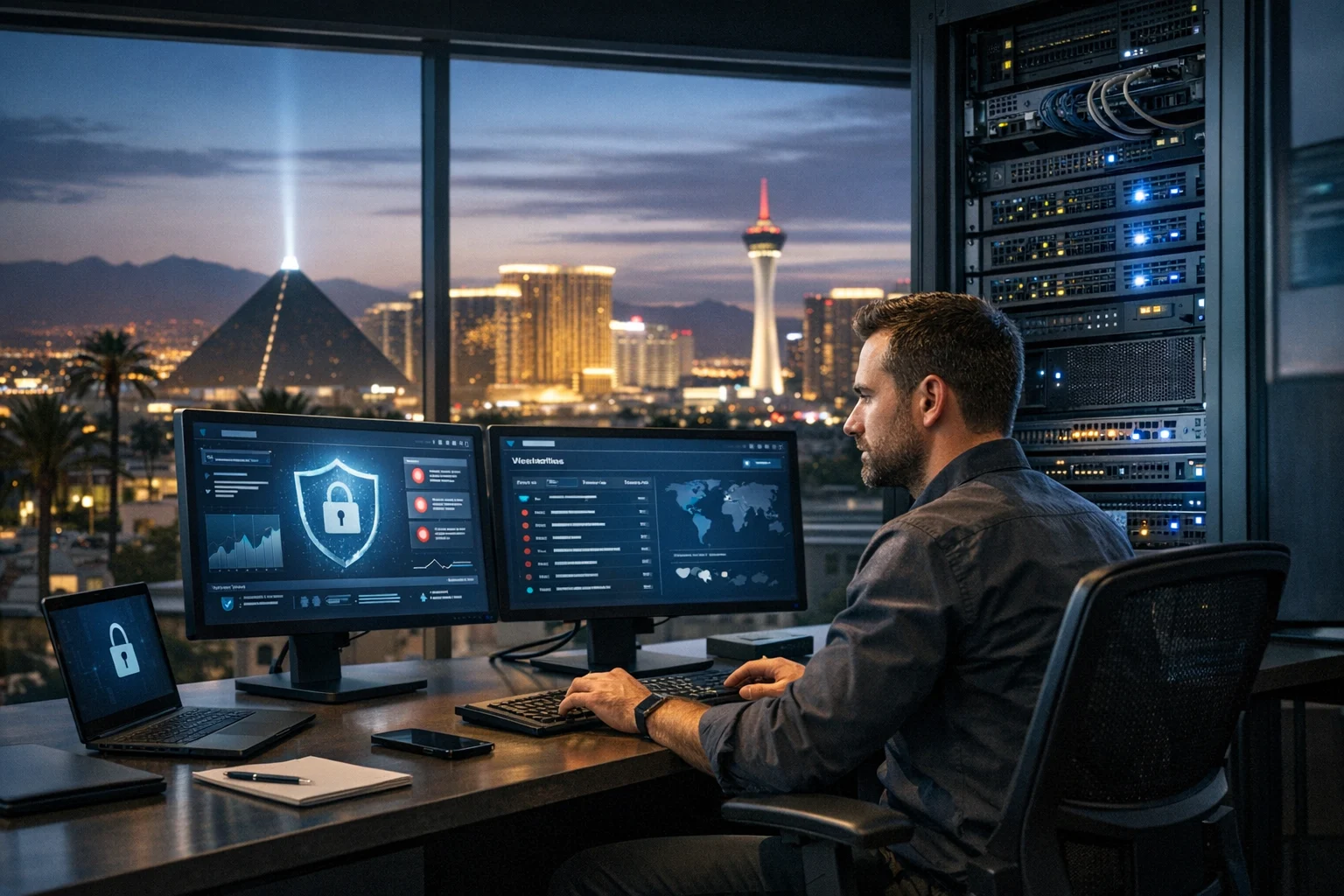
Server hardening sounds technical, but the business value is straightforward. It means reducing the number of ways a server can be abused, tightening access, keeping software current, and monitoring for problems before they become expensive.
Done properly, server hardening is not one setting. It is a layered process that supports uptime, speed, and resilience.
- Operating system and software updates: keeping the server, web stack, database, and runtime versions patched so known vulnerabilities are closed.
- Firewall configuration: limiting unnecessary ports, blocking suspicious traffic, and filtering access to sensitive services.
- Least privilege access: giving users and applications only the permissions they actually need.
- Secure authentication: strong passwords, SSH key access where appropriate, and two factor authentication for admin logins.
- File and directory permissions: preventing scripts and users from writing where they should not.
- Web application firewall rules: helping block common attack patterns, brute force attempts, malicious bots, and exploit scans.
- Malware scanning and integrity monitoring: detecting injected files, altered code, and suspicious behavior early.
- Backup strategy: keeping verified backups that are recent, recoverable, and stored separately.
- SSL and transport security: making sure traffic is encrypted correctly and browsers trust the site.
- Logging and alerting: spotting repeated login attempts, file changes, errors, and unusual traffic spikes.
- Service reduction: removing software and services that are not needed, because every extra component increases attack surface.
This is why server hardening should be part of Las Vegas website maintenance, not an afterthought. If your site supports lead generation, online orders, appointment requests, or quote forms, these controls are directly connected to revenue. They also make troubleshooting much faster when something goes wrong.
At SiteLiftMedia, security work is tied closely to performance and growth. That means we are not just blocking attacks. We are making sure the site can support campaigns, seasonal traffic spikes, redesign planning, and content expansion without falling apart. If you want a deeper look at the basics, our guide on cybersecurity and server hardening for Las Vegas sites covers the core principles in more detail.
How cybersecurity protects rankings, ads, and conversion rates
Security problems do not stay in the IT lane. They spill into marketing fast.
A hacked website may generate spam pages that get indexed under your domain. It may send users to scam pages, create strange titles in search results, or trigger malware warnings. Google can lose trust in the site, users stop clicking, and the cleanup gets harder the longer it sits. We have seen businesses spend months building local landing pages, service content, and authority signals, only to watch that momentum stall because the site was compromised.
That matters if you are investing in a Las Vegas SEO agency, a Las Vegas SEO firm, or an SEO company Las Vegas businesses can rely on. Strong Las Vegas SEO is not just about keywords and backlinks. It depends on crawlable, stable, secure infrastructure. Technical SEO and security overlap more than most people realize.
There is also the performance side. Malware and bloated scripts can slow load times, create server strain, and hurt user experience. Good Las Vegas web design should not only look polished, it should run on a secure and efficient environment. That is especially important for mobile users who find you through map pack rankings or branded searches and want a fast answer right away.
Paid media is affected too. If you run ads to landing pages and those pages are slow, broken, or untrustworthy, conversion rates drop. Secure PPC landing pages help keep ad spend from leaking through form failures and broken tracking. Even AI driven optimization depends on clean data. If bot traffic, malicious hits, or form spam are muddying the numbers, your reporting gets distorted and your decisions get worse.
That is one reason security matters even more in the age of Las Vegas AI SEO. As AI search changes how websites are discovered and summarized, site quality, trust, clarity, and technical integrity carry more weight. We recently covered that shift in our article on how AI search is changing SEO for business websites.
What this looks like for Spring Valley businesses
Spring Valley is a good example of why local context matters. Many businesses there depend on nearby traffic, repeat customers, and reputation. They are not trying to be famous nationwide. They want to rank in their service area, convert local visitors, and keep operations smooth. That makes website reliability a business issue, not just a technical one.
Local service companies
For plumbers, roofers, electricians, landscapers, and repair companies, the website is often tied directly to lead flow. If the phone number is hidden by injected code, the form stops sending, or a security issue knocks the site offline during a spring marketing push, booked jobs can disappear quickly. These businesses need secure forms, strong uptime, location pages that stay clean, and a maintenance plan that catches issues early.
Restaurants and neighborhood brands
Restaurants need menus, hours, online ordering, reservations, and local trust. If a restaurant site is compromised, customers may see browser warnings or broken ordering links and head to a competitor instead. For neighborhood focused brands, that lost trust can be hard to win back. Security also supports the local signals that matter, like clean schema markup, accurate contact information, and consistent landing page performance.
Healthcare offices and wellness providers
Healthcare, dental, med spa, and wellness sites need extra care. Even when they are not processing highly sensitive records directly on site, they still collect appointment requests, intake details, and contact information that deserve protection. A weak hosting setup or neglected plugin is not a minor issue in that environment. These businesses should be especially careful when evaluating a digital marketing agency Las Vegas providers recommend, because security, privacy, and uptime need to be part of the build plan from day one.
E-commerce and high intent lead generation
If you sell products, gift cards, memberships, or online bookings, security incidents can affect transactions, customer confidence, and chargeback risk. If you generate high value leads, spam form submissions and bot traffic can ruin reporting and waste follow up time. Either way, server hardening supports cleaner analytics, better checkout reliability, and more dependable growth.
Security and local SEO work best together
When business owners compare a Las Vegas web designer, a Las Vegas SEO agency, or a Las Vegas AI SEO partner, they often separate design, SEO, and security into different buckets. In practice, they work together.
A secure site makes it easier to maintain structured data, FAQ schema, location pages, and service pages without constant breakage. It helps keep page speed consistent. It protects forms and call tracking. It reduces the chance that malware creates duplicate junk pages that confuse search engines. It also protects the trust signals that matter for local visibility, including reviews, branded search behavior, and user engagement.
Google Business Profile optimization also benefits from a stable site. If users click from your listing and land on broken or suspicious pages, that weakens the customer journey. Your business may still appear in local results, but fewer people will convert. Good map pack rankings are valuable only if the website experience backs them up.
Businesses investing in content expansion should pay attention here too. Service articles, FAQ content, and topical pages can attract more qualified traffic, but they need a secure platform underneath. For example, adding useful FAQ content can support both search visibility and answer engine visibility when implemented well. We wrote more about that in how FAQ content improves AEO for Las Vegas businesses.
What to ask before hiring a web or SEO partner
If you are comparing providers for Las Vegas website design, custom web design, or website growth support, ask direct security questions. A polished sales pitch is not enough.
- Who handles software updates? Ask whether plugin, theme, CMS, and server updates are part of ongoing service.
- What is the backup process? You want scheduled backups, off server storage, and tested recovery steps.
- How is access managed? Ask about admin roles, two factor authentication, and account cleanup when staff changes.
- Is there active monitoring? Good partners watch uptime, suspicious activity, file changes, and performance anomalies.
- What server hardening steps are included? Do not settle for vague answers. Ask about firewalls, permissions, login protection, patching, and malware scanning.
- How is security handled during redesigns and launches? New sites often go live with debug settings enabled, weak staging controls, or rushed plugin installs.
- How does security support SEO and conversions? The right team should connect security to technical SEO, form reliability, page speed, and lead quality.
- What happens if the site is compromised? There should be a clear incident response process, not panic and finger pointing.
This matters whether you are hiring a Las Vegas web designer for a rebuild, a Las Vegas SEO firm for local search growth, or a team offering Las Vegas AI SEO support. If the partner cannot talk clearly about cybersecurity services, you may be getting a visually attractive site with weak operational foundations.
Secure websites are easier to scale
One of the biggest advantages of good security is that growth becomes less fragile. You can launch new service pages, roll out city pages, improve structured data, refine conversion paths, and build content with confidence. You can test new PPC landing pages without worrying that spam bots will flood your forms. You can push into local SEO Las Vegas campaigns knowing the site is stable enough to support the work.
That is the approach we take at SiteLiftMedia. We do not separate security from design, maintenance, SEO, or performance. Whether a business needs Las Vegas web design, ongoing Las Vegas website maintenance, technical SEO cleanup, or a stronger AI SEO Las Vegas strategy, the site has to be protected at the server and application level first. That is how you safeguard rankings, keep lead flow steady, and give customers a website they can trust.
If your site has not had a real security review in a while, now is the time to do it before your next campaign push, redesign cycle, or local expansion effort. SiteLiftMedia can audit the setup, identify gaps, harden the server, clean up weak points, and help you build a stronger foundation for search visibility and conversions in Las Vegas and Spring Valley.
Local Focus: Las Vegas Search Visibility
SiteLiftMedia works with businesses that want stronger visibility across the Las Vegas valley. The map below highlights the local market context for this article and the kind of location based search intent that matters when people compare a Las Vegas web designer, Las Vegas SEO agency, or local SEO firm.
Frequently Asked Questions
Why does cybersecurity matter for local SEO in Las Vegas?
A hacked or unstable website can lose rankings, show spam in search results, break forms, and hurt user trust. Strong security helps protect uptime, crawlability, and conversion performance.
What is server hardening for a business website?
Server hardening means tightening the server environment to reduce risk. It usually includes patching software, limiting access, configuring firewalls, securing logins, monitoring activity, and maintaining recoverable backups.
Should I ask a Las Vegas web designer about security before hiring them?
Yes. Ask who manages updates, backups, admin access, malware monitoring, and incident response. Good Las Vegas website design should include security planning, not just visual design.
Can security problems hurt PPC landing pages and conversions?
Yes. Slow pages, broken forms, malware warnings, and bot spam can reduce conversion rates and waste ad spend. Secure PPC landing pages protect the customer experience and keep reporting cleaner.
How does AI SEO connect to website security?
AI SEO depends on trustworthy site content, clean data, stable page access, and strong technical foundations. If a site is compromised or unreliable, it becomes harder for search systems and users to trust it.
Photo Gallery