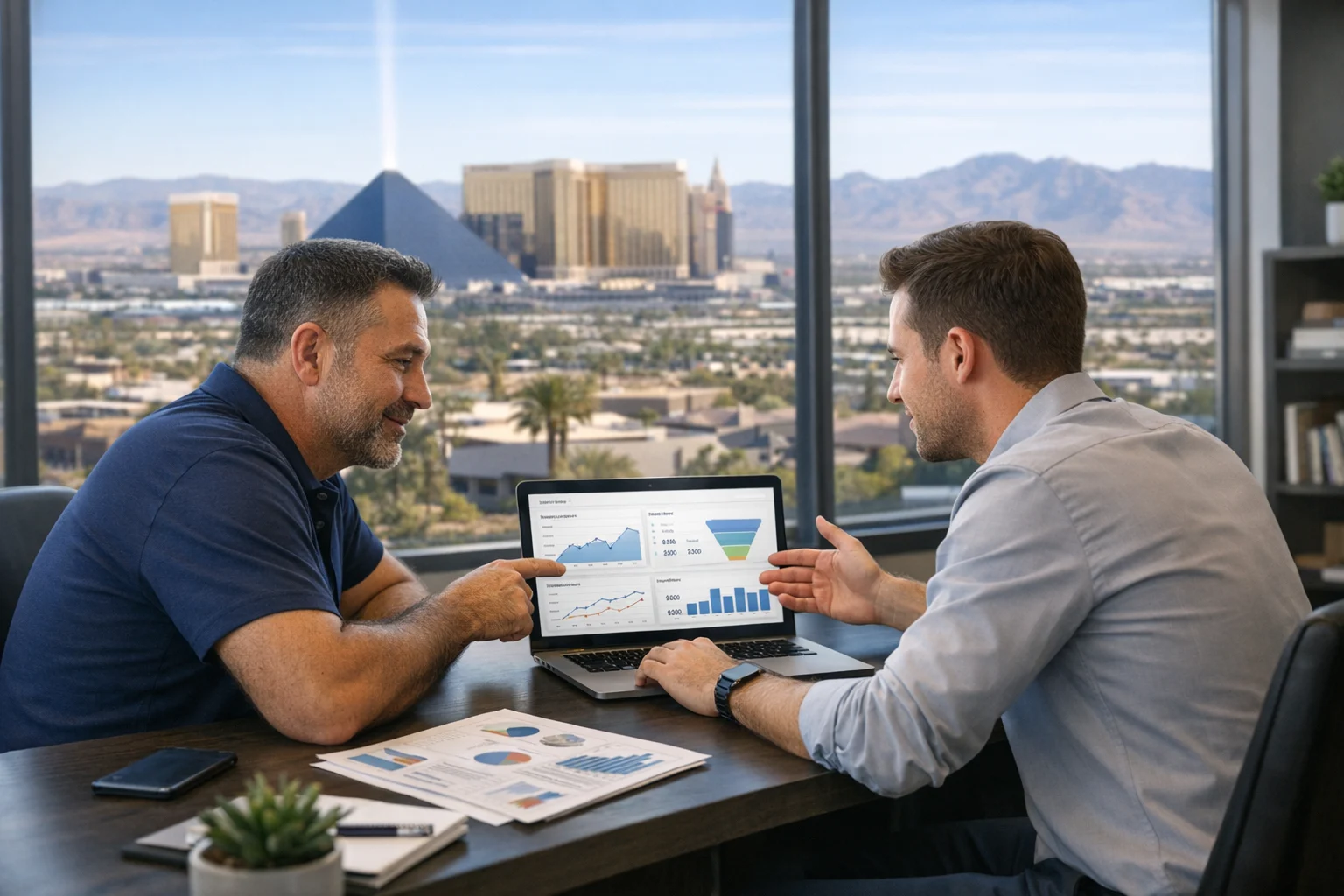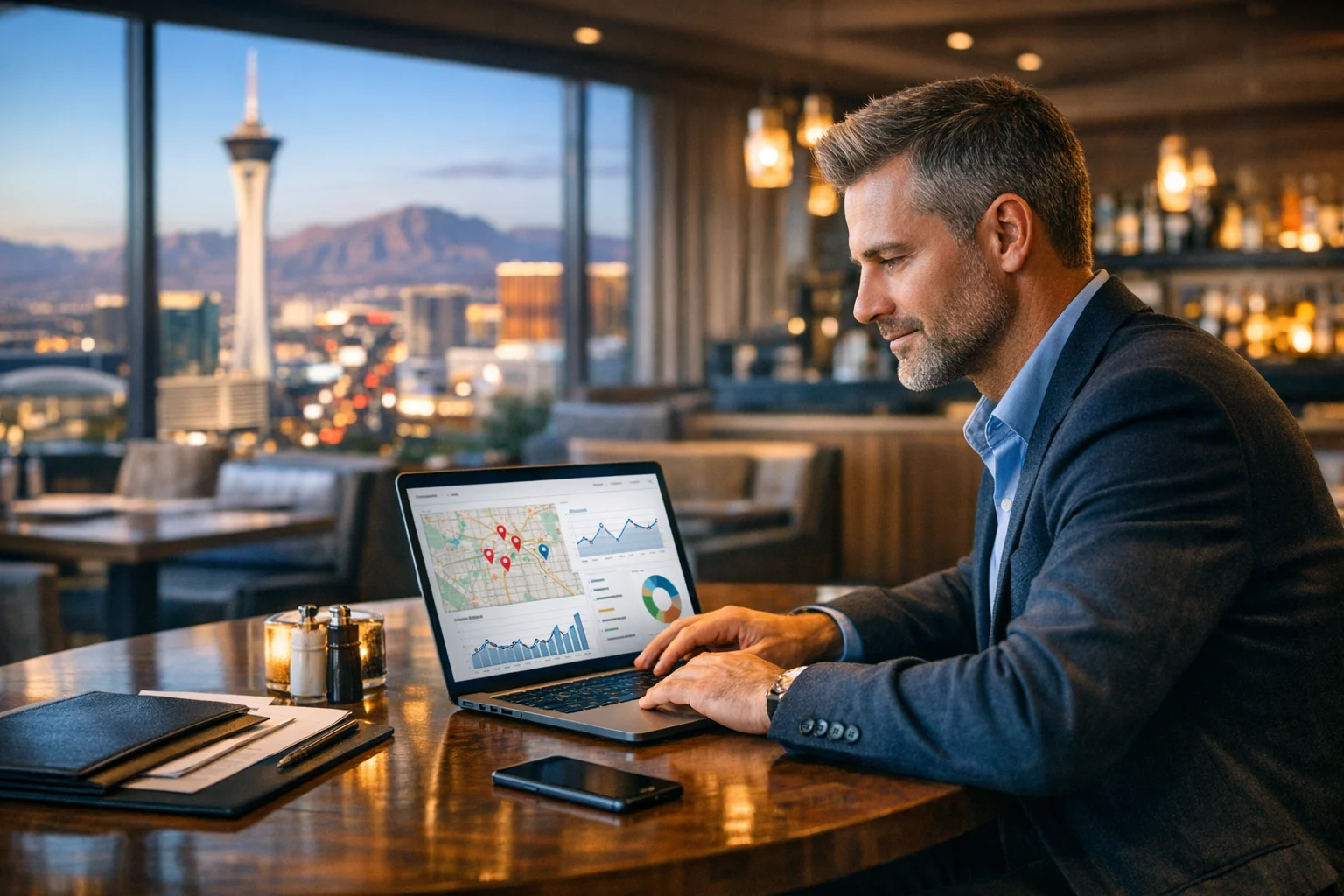
Las Vegas restaurants and hospitality brands do not compete in a normal market. You are fighting for attention in one of the most active local search environments in the country, where tourists, convention visitors, locals, and nearby residents all search with different intent. Some want a quick lunch near the Strip. Some want a family dinner in Centennial Hills. Others are comparing event venues, catering, brunch spots, or hotel dining options from their phones in real time.
That means a local SEO Las Vegas strategy has to do more than chase rankings. It needs to help your brand show up when people are hungry, nearby, and ready to act. It also has to support real conversions, not just clicks. Calls, reservations, online orders, private event inquiries, and direction requests matter far more than vanity traffic.
At SiteLiftMedia, we have seen a common pattern with hospitality brands across Las Vegas. Many businesses invest in strong visuals and social media, but their local search foundation is weak. Their Google Business Profile is incomplete, their website is slow, their menu pages are hard for Google to understand, and their location signals are inconsistent across the web. Those issues keep good brands from showing up where it counts.
If you are a restaurant owner, hotel operator, hospitality marketing manager, or local business decision maker comparing a Las Vegas SEO agency, Las Vegas web designer, or AI SEO Las Vegas partner, here is what actually drives local visibility in this market.
Why local SEO matters more for restaurants in Las Vegas
Restaurants depend on high intent demand. People searching for "best tacos near me," "happy hour Centennial Hills," or "private dining Las Vegas" are not casual browsers. They are usually ready to choose. Strong map pack rankings put your brand in front of that demand at exactly the right moment.
Las Vegas also has layered search behavior. A local family in the northwest valley searches differently than a tourist staying near the convention corridor. A medical office or contractor in Centennial Hills may care about long research cycles and service pages, but restaurants often win or lose business in minutes. That is why Google Business Profile optimization, local content, online reviews, and technical SEO need to work together.
For hospitality brands, local SEO also affects more than dine-in traffic. It can support:
- Online ordering and takeout
- Reservations and booking requests
- Catering leads
- Private events and group dining
- Bar and lounge traffic
- Hotel and resort dining discovery
- Seasonal promotions during summer campaigns and tourism peaks
When the foundation is right, local search becomes a reliable lead generation channel instead of a guessing game.
Start with Google Business Profile optimization
If you only fix one thing first, fix your Google Business Profile. For most Las Vegas restaurants, this is the single biggest local visibility asset outside the website itself. It influences map pack rankings, click-through rate, direction requests, calls, and trust.
Your profile should be fully built out and actively managed. That includes:
- Primary and secondary categories that accurately reflect the business
- Consistent name, address, and phone details
- Updated hours, holiday hours, and seasonal changes
- Service options such as dine-in, takeout, delivery, curbside, or reservations
- Real photos of food, interior, exterior, patio, bar, and team
- Menu links that work on mobile
- Questions and answers monitored for accuracy
- Google Posts for events, specials, brunch, or holiday promotions
Las Vegas restaurants often overlook category precision. A steakhouse with a bar, private room, and catering operation may need a smarter category structure than a simple one-label setup. The same goes for hospitality brands with restaurants inside hotels or multi-concept venues. Clear categorization helps Google match the listing to the right searches.
Photos matter more than many owners realize. Local users compare businesses quickly, especially on mobile. Crisp, current images can improve engagement and send quality signals. If your profile still shows outdated menu items, empty interiors, or low-quality uploads, you are making it harder to win the click.
Your website needs to support local intent, not just look good
A polished site helps, but a conversion-focused website is what drives results. This is where many businesses struggle after hiring a Las Vegas web designer who prioritizes visual flair over search performance and user flow. Good Las Vegas web design for restaurants should make it easy for Google to understand the business and easy for users to take action fast.
Your site should clearly answer these questions within seconds:
- What kind of restaurant or hospitality experience is this?
- Where are you located?
- What are your hours?
- Can users reserve, order, or call right now?
- Do you offer catering, events, or group bookings?
- What nearby areas do you serve, including neighborhoods like Centennial Hills?
Local landing pages or highly localized content can help if you serve multiple audiences or nearby neighborhoods. A family-friendly restaurant in northwest Las Vegas should not rely on generic citywide copy alone. If Centennial Hills is a real customer source, mention it naturally where it makes sense. The same logic applies to nearby service area positioning for hospitality groups, event venues, and delivery zones.
Strong Las Vegas website design also means a clear internal structure. Your menu should not live in an image or PDF only. Event pages should be crawlable. Contact information should be visible. Reservation buttons should work properly on mobile. If you are running paid campaigns, your PPC landing pages should align with local intent and support consistent messaging.
At SiteLiftMedia, we often tell clients that web design Las Vegas strategy and Las Vegas SEO should never be separated. The best-looking restaurant website in the city will still underperform if search engines cannot properly crawl, interpret, and trust it.
Technical SEO is not optional for hospitality brands
Local SEO success often gets blamed on content or reviews, but technical SEO problems quietly damage rankings all the time. Las Vegas restaurants especially need fast, stable websites because searchers are usually on mobile, often on the move, and not patient.
If your site loads slowly, shifts around while opening, or breaks key actions like ordering and booking, users bounce. Google notices that poor experience too. We covered this in more detail in our article on website speed and technical SEO for Las Vegas businesses, and the same principles are critical for hospitality brands.
Here are the technical issues that matter most:
- Fast hosting and optimized media
- Mobile-first usability
- Clean, indexable menu and location pages
- Working canonicals and redirects
- Schema markup for location, menu, FAQ, and organization data
- Secure site configuration and stable uptime
- Proper image compression and modern formats
Technical SEO is also where security overlaps with visibility. A compromised site, malware warnings, or spam pages can destroy rankings and customer trust fast. For hospitality groups handling reservations, forms, or customer information, cybersecurity services and server hardening are not just IT tasks. They protect search performance, brand credibility, and revenue continuity.
Use structured data to help Google understand your business
Structured data is one of the simplest ways to make your website easier for search engines to interpret. It will not magically rank a weak site, but it helps reinforce key business facts and can improve how your pages appear in search.
For Las Vegas restaurants and hospitality brands, structured data can support:
- Business name, address, and phone consistency
- Opening hours
- Menu content
- Reviews and ratings where appropriate
- Event details
- Frequently asked questions
FAQ schema is especially useful when customers ask the same things repeatedly, such as dress code, parking, private dining minimums, patio seating, delivery options, or large party reservations. That kind of content helps both users and local rankings when it is done well. SiteLiftMedia has also written about using FAQ schema and local content for Las Vegas SEO if you want a deeper look at how this supports visibility.
The key is accuracy. Do not add markup for things that are not actually present on the page. Keep data updated when menus, hours, or services change.
Reviews are a ranking factor and a conversion factor
Restaurant owners already know reviews matter, but many still treat them as a reputation issue instead of an SEO system. In local search, review quality, review velocity, review content, and response activity all influence performance.
For Las Vegas hospitality brands, reviews do three important jobs at once. They support trust, improve click-through rates, and give Google more context about what your business is known for. When guests naturally mention phrases like brunch, patio, date night, family dining, cocktails, private events, or Centennial Hills, those signals can reinforce relevance.
That does not mean you should script fake language or push spammy requests. It means you should build a real review process. Ask at the right moment. Make it easy. Train staff. Follow up after catering or event bookings. Respond consistently.
Useful review habits include:
- Request reviews from happy guests shortly after the experience
- Use QR codes or follow-up messages where appropriate
- Respond to positive and negative reviews professionally
- Address operational issues raised repeatedly
- Monitor third-party platforms for consistency and trust
If you are trying to understand how reputation and local visibility connect, our piece on how online reviews affect SEO and trust for local brands breaks that relationship down clearly.
Build location relevance with useful local content
Many restaurant sites stop at a homepage, menu, and contact page. That is rarely enough in a competitive city. Local content helps expand your keyword reach, improve neighborhood relevance, and answer practical questions before someone chooses a competitor.
Good local content for hospitality brands can include:
- Private event pages for weddings, birthdays, and corporate dinners
- Neighborhood pages where service areas are real and relevant
- Pages for brunch, happy hour, catering, or late-night dining
- Seasonal campaign pages for summer specials or holiday menus
- Blog posts about local events, conventions, or dining guides
- FAQ content based on recurring guest questions
What matters is usefulness. Thin pages written only for keywords will not do much. A page targeting family dining near Centennial Hills should genuinely explain what makes the experience suitable for local families, what the atmosphere is like, what the parking situation is, and how to book or order.
This is one area where restaurants can learn from other Las Vegas industries. Medical offices, contractors, and family-focused brands often build strong service pages because they know local relevance drives lead quality. Restaurants should think the same way, just with a faster conversion path.
Citations, backlinks, and local authority still matter
Google Business Profile and on-site optimization are central, but local authority signals still help separate top performers from average ones. Citations and local backlinks strengthen trust around your business identity and geographic relevance.
That means your business information should be consistent across major platforms, directory listings, maps, tourism sites, local chambers, event sites, and relevant hospitality references. If the restaurant has multiple phone numbers, old addresses, or conflicting hours spread around the web, rankings can suffer.
Backlinks matter too, especially when they are local and contextually relevant. Examples include:
- Local food blogs and city guides
- Event partnerships
- Chamber and neighborhood organizations
- Hotel and tourism resource pages
- Vendor and catering partner links
- Community sponsorships and press mentions
We explain this in more detail in our article about local backlinks and citations for Las Vegas SEO campaigns. For hospitality brands, these signals often support both rankings and referral traffic.
Use AI SEO carefully and strategically
Las Vegas AI SEO is getting a lot of attention, and for good reason. Used properly, AI can speed up research, identify content gaps, organize keyword clusters, surface review themes, and support ongoing optimization. Used poorly, it creates generic pages that sound like everyone else's and fail to convert.
For restaurants and hospitality groups, AI SEO Las Vegas strategy works best when it supports human expertise instead of replacing it. AI can help you analyze search trends before tourism season, identify common questions from guests, and scale localized content planning. But your actual pages still need brand voice, accurate details, and real operational insight.
A smart Las Vegas SEO firm or SEO company Las Vegas should be able to explain exactly how AI helps the process. If the pitch is simply "we generate lots of content fast," that is not enough. Quality control, local nuance, and conversion strategy still matter.
Measure what leads to bookings, not just rankings
Visibility is only half the job. The real question is whether local search is producing profitable actions. A restaurant might improve rankings but still lose revenue if the website confuses users, the booking path is clunky, or the menu is hard to access on mobile.
Track metrics that reflect business outcomes:
- Calls from organic and map listings
- Direction requests
- Reservation clicks and completed bookings
- Online orders
- Private event form submissions
- Catering leads
- Traffic to high-intent pages such as menu, reservations, and events
This is where the best digital marketing agency Las Vegas partners stand apart from vendors who only send ranking reports. You want to know which pages create revenue, which search terms drive action, and where users are dropping off. Then you improve the site, content, and local assets accordingly.
What to look for in a Las Vegas SEO agency or web partner
If you are comparing a Las Vegas SEO agency, Las Vegas SEO firm, Las Vegas web designer, or custom web design partner, ask practical questions. Hospitality SEO is not the same as broad national SEO, and local market experience matters.
Ask whether they understand:
- Google Business Profile optimization for multi-service or multi-location brands
- Map pack rankings and local conversion tracking
- Technical SEO for mobile-heavy restaurant traffic
- Structured data and FAQ schema implementation
- Review strategy and local reputation management
- Fast hosting, Las Vegas website maintenance, and security needs
- How web design Las Vegas decisions affect reservations and lead generation
The right agency should also understand how hospitality intersects with broader local markets. In Las Vegas, many companies serve multiple audiences across neighborhoods like Centennial Hills and beyond. A partner who also works with contractors, medical offices, service companies, and family-focused brands often brings stronger local insight because they understand how search behavior changes across intents and customer types.
At SiteLiftMedia, that broader perspective helps us build local strategies that are not just technically sound but commercially useful. For some brands, the highest-value search may be "best brunch in Centennial Hills." For others, it may be "Las Vegas private dining for corporate groups" or "catering for medical office lunch event." Local SEO needs to map to what the business actually sells.
If your restaurant or hospitality brand is preparing for stronger competition, planning summer campaigns, or trying to improve visibility before peak tourism demand, start by tightening the foundation. Update your Google Business Profile, fix technical issues, strengthen your local pages, and make sure your website is built to convert. If you want a team that handles Las Vegas web design, Las Vegas SEO, Las Vegas AI SEO, and ongoing growth strategy together, contact SiteLiftMedia and we will show you where local visibility is leaking revenue.
Local Focus: Las Vegas Search Visibility
SiteLiftMedia works with businesses that want stronger visibility across the Las Vegas valley. The map below highlights the local market context for this article and the kind of location based search intent that matters when people compare a Las Vegas web designer, Las Vegas SEO agency, or local SEO firm.
Frequently Asked Questions
How long does local SEO take for a Las Vegas restaurant?
Most restaurants can see early movement in 30 to 90 days if Google Business Profile, website issues, and reviews are improved quickly. Stronger gains in map pack rankings and organic traffic usually build over several months.
What is the most important local SEO asset for a restaurant?
Your Google Business Profile is usually the top priority because it directly affects map pack visibility, calls, directions, and customer trust. It works best when paired with a fast, well optimized website.
Do Las Vegas restaurants need separate pages for events, catering, or neighborhoods?
Yes, if those services or locations are real parts of the business. Dedicated pages help Google understand your offerings and give users a clear path to book, order, or contact you.
How can AI SEO help a hospitality brand without hurting quality?
AI can help with keyword research, content gap analysis, review trend analysis, and planning localized topics. It should support human strategy, not replace accurate brand voice, operational detail, or conversion focused writing.
What should I ask before hiring a Las Vegas SEO agency or web designer?
Ask how they handle Google Business Profile optimization, technical SEO, structured data, review strategy, mobile performance, conversion tracking, and ongoing website maintenance. They should be able to connect SEO work to bookings, leads, and revenue.
Photo Gallery