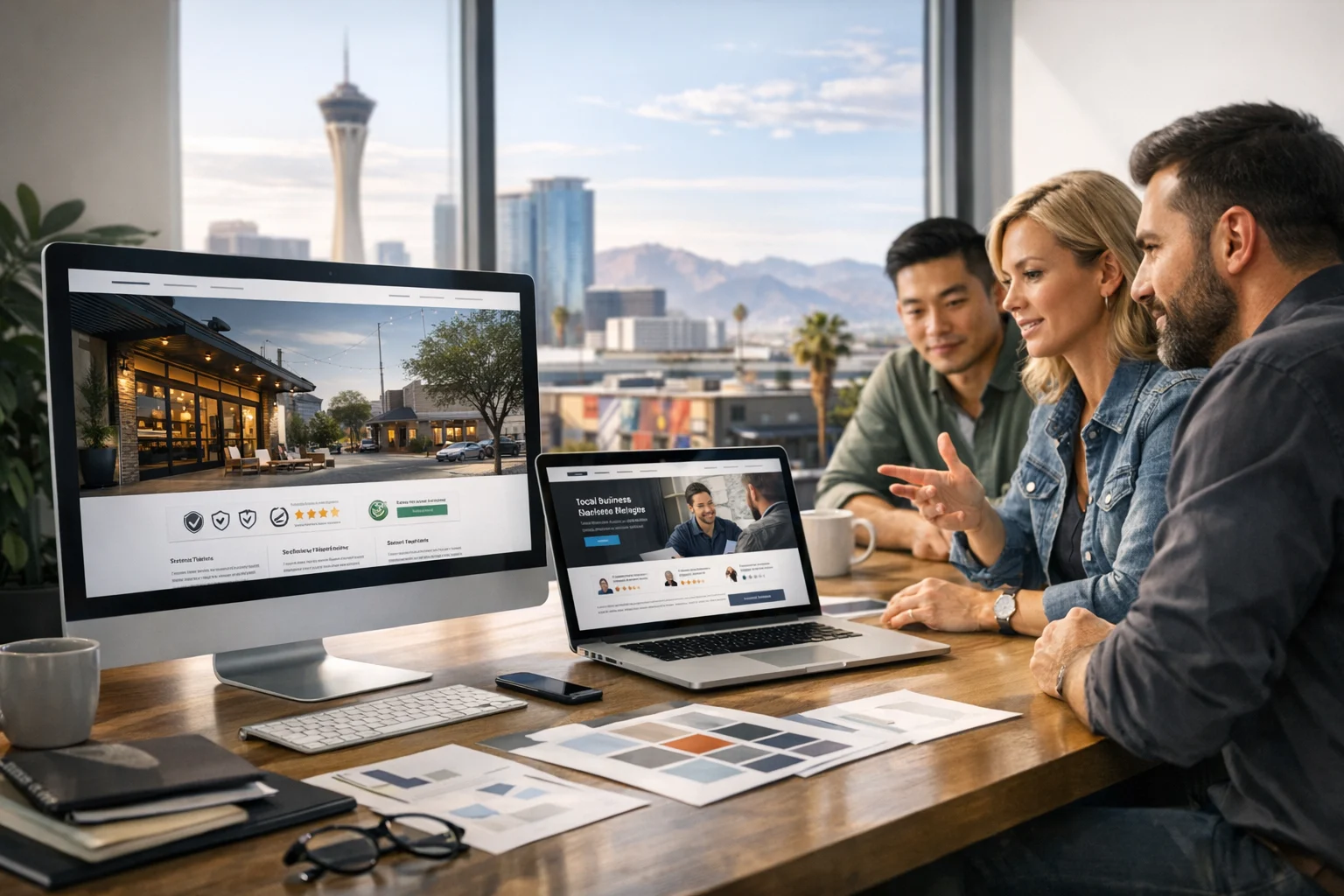
Trust is one of the first things a website has to earn in Las Vegas. That matters whether you're a law firm in Summerlin, a contractor serving Henderson, a restaurant near the Strip, or a creative brand in the Las Vegas Arts District trying to stand out in a crowded local market. People make snap decisions online. If a site feels outdated, slow, confusing, or generic, they usually do not wait around for proof. They leave.
At SiteLiftMedia, we've seen this across industries. A business can have a great offline reputation and still lose leads because its website looks behind the market. The strongest Las Vegas web design today is not just about looking modern. It is about making a business feel legitimate, established, easy to work with, and visible in search at the same time.
If you're comparing a Las Vegas web designer, a digital marketing agency Las Vegas businesses trust, or a Las Vegas SEO agency that also understands conversion strategy, it helps to know what actually builds confidence online. The best design trends are not decorative. They support trust, local SEO, lead generation, and better sales conversations.
Here are the web design Las Vegas trends making local business websites feel more trustworthy right now.
Clean, premium visual systems are replacing cluttered layouts
One of the clearest shifts in Las Vegas website design is the move away from crowded pages packed with too many colors, too many fonts, too many calls to action, and too much stock imagery. Local businesses are realizing that a premium look often comes from restraint, not volume.
Trust increases when a site feels intentional. That means consistent spacing, a clear font hierarchy, strong image quality, professional icon usage, and branded colors that do not fight for attention. In the Las Vegas Arts District especially, where studios, nightlife companies, restaurants, and creative brands rely heavily on visual identity, brand consistency signals that the business is established and serious.
A clean interface also helps users find what they need quickly. That lowers friction and makes the business look organized. For service companies, that can be the difference between a booked estimate and a bounce. For medical and wellness brands, it can be the difference between confidence and hesitation.
If you want a deeper look at trust-building design choices, this breakdown of what makes a premium looking website feel trustworthy is worth reviewing.
What this looks like in practice:
- Clear headline structure so people instantly understand the offer
- Consistent typography that feels polished across desktop and mobile
- Better use of white space so content is easier to scan
- Professional brand imagery instead of generic stock photos
- Focused calls to action instead of five competing buttons on one screen
For many businesses, this is where custom web design starts outperforming cookie-cutter templates. Templates tend to force a business into a generic structure. A custom web design approach gives the brand room to feel distinctive while staying conversion-focused.
Fast loading websites feel more credible immediately
Speed is not just a technical metric. It is a trust signal. When someone clicks a site and it loads fast, scrolls smoothly, and responds well on mobile, the business feels more current and dependable. When the site drags, flashes broken layout elements, or lags behind input, it creates doubt.
That doubt shows up quickly in Las Vegas because local customers often browse on mobile while on the go. They are comparing restaurants, calling service providers, checking directions, looking up reviews, or reviewing a company before making contact. A slow site feels like a business that might also be slow to respond.
Speed also supports Las Vegas SEO. Google cares about user experience, and faster pages tend to help both rankings and conversions. That is one reason businesses looking for web design Las Vegas support often end up needing deeper technical improvements, not just a visual refresh.
Fast, modern performance usually includes:
- Compressed and properly sized images
- Lean code and fewer bloated plugins
- Well-built mobile layouts
- Reliable hosting and caching
- Technical SEO improvements that reduce crawl and rendering issues
Businesses planning a redesign this spring often discover that performance fixes alone can improve lead quality. If your current site looks acceptable but feels sluggish, these ideas on how to make a business website look modern and fast align closely with what local buyers expect now.
Local proof is becoming a bigger part of trustworthy design
In Las Vegas, trust grows when people can tell you're local, active, and known in the market. That is why one of the strongest trends in Las Vegas web design is the integration of local proof directly into page design.
Generic trust badges are not enough anymore. People want to see real evidence that you work in their area and understand their type of business or problem. A polished website should make that obvious without forcing the user to dig for it.
For example, a contractor might highlight projects completed in Summerlin, Henderson, and North Las Vegas. A restaurant group may showcase local press mentions and location-specific photography. A creative brand in the Las Vegas Arts District may feature event collaborations, studio visuals, or nightlife campaign work that instantly connects with the local audience.
High-trust local proof can include:
- Real client reviews with location references
- Case studies tied to Las Vegas industries or neighborhoods
- Team photos, storefront photos, or project photos
- Clear business address, service area, and contact details
- Industry certifications, associations, or awards
This design trend also supports local SEO Las Vegas campaigns. When a site reinforces geographic relevance with content, service pages, and real business signals, it becomes easier to support Google Business Profile optimization, map pack rankings, and stronger location-based conversions.
Better messaging and page structure are replacing vague marketing language
Another trend making websites look more trustworthy is sharper messaging. Las Vegas businesses are moving away from vague homepage copy like "we deliver excellence" or "your trusted partner" and replacing it with specific, useful language that tells visitors what the company actually does, where it works, and why it is different.
Trust goes up when a visitor does not have to guess. Strong websites answer core questions in the first few seconds:
- What do you offer?
- Who do you serve?
- What areas do you cover?
- Why should I choose you?
- What should I do next?
This is especially important for local service companies, professional firms, medical practices, and home service brands. If your website has polished design but weak copy, it can still feel thin. Design and messaging need to reinforce each other.
The most effective conversion-focused website layouts now include:
- A clear hero section with one primary offer and one primary call to action
- Service-specific sections that speak to real buyer concerns
- Short proof blocks with reviews, stats, or credibility markers
- Visible contact pathways including forms, calls, and location details
- Frequently asked questions that reduce hesitation before contact
FAQ sections also create SEO value when paired with FAQ schema. That gives Google more structured context around your services and can improve how your content appears in search.
Mobile first design is no longer optional for Las Vegas businesses
Many local decision-makers still review websites on desktop, but a huge share of first visits happen on mobile. That is especially true for restaurants, nightlife companies, local service businesses, urgent care, wellness brands, and fast-moving consumer traffic. A site that looks great on a large screen but feels cramped or confusing on a phone does not feel trustworthy.
Good mobile design is not just a shrunken desktop layout. It requires real planning. Buttons must be easy to tap. Contact options need to stay visible. Important trust elements should show up early. Page sections have to stack logically. Menus need to be simple. Page speed becomes even more important.
In Las Vegas website design, the businesses winning more leads on mobile are doing a few things consistently:
- Using concise sections instead of giant walls of text
- Keeping phone numbers and contact buttons accessible
- Reducing popup clutter that interrupts browsing
- Prioritizing fast load times on cellular connections
- Making forms shorter and easier to complete
This matters for paid campaigns too. If you're sending traffic from Google Ads or social ads, your PPC landing pages need to match user intent quickly. Trust is lost when ad traffic lands on generic, slow, or mismatched pages. A solid Las Vegas web designer should be thinking about paid traffic behavior, not just aesthetics.
Trustworthy websites are being built with SEO visibility in mind from day one
A website can look polished and still underperform if search engines do not understand it well. That is why stronger Las Vegas web design now includes on-page SEO structure, technical SEO planning, and local relevance from the beginning instead of tacking it on later.
For businesses comparing a Las Vegas SEO firm, a Las Vegas SEO agency, or an SEO company Las Vegas brands can rely on, this is a major differentiator. Design and SEO should work together. If they do not, you usually end up paying twice, once for the website and again to fix what the first build missed.
Trust-building SEO elements often include:
- Well-structured service pages tied to actual search intent
- Location signals that reinforce Las Vegas relevance
- Schema markup including structured data for business details, services, reviews, and FAQ schema where appropriate
- Proper heading hierarchy that supports readability and crawlability
- Internal linking that helps both users and search engines navigate site content
For local businesses, trust and discoverability are connected. A site that is well organized and clearly optimized sends better quality signals to both users and search engines. That supports stronger map pack rankings, better organic visibility, and more qualified traffic.
It also helps with Google Business Profile optimization. When your website reinforces the same services, categories, and location signals that your Google profile is trying to rank for, local performance improves. That is a big reason SiteLiftMedia often treats site structure and local SEO cleanup as part of the same conversation.
AI assisted content strategy is raising the bar, but quality still decides trust
More businesses are asking about Las Vegas AI SEO and AI SEO Las Vegas strategies, and for good reason. AI tools can help speed up content planning, service page expansion, FAQ development, and search intent research. Used correctly, AI can support a smarter content roadmap and help businesses cover more of the questions their customers are already asking.
Used poorly, it creates generic pages that feel thin, repetitive, and untrustworthy.
The trend that actually builds credibility is not simply using AI. It is combining AI-assisted research with real local experience, strong editorial control, and conversion strategy. For example, an Arts District restaurant group or studio brand may use AI-supported analysis to identify search patterns, then build content that reflects real neighborhood relevance, local event traffic, menu intent, or booking behavior.
That approach works because the final result still sounds human and specific. It also creates better SEO outcomes than publishing lifeless filler pages.
Businesses should expect an AI SEO partner to help with:
- Content gap analysis
- Service page expansion
- Location page planning
- FAQ opportunities tied to search intent
- Content systems that support growth without lowering quality
If the site does not feel authentic after the content is added, trust drops. AI should strengthen clarity, not replace it.
Security and stability are becoming visible trust factors
People may not use technical language when they browse a website, but they notice when something feels off. Browser warnings, broken forms, mixed content errors, spammy behavior, expired plugins, and glitchy functionality can instantly damage credibility. That is why strong Las Vegas website maintenance has become part of trust-focused design.
Secure, reliable websites tend to convert better because users do not encounter unnecessary friction. For professional firms, healthcare brands, e-commerce stores, and any company collecting lead data, this matters even more.
Trust-related technical essentials include:
- SSL and secure form handling
- Regular plugin, theme, and platform updates
- Website backups and uptime monitoring
- Cybersecurity services to reduce exploit risks
- Server hardening for stronger infrastructure protection
This area gets overlooked during redesign planning, but it should not. A beautiful website that breaks under traffic or becomes vulnerable after launch is not a trustworthy asset. Businesses comparing a digital marketing agency Las Vegas companies use should ask whether the team also understands long-term maintenance, performance, and security.
Design consistency across growth pages makes businesses look more established
One subtle but powerful trend is the use of scalable design systems. As businesses expand content, add services, launch seasonal promotions, or build landing pages for campaigns, the site should still feel like one brand. When each page looks like it was built by a different team, trust drops.
That matters for local companies pushing new spring promotions, content expansion, or service rollouts. It also matters for businesses testing new landing pages for paid ads, local campaigns, or niche services. The website needs room to grow without losing cohesion.
Stronger sites now use repeatable design patterns for:
- Service pages
- Location pages
- Lead generation sections
- Review and case study blocks
- PPC landing pages
Consistency makes a company feel larger, more organized, and more credible. It also makes future updates easier and supports better conversion testing. If your site has grown in pieces over time, this is often where trust starts to erode. The design may not be bad, but it no longer feels aligned.
For businesses auditing weak pages, these examples of website design mistakes hurting Las Vegas conversions often reveal where credibility is slipping.
The best Las Vegas websites feel local without feeling small
There is a balance the most trustworthy local websites achieve well. They feel rooted in Las Vegas, but they do not feel amateur or overly limited. They show local understanding while still presenting the brand as polished, capable, and competitive.
That balance is especially important in markets like the Las Vegas Arts District, where creative energy matters, but professionalism still decides who gets the call, booking, or contract. A brand can feel artistic, bold, or neighborhood-connected without sacrificing clarity or business readiness.
That is why the best Las Vegas website design today usually blends four things at once:
- Strong brand presentation
- Search-friendly structure
- Conversion-focused layout decisions
- Stable technical execution
If you're reviewing your own site, ask a few blunt questions. Does it look current? Does it load fast? Does it clearly show what you do and where you work? Does it include real proof? Does it support Las Vegas SEO and local search visibility? Does it feel like a business people can trust with money, time, or personal information?
If the answer is not a confident yes, it may be time for more than cosmetic changes. SiteLiftMedia helps local companies improve trust, performance, SEO structure, and lead generation together. If you want a website that feels credible in the Las Vegas market and supports real growth, contact SiteLiftMedia and request a review of your current design, local SEO signals, and conversion flow.
Local Focus: Las Vegas Search Visibility
SiteLiftMedia works with businesses that want stronger visibility across the Las Vegas valley. The map below highlights the local market context for this article and the kind of location based search intent that matters when people compare a Las Vegas web designer, Las Vegas SEO agency, or local SEO firm.
Frequently Asked Questions
What makes a Las Vegas business website look more trustworthy?
The biggest trust factors are clean design, fast loading speed, clear messaging, real local proof, secure browsing, and strong mobile usability. A trustworthy site should also show who you serve in Las Vegas, how to contact you, and why someone should choose your business.
Does web design affect Las Vegas SEO?
Yes. Site structure, speed, mobile performance, internal linking, heading hierarchy, and structured data all influence SEO. Good Las Vegas web design supports both user trust and stronger search visibility.
How does local SEO fit into a website redesign?
A redesign is the right time to improve service pages, location signals, Google Business Profile alignment, map pack relevance, and technical SEO. It is much easier to build local SEO Las Vegas elements into the site from the start than to retrofit them later.
Should I hire a Las Vegas web designer or a Las Vegas SEO agency for a new site?
Ideally, you want a partner that understands both. A good website should look strong, convert visitors, and support search performance. If design and SEO are handled separately without coordination, important trust and ranking opportunities can be missed.
Is AI SEO useful for local Las Vegas businesses?
Yes, when used properly. AI can help with research, content planning, FAQ development, and expansion of service pages. The key is combining AI assisted insights with local knowledge, human editing, and a real conversion strategy.
Photo Gallery