In Las Vegas, people make quick decisions online. A patient comparing med spas, a parent looking for a pediatric therapist, a homeowner searching for a contractor, or a business owner reviewing law firms will form an opinion about your company in seconds. Before they call, book, or fill out a form, they ask themselves one quiet question: do I trust this business?
That question sits at the center of good web design. It also shapes local search performance, lead quality, and conversion rates. If your website feels dated, thin, generic, slow, or out of sync with your real-world reputation, trust drops. When trust drops, rankings can still bring traffic, but that traffic is far less likely to turn into appointments or consultations.
For Las Vegas medical wellness brands and professional service businesses, trust has to be built on multiple levels. Your website has to look credible. Your content has to answer real concerns. Your local SEO has to show that you’re established in the market. Your technical foundation has to feel secure. And your calls to action have to feel safe enough for a serious buyer to take the next step.
That’s why business owners comparing a Las Vegas web designer, a Las Vegas SEO agency, a Las Vegas SEO firm, or a Las Vegas AI SEO partner should look beyond who can make the prettiest site or promise the biggest rankings. The better question is who can build a site that feels trustworthy from the first visit through the first conversion.
Why website trust matters so much in Las Vegas
Las Vegas is a high-choice market. Searchers often see dozens of options for the same service, especially in wellness, dental, aesthetics, therapy, legal, accounting, consulting, and home services. That means your website is rarely judged in isolation. It’s judged against the other businesses open in nearby tabs.
Medical and wellness brands deal with especially high stakes. A visitor may be sharing health concerns, cosmetic goals, pain issues, or sensitive personal information. Professional firms deal with financial, legal, and operational risk. In both cases, people are looking for proof that your business is legitimate, competent, stable, and easy to work with.
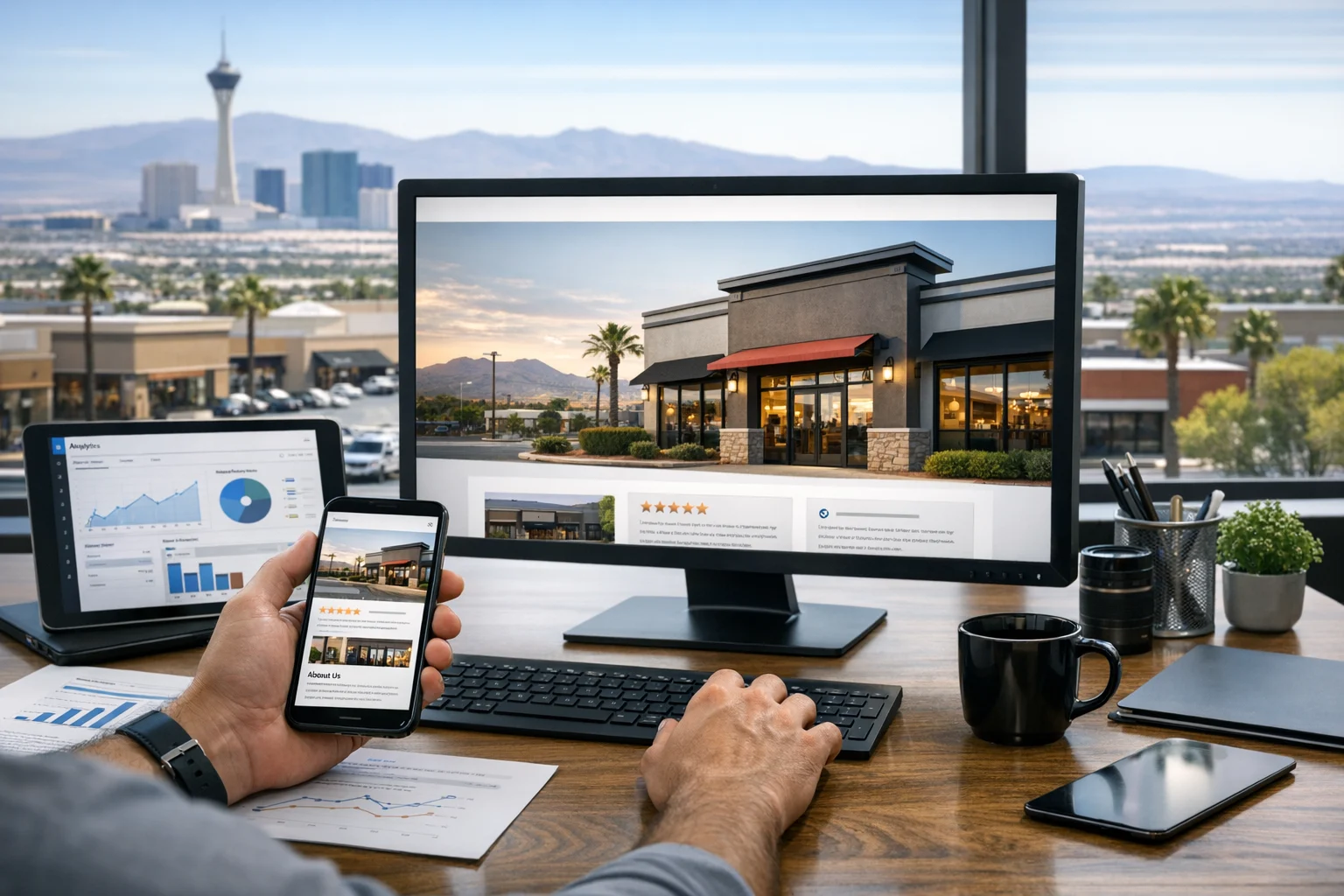
That same trust layer applies to many local brands outside healthcare. Restaurants, nightlife companies, studios, and creative brands in places like the Las Vegas Arts District rely heavily on strong brand visibility and confidence signals. A great-looking restaurant site makes people feel like the in-person experience will be worth it. A weak site can make even a good business feel uncertain. The lesson is the same across categories: if the website looks careless, people assume the business may be careless too.
From an SEO perspective, trust also affects user behavior. Strong trust signals can improve click-through rates from search results, reduce bounce rates, increase time on page, and lift form submissions or calls. That’s part of why smart Las Vegas SEO work has to connect design, content, and technical SEO instead of treating them as separate projects.
First impressions start with design clarity, not decoration
One of the biggest problems we see at SiteLiftMedia is a website that tries to impress visitors before it explains anything. That usually means oversized banners, vague taglines, stock photography, and too much motion. None of that builds trust if the visitor can’t quickly understand what you do, who you help, and why they should choose you.
A trust-focused homepage should answer key questions right away:
- What service do you provide?
- Who is it for?
- Are you in Las Vegas?
- What makes your practice or firm credible?
- What should the visitor do next?
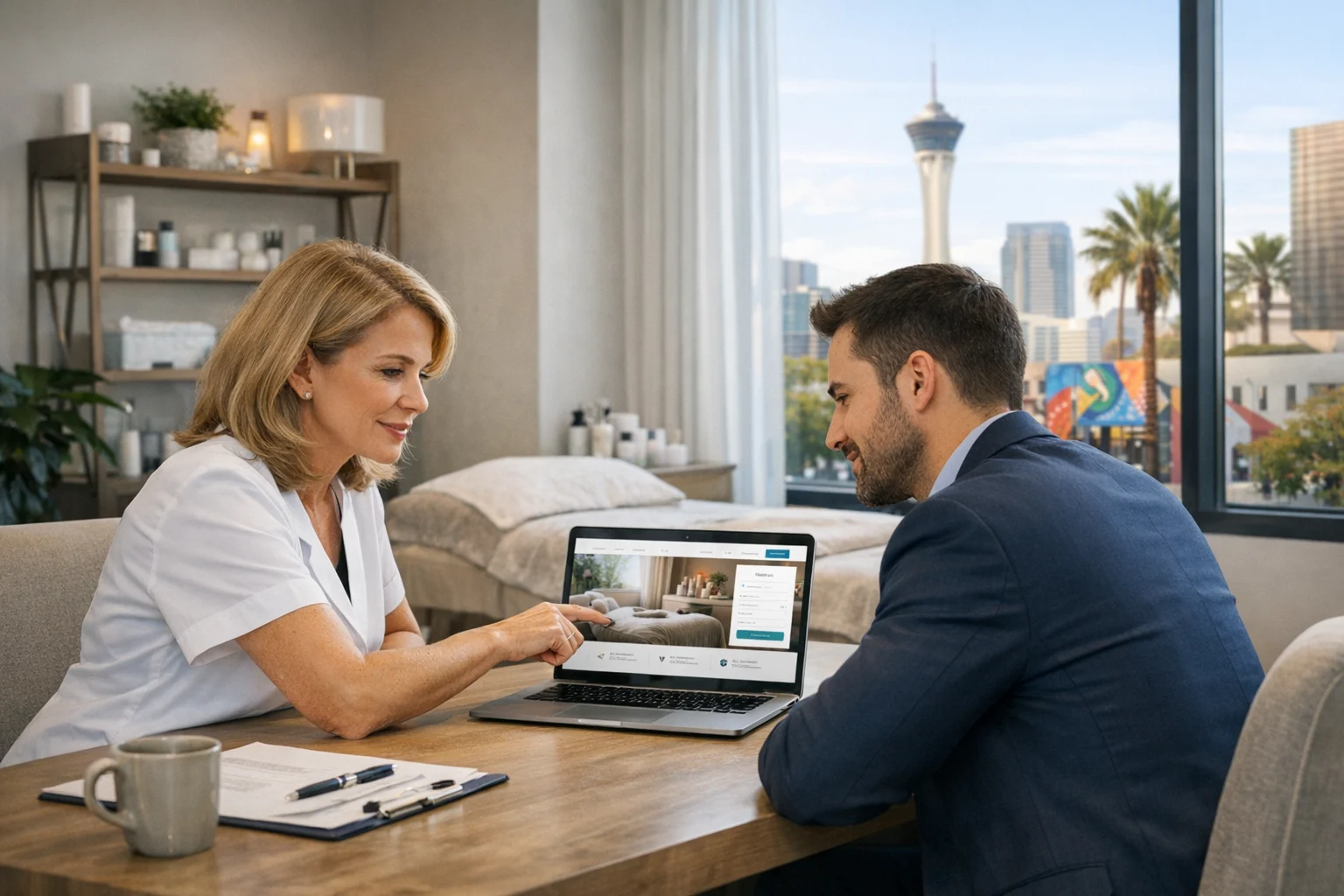
That sounds simple, but many sites miss it. A strong Las Vegas website design project usually starts by clarifying the message above the fold, cleaning up navigation, and reducing friction on mobile. If a patient lands on a wellness site and sees a clear service promise, a real office photo, strong review proof, and an obvious booking path, trust rises fast.
This is where custom web design matters. A template can work for a startup, but serious medical wellness and professional service brands usually need a more tailored structure. A chiropractor needs a different content flow than a personal injury attorney. A med spa needs different trust signals than a CPA firm. A conversion-focused website is built around the objections, questions, and actions that matter in that specific buying process.
Visual consistency matters just as much. Fonts, spacing, colors, button styles, iconography, and imagery should feel intentional. If your site mixes old brand elements with new ones, trust erodes. If your photography looks generic while your competitors show real team members, real rooms, and real work, your site will feel less established. For more on the visual side of credibility, this guide on website trust signals and visual credibility covers the details businesses often miss.
Use real photography whenever possible
Real photography is one of the fastest ways to improve perceived trust. Show the front desk, treatment rooms, consultation areas, team members, providers, partners, and even the surrounding neighborhood when it helps reinforce local relevance. A polished photo of your office in Las Vegas tells a stronger story than another stock image of people pointing at a laptop.
This is especially true in the Arts District and other brand-conscious areas of the city. Businesses there often understand presentation better than average because they compete on identity as much as service. Medical and professional sites can borrow that discipline. You do not need to look trendy, but you do need to look real.
Mobile design is trust design
Most local searches happen on phones. If your buttons are hard to tap, your forms are long, your text is tiny, or your site loads awkwardly on mobile, users will assume your operation is disorganized. Good web design Las Vegas projects are mobile-first, not desktop-first with a mobile adjustment added later.
That means click-to-call buttons, fast-loading service pages, easy directions, visible reviews, and clean contact flows. It also means avoiding clutter. People searching from a parking lot, office, or waiting room do not want to decode your site structure.
Trust grows when your content reduces risk
Design gets a visitor to stay. Content gives them a reason to believe. For medical wellness and professional service businesses, the most effective content usually does one thing very well: it lowers perceived risk.
That starts with credentials and transparency. Don’t make people hunt for them. If your practice has licensed providers, show that clearly. If your firm has certifications, years in business, courtroom experience, industry specializations, or insurance coverage, make it visible. If your team has niche expertise, explain it in plain language.
Strong trust content often includes:
- Provider or team bios with experience and specialization
- Licensing, certifications, memberships, and awards
- Specific services or treatment pages instead of one generic list
- Clear process explanations for consultations, appointments, or intake
- Review highlights and testimonial excerpts with context
- Before and after galleries where appropriate and compliant
- Insurance, financing, or payment information when relevant
- Frequently asked questions that address hesitation before it becomes a bounce
Reviews deserve special attention. A five-star average helps, but what really builds trust is specificity. A testimonial that mentions professionalism, communication, cleanliness, responsiveness, pain relief, case clarity, or a smooth booking process is more persuasive than a generic “great service” comment. The goal is to help the next visitor see themselves in the experience.
For many businesses, FAQ content is also an SEO asset. It helps capture long-tail searches, supports service page relevance, and improves the page experience. When structured correctly with FAQ schema, those answers can reinforce both user trust and search visibility. This is where Las Vegas AI SEO can be useful as a research tool. AI can help surface common questions and content gaps quickly, but the final answers still need human editing, legal or medical review where needed, and local context to feel credible.
Local SEO makes trust visible before someone clicks
A website doesn’t build trust only after the visit. It also builds trust in the search results. That’s where local SEO Las Vegas work matters. If your business name, reviews, location data, page titles, and Google Business Profile all look consistent and complete, users are more likely to trust you before they ever land on the site.
Good Las Vegas SEO for medical and service brands should include more than keyword placement. It should align your site with your local presence. That means:
- Accurate name, address, and phone information across the site and business listings
- Strong service pages tied to real search intent
- Thoughtful internal linking between service, location, and trust pages
- Google Business Profile optimization with updated categories, services, photos, and posts
- Review generation and response strategy
- Structured data that helps search engines understand your business
For businesses trying to improve map pack rankings, the basics matter more than people think. Category selection, review quality, proximity, relevance, and business data consistency all contribute. So does having a site that clearly supports the same services and location signals shown in the profile. If your profile says you offer a service but your site barely mentions it, trust drops for both users and search engines. This guide on how to improve map pack rankings is a useful next read if local search visibility is one of your immediate goals.
Structured data is another underused trust tool. With the right structured data, search engines can better understand your business type, services, reviews, FAQ content, and local relevance. That does not guarantee rich results, but it does reinforce credibility and context.
This is also where many businesses realize they need more than a generic SEO company Las Vegas pitch. A real Las Vegas SEO agency or Las Vegas SEO firm should be able to explain how your site architecture, local business data, content, and conversion flow all work together. Rankings that lead to weak conversions do not solve the actual business problem.
Technical trust is still trust
Visitors may not know the term technical SEO, but they notice the outcome. If pages are slow, forms fail, PDFs break, security warnings appear, or mobile layouts shift while loading, confidence falls immediately. People read those issues as signs that the business may not be paying attention.
Technical SEO and website maintenance are often the silent difference between a site that converts and one that leaks leads. A strong technical foundation usually includes:
- Fast page speed and stable mobile performance
- Secure HTTPS setup
- Indexing cleanup and crawl error resolution
- Accessible navigation and readable page structure
- Working forms with confirmation flows and lead routing
- Image compression and code cleanup
- Ongoing plugin, CMS, and server updates
Medical and wellness businesses should take this especially seriously. Even if your forms are not handling highly sensitive records directly, users still need to feel that inquiry and booking processes are secure and professional. Trust is fragile at the point of submission. If a form looks outdated or behaves strangely, users abandon it.
This is why Las Vegas website maintenance should not be treated like an afterthought. It’s part of brand credibility. The same goes for cybersecurity services and server hardening. If your site gets hacked, defaced, flagged, or filled with spam pages, the damage affects SEO, reputation, and lead generation at the same time. SiteLiftMedia has covered this in more depth in our resource on cybersecurity and server hardening for Las Vegas sites.
A conversion focused website makes trust actionable
Trust is not just a feeling. It should guide a person toward a next step that feels safe and easy. That is the difference between a pretty site and a conversion-focused website.
For medical and wellness businesses, that may mean separate calls to action for scheduling, consultations, insurance questions, or treatment inquiries. For professional firms, it may mean better intake forms, consultation scheduling, case type selection, or lead qualification. For contractors and service companies, it may mean clear estimate requests with service area validation and urgency prompts.
Each major service should have its own landing experience. A home page cannot carry everything. If you run paid search campaigns, your PPC landing pages should match the ad intent, message, and audience. Sending every click to a generic service page usually weakens trust because the visitor does not feel understood.
Strong conversion design often includes:
- Service-specific headlines and proof points
- Review snippets close to the form or call button
- Short forms for high-intent users
- Alternative contact paths such as call, text, or request a callback
- Simple explanation of what happens after submission
- Trust badges, affiliations, or credentials placed near the action area
When SiteLiftMedia reviews underperforming websites, we often find that the traffic problem is really a conversion problem. The site may already be attracting the right users, but the page structure does not help them commit. This article on how a Las Vegas web designer turns traffic into leads breaks down that shift well.
What Arts District brands can teach service businesses about credibility
The Las Vegas Arts District is a useful reminder that brand visibility is part of trust. Creative brands, restaurants, nightlife companies, studios, and local companies there often win attention because they know how to present a point of view clearly. Their sites usually show atmosphere, personality, and place. They understand that people buy the experience before they buy the product.
Medical wellness and professional firms can learn from that without becoming flashy. You do not need neon colors or trendy layouts. You do need a defined brand voice, consistent visuals, and a website that feels connected to the real business. If your office is warm and modern, let the site reflect that. If your firm is precise and methodical, let the structure show that. If your wellness brand is calm and premium, the design should support that feeling at every touchpoint.
Brand trust is strongest when there is no disconnect between what people see online and what they experience offline. That alignment matters whether you are a clinic near downtown, a law firm serving Las Vegas businesses, a contractor covering the valley, or an e-commerce brand with a local identity.
How to choose the right partner for web design and SEO
When businesses start comparing providers, they often narrow the list to a few types of companies: a freelancer, a Las Vegas web designer, a digital marketing agency Las Vegas team, a Las Vegas SEO agency, a Las Vegas SEO firm, or a specialist in AI SEO Las Vegas strategy. The right fit depends on whether the partner can connect trust, visibility, and conversion.
Ask practical questions:
- How do you evaluate website trust issues before redesigning?
- What is your process for content planning and local SEO alignment?
- How do you handle technical SEO and ongoing website maintenance?
- Can you improve our Google Business Profile optimization and local landing pages?
- How do you measure lead quality, not just traffic?
- What role does AI play in your content workflow, and where does human review step in?
A solid partner should be able to explain why your current site is underperforming in business terms, not just design terms. They should be comfortable talking through messaging, analytics, booking flow, review strategy, structured data, and security. If they only focus on visuals, they are missing part of the trust equation. If they only talk about rankings, they are missing the conversion side.
At SiteLiftMedia, the best projects usually start with a clear audit. We look at the trust signals users can see, the technical issues they cannot see, the local SEO gaps reducing visibility, and the conversion problems stopping qualified leads from taking action. That mix matters whether the fix is a full custom web design build, a content expansion plan, a spring redesign push, local SEO cleanup, or a more disciplined Las Vegas website maintenance process.
If your site looks acceptable on the surface but still feels hard to trust, there is usually a reason. It may be vague messaging, weak service pages, poor mobile flow, thin local relevance, inconsistent reviews, or a technical problem that keeps showing up at the wrong moment. If you want a real assessment of where credibility is being lost and what to fix first, contact SiteLiftMedia and start with the areas that affect trust before you spend more money chasing traffic.
Local Focus: Las Vegas Search Visibility
SiteLiftMedia works with businesses that want stronger visibility across the Las Vegas valley. The map below highlights the local market context for this article and the kind of location based search intent that matters when people compare a Las Vegas web designer, Las Vegas SEO agency, or local SEO firm.
Frequently Asked Questions
How can a Las Vegas medical or wellness website build trust quickly?
Start with clear messaging, real team and office photos, visible credentials, strong reviews, fast mobile performance, and simple booking or contact options. Visitors should understand what you offer and why they can trust you within a few seconds.
Does local SEO in Las Vegas affect website trust?
Yes. Consistent business information, strong Google Business Profile optimization, quality reviews, and relevant service pages help people trust your brand before they even click through from search results.
What should I ask a Las Vegas web designer before hiring them?
Ask how they improve conversions, how they approach mobile design, whether they handle technical SEO, how they build trust signals into service pages, and what support they offer after launch for updates and maintenance.
Can AI SEO help Las Vegas service businesses improve trust?
AI SEO can help identify search intent, content gaps, and common questions, but it should support a human strategy, not replace it. Trust building content still needs expert editing, brand alignment, and local context.
Why is ongoing website maintenance important for trust?
A neglected site can become slow, outdated, insecure, or broken. Regular Las Vegas website maintenance protects user experience, supports SEO performance, keeps forms working, and reduces security risks that hurt credibility.
Photo Gallery