Trust is one of the biggest conversion factors on any website, and most businesses underestimate how quickly visitors judge it. People decide within seconds whether your company looks established, safe, and worth contacting. If the design feels dated, the copy is vague, or the site loads slowly, confidence drops before your offer even gets a real chance.
That is why improving website trust signals and visual credibility is not just a branding exercise. It affects lead quality, conversion rates, local search performance, and how seriously your business is taken. For companies competing in crowded markets, especially service-heavy cities like Las Vegas, those details often determine which site gets the call and which one gets ignored.
At SiteLiftMedia, we have seen this firsthand across custom web design projects, SEO campaigns, technical SEO cleanups, website maintenance engagements, and cybersecurity services. A trustworthy website is rarely built by one standout feature. It comes from dozens of smaller signals working together. The layout feels intentional. The pages load fast. Contact details are easy to find. Reviews look real. The business appears active. Security is visible. The messaging sounds specific, not generic.
If you want a stronger website that looks credible and performs like a serious business asset, these are the areas worth improving first.
Why trust signals matter more than most businesses realize
A website can look attractive and still feel untrustworthy. That usually happens when the design looks polished, but the supporting proof is weak. Trust signals are the elements that reassure visitors your business is legitimate, capable, current, and safe to engage with.
Visual credibility is the first impression. Trust signals are the proof behind it.
When both are strong, people stay longer, click deeper, and are more likely to fill out a form or call. Search engines benefit indirectly from those improvements too. Better engagement, lower bounce rates, cleaner structure, and stronger reputation signals can all support stronger rankings. For businesses investing in Las Vegas SEO or local SEO Las Vegas campaigns, credibility is not separate from SEO. It is part of what makes SEO convert.
If someone searches for an SEO company Las Vegas, a law firm, a home service provider, or a medical practice, they are not just comparing services. They are comparing confidence. The business that looks more stable and transparent usually wins attention first.
First impressions are built by design, spacing, and consistency
Most trust problems show up before a person reads much copy. Visitors react to visual structure first. If the site feels cluttered, inconsistent, or outdated, the business appears less reliable, even if the service itself is excellent.
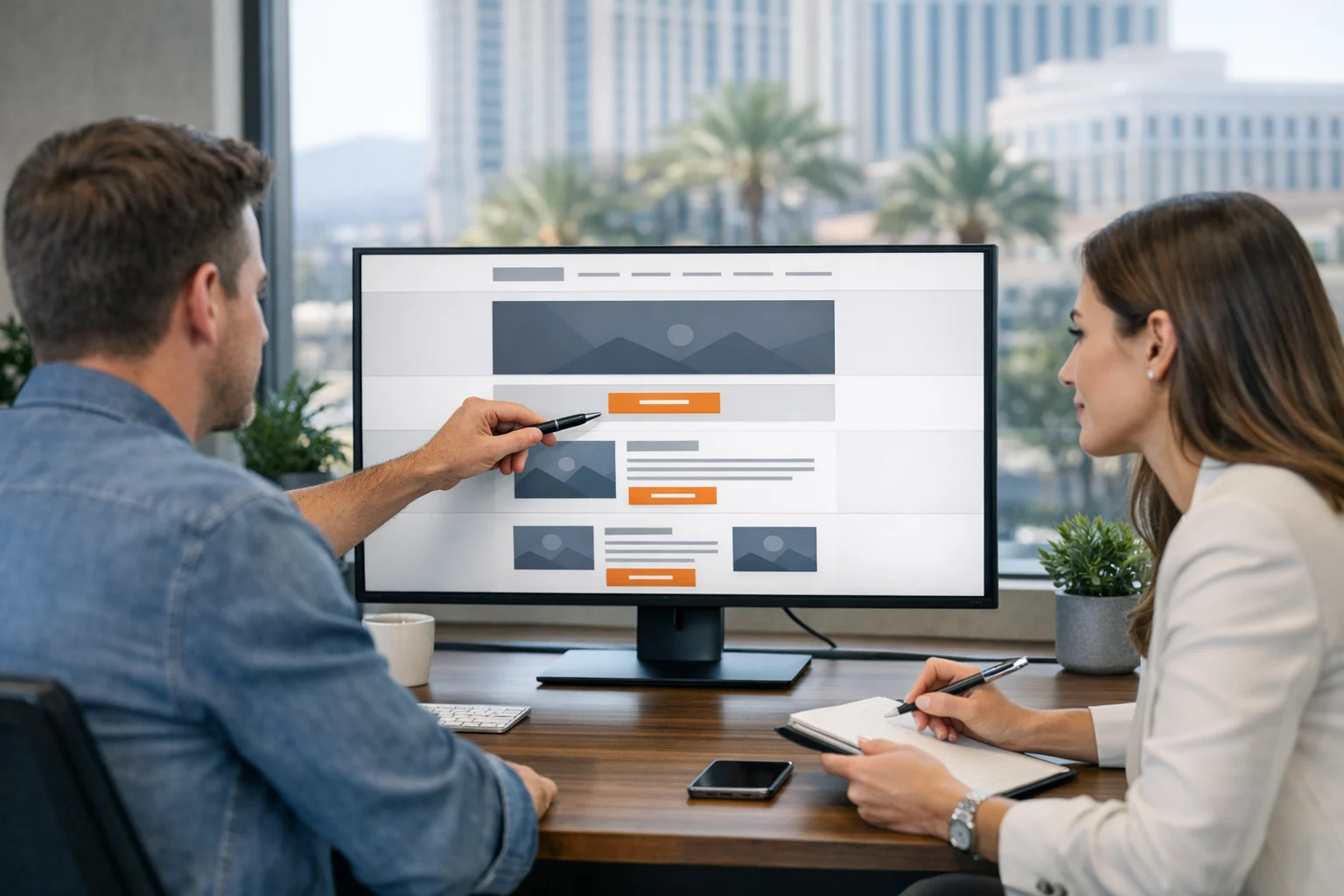
Strong visual credibility starts with consistency across the whole site. Fonts, colors, button styles, image treatment, icon sets, spacing, and page layouts should feel unified. A company that looks organized online feels more organized offline. A company with five button styles, low-quality photos, and mismatched page sections feels less stable.
Clean design also helps people process information faster. You are not trying to impress visitors with complexity. You are trying to remove hesitation. That means:
- Clear navigation with obvious service categories
- Readable typography with strong contrast
- Consistent spacing between sections
- Professional imagery that reflects real work and real people
- Calls to action that are easy to find without shouting
- Mobile-friendly layouts that do not break on smaller screens
If your current site feels busy or disjointed, improving hierarchy often does more for credibility than adding more content. SiteLiftMedia often sees businesses overload their homepages with everything at once. It usually creates doubt, not clarity. For a deeper look at the structure side of this, see how content layout and visual hierarchy boost engagement.
One more point matters here. A premium look is not the same as a flashy look. The kind of web design Las Vegas businesses usually benefit from feels controlled, clear, and modern without trying too hard. That approach builds confidence faster than trendy effects ever will.
Trust signals every serious business website should have
A surprising number of company websites still miss the basics. If you want a site that feels credible, these are the core trust elements to review page by page.
Real contact information
Your phone number, email, form access, and service area should be easy to find. A website that hides basic contact details can feel evasive. If you serve Las Vegas, Henderson, Summerlin, or broader Nevada markets, say so clearly. If you serve clients nationwide, show that too without losing your local relevance.
Clear company identity
Visitors want to know who they are dealing with. That means a visible business name, strong logo treatment, an About page that says something meaningful, and copy that sounds like your company actually exists. Avoid placeholder statements like "we are committed to excellence" unless you back them up with specifics.
Specific service pages
Dedicated pages for web design, technical SEO, backlink building services, social media marketing, cybersecurity services, website maintenance, system administration, and related offers build confidence because they show depth. Thin pages create the opposite impression. Businesses trust specialists when the site demonstrates real understanding.
Testimonials and review proof
Real reviews, case snapshots, client logos where appropriate, and quotes tied to actual service outcomes all help. The strongest social proof is specific. A testimonial that says "great company" is fine. A testimonial that says "they rebuilt our custom web design, cleaned up technical SEO issues, and improved lead flow in Las Vegas" is much stronger.
Recent updates
A stale site makes a business look inactive. Recent blog posts, updated copyright dates, fresh project work, or current service references reassure visitors that the company is active now, not just five years ago.
Policies and legal basics
Privacy policy, terms where appropriate, accessibility attention, and visible business details all help lower friction. These pages are not glamorous, but their absence can raise red flags.
If you want examples of how thoughtful trust presentation works without cluttering the page, this article on using social proof in web design without clutter is worth reading.
Local credibility is a major advantage in Las Vegas search
Even businesses that serve nationwide audiences need local trust signals when they want to rank and convert in a metro area. For Las Vegas companies, this matters even more because competition is high, customer skepticism is real, and users often compare several providers quickly.
Local credibility goes beyond putting "Las Vegas" in a headline. It should show up naturally across the site in ways that help both users and search engines:
- Consistent business name, address, and phone information
- Service area references that mention Las Vegas and nearby communities naturally
- Google reviews or local testimonials where relevant
- Pages or content tied to local customer needs
- Photos of your team, office, projects, or work in the region
- Clear evidence that you understand the local market
This matters for more than branding. It supports local SEO Las Vegas visibility and strengthens conversion intent when a visitor lands on the site. A business looking for web design Las Vegas services wants to know the agency understands the city, the competition, and the expectations of local buyers. That same logic applies to companies looking for a Las Vegas SEO partner or broader digital growth support.
Reputation also plays a major role here. Reviews, mentions, and visible customer satisfaction help close the trust gap faster than self-promotion. SiteLiftMedia recommends treating reputation management as part of design strategy, not just off-page SEO. This piece on how reputation signals improve local search rankings explains why the connection is so strong.
Speed, technical quality, and security create silent trust
Some trust signals are visible. Others are felt. Visitors may not know exactly why a website feels reliable, but they notice when it works smoothly. Fast loading, stable pages, secure browsing, and clean functionality all shape credibility, even when the user never says it out loud.
Speed is a big one. Slow pages make people doubt the business behind them. If the website feels neglected, they assume other things may be neglected too. This is one reason modern design should never come at the expense of performance. If you are planning a refresh, making your Las Vegas website modern without sacrificing speed should be part of the process.
Technical quality includes:
- Fast load times on mobile and desktop
- HTTPS and valid SSL setup
- Clean code and stable page rendering
- Mobile-responsive layouts
- Working forms and click-to-call links
- Logical URL structure and internal linking
- No broken pages, mixed content warnings, or outdated plugin issues
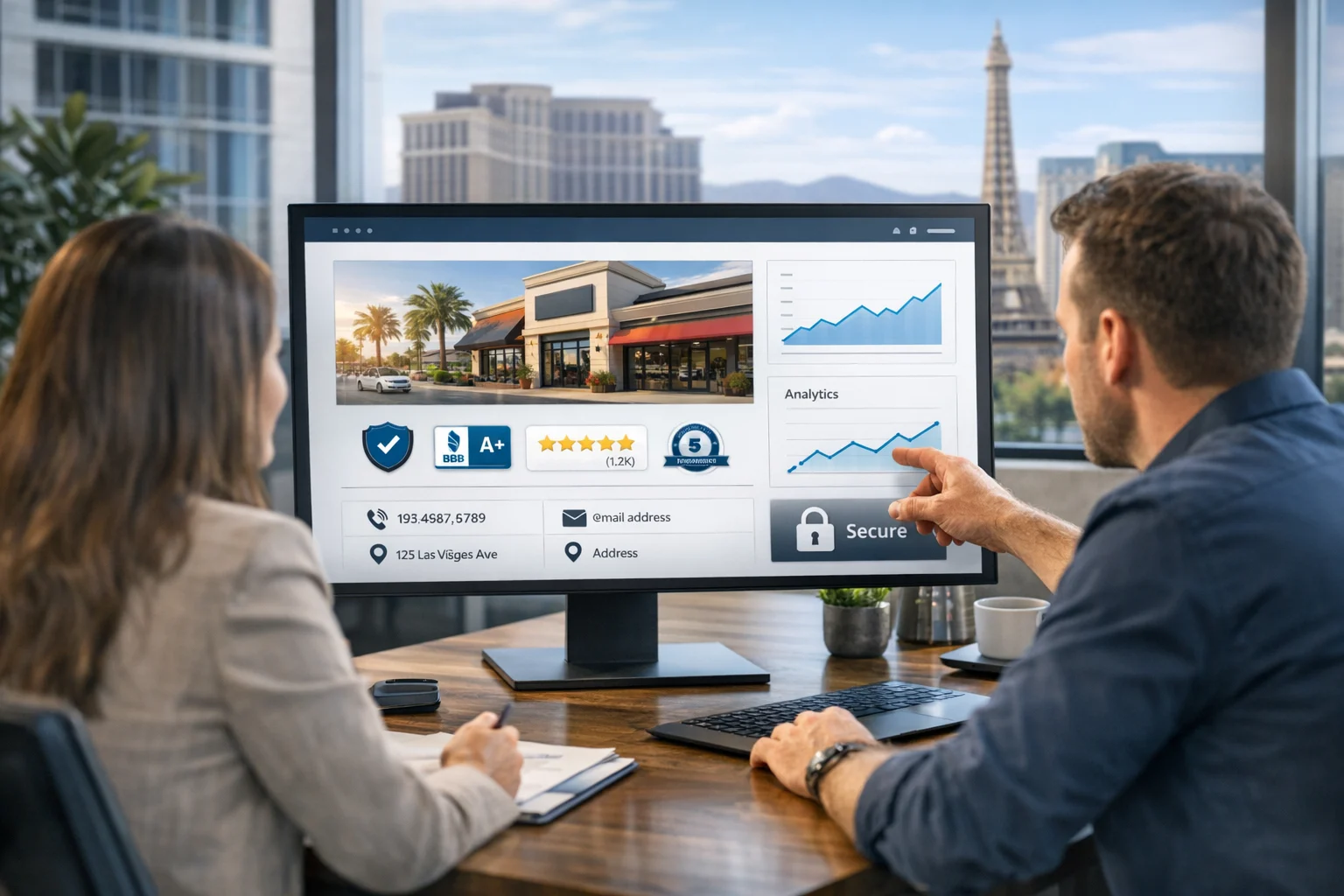
Security is where many businesses still lose trust without realizing it. Business website security is no longer just an IT issue. It is part of user confidence. If the browser throws warnings, forms seem suspicious, or the site looks abandoned, visitors hesitate. For service businesses collecting leads, that hesitation is expensive.
This is where cybersecurity services intersect with web credibility. Penetration testing, server hardening, secure hosting practices, plugin auditing, and proactive website maintenance all support the user experience because they reduce visible risk. The same goes for back-end system administration. If your infrastructure is unstable, your website will eventually show it through downtime, strange behavior, or performance issues.
At SiteLiftMedia, we often find that trust problems are caused more by technical debt than design alone. A redesign can help, but if the underlying system is messy, credibility erodes again. The best websites are visually strong and technically disciplined.
Proof beats promises every time
One of the fastest ways to improve trust is to replace broad claims with proof. Visitors are used to seeing every company call itself expert, experienced, or results-driven. Those words do little on their own. Specific evidence carries far more weight.
Here are some of the most effective proof elements:
- Before and after project examples
- Short case studies with measurable outcomes
- Industry certifications or verified partnerships
- Real client testimonials with context
- Screenshots or samples of completed work
- Team expertise tied to actual services
- Accurate service process explanations
If you offer custom web design, show examples that demonstrate taste, usability, and conversion thinking. If you provide technical SEO, explain what audits, fixes, schema, crawl improvements, and performance work actually involve. If you sell cybersecurity services, talk about what you review, how you identify risks, and what better protection looks like in practical terms.
Proof is especially important for agencies because many prospects have been burned before. They have heard the sales language. They want to see competence. That is true whether the service is Las Vegas SEO, social media marketing, server hardening, or redesign strategy.
Strong websites make it easy to verify the business behind them
Visitors do not only evaluate the page they landed on. They look for surrounding signs that the company is real and reachable. A strong, trust-focused website makes verification easy.
That means your About page should not be an afterthought. It should explain who you are, what you do, where you work, and how you approach client work. For some businesses, team photos help. For others, founder visibility, operational history, or a concise process overview works even better.
Your contact page matters too. Include more than a basic form if possible. Add phone details, email, office information, service regions, and what happens after someone reaches out. Small details reduce uncertainty.
For local businesses in Nevada, even a brief reference to neighborhoods, nearby service areas, or real experience in the Las Vegas market can increase comfort. It signals that the company is not just targeting the city for search traffic. It actually understands the audience.
What quietly damages website trust
Sometimes improving trust is less about what you add and more about what you remove. A few credibility killers still show up on far too many business sites.
- Stock photos that feel fake or overused
- Outdated layouts with tiny text or cramped spacing
- Broken links, 404 errors, and missing images
- Old copyright years and stale blog content
- Generic copy that could describe any company
- Intrusive popups that appear too early
- Inconsistent branding across pages
- Weak mobile usability
- Too many badges or logos with no context
- Suspicious-looking forms that ask for too much too soon
Many of these issues show up during redesign planning or year-end audits. That is actually a smart time to review them. Businesses often head into next-year SEO strategy discussions focused on rankings, but if the site itself does not inspire confidence, more traffic will not solve the real problem.
How to audit trust signals on your own website
If you want a practical way to evaluate your site, start by reviewing your top revenue pages as if you were a first-time visitor. Look at the homepage, service pages, location pages, contact page, and any major landing pages.
Ask these questions:
- Does the site look current and professionally maintained?
- Can a visitor understand what we do within a few seconds?
- Do we show real proof, not just claims?
- Is contact information obvious and easy to use?
- Do pages load quickly on mobile?
- Do we look credible for both local and nationwide clients?
- Are reviews, testimonials, and reputation signals visible?
- Do security basics appear to be handled properly?
- Does the site feel active, current, and relevant?
- Would we trust this business if we had never heard of it before?
It also helps to get outside eyes on the site. Internal teams get used to weak spots over time. A fresh review from an experienced agency can usually identify credibility gaps quickly. This is where SiteLiftMedia often helps clients connect design issues, SEO problems, and technical risk into one clear action plan.
Where businesses should start first
If your website needs work, do not try to fix everything at once. Start with the pages that influence revenue and the signals that reduce friction fastest.
For most businesses, that means:
- Refreshing the homepage hero and overall layout
- Improving service page clarity and specificity
- Adding stronger testimonials and proof of work
- Making contact actions more visible
- Fixing mobile usability and speed problems
- Reviewing security basics and business website security posture
- Updating local trust elements for Las Vegas search visibility
- Cleaning up technical SEO issues that make the site feel neglected
After that, move into deeper improvements like conversion-focused redesign planning, content restructuring, review generation, stronger local pages, and better integration between SEO, web design, and brand credibility.
If your site feels dated, thin, or harder to trust than it should, SiteLiftMedia can audit the design, messaging, SEO, security posture, and technical foundation together. That gives you a practical roadmap instead of another vague list of suggestions. If you want a website that looks credible, ranks better, and gives prospects fewer reasons to hesitate, reach out to SiteLiftMedia for a focused trust and credibility review.
Photo Gallery