Search behavior is changing fast. People still use Google, of course, but they also ask ChatGPT, Gemini, Perplexity, voice assistants, map apps, YouTube, Reddit, and industry tools for answers before they ever click a website. That shift matters to every business owner and marketing manager who relies on search visibility to drive leads.
If your strategy is built only around blue links and a handful of target keywords, you're already competing in a smaller portion of the discovery journey. AI search experiences pull from structured data, trusted brand mentions, well-organized service pages, local business signals, and content that answers real questions clearly. Businesses that show up in those environments can shape more of the buying conversation before a prospect even reaches a traditional search result.
At SiteLiftMedia, we've seen the same pattern across industries. The companies gaining traction right now are not chasing gimmicks. They're improving technical SEO, tightening their messaging, publishing better answer-focused content, strengthening authority signals, and making sure their websites are fast, secure, and easy for both users and machines to understand. For Las Vegas businesses, that often means pairing strong local SEO Las Vegas tactics with a broader AI visibility plan that can work nationwide.
This is where AI SEO becomes practical. It is not about gaming a chatbot. It is about making your business easier to discover, easier to trust, and easier to cite wherever people search.
Why visibility beyond Google matters now
Google still owns a massive share of search traffic, but buyer behavior has fragmented. A homeowner might ask an AI assistant for the best HVAC company near Summerlin. A healthcare buyer may compare vendors through AI summaries before reading product pages. A restaurant group might use social media search and map results to shortlist agencies for web design Las Vegas or social media marketing support. A law firm marketing director may ask a generative engine which SEO company Las Vegas businesses trust for technical cleanup and lead generation.
Those interactions do two important things. First, they narrow the field before a user visits your website. Second, they amplify businesses whose digital footprint is clear, consistent, and credible across the web. If your company is hard to categorize, thin on proof, slow to load, or inconsistent across listings and service pages, you make it harder for AI systems to include you in recommendations.
Visibility beyond Google is not a replacement for SEO. It is the next layer of SEO. If your brand can earn citations, mentions, summaries, map visibility, and direct referral traffic from AI-driven experiences, you become less dependent on one platform and better prepared for stronger competition.
For a nationwide brand, that means building a digital presence that scales across locations and service areas. For Nevada businesses, especially in a competitive market like Las Vegas, it means standing out where intent is high and the sales cycle moves quickly.
What AI SEO actually means for a real business
AI SEO is often explained poorly. It is not just publishing content with AI tools. It is not stuffing pages with FAQs and hoping a chatbot notices. The real work is making your business machine-readable and human-persuasive at the same time.
A strong AI SEO strategy usually includes:
- Clear entity signals so platforms understand who you are, what you do, where you operate, and who you serve
- Technical SEO that improves crawlability, indexing, speed, mobile performance, and structured data
- Answer-ready content that solves questions directly, supports comparisons, and reflects real buyer intent
- Local relevance through location pages, service area clarity, reviews, map signals, and Google Business Profile optimization
- Authority building through backlinks, brand mentions, case studies, third-party references, and strong trust signals
- Operational credibility such as website maintenance, fast hosting, business website security, and stable infrastructure
There is a useful overlap here with AEO and GEO. If you want a clearer picture of how these pieces fit together, SiteLiftMedia recently covered AEO and SEO working together for growth. That matters because modern visibility is no longer tied to a single search results page.
Start with structured, unambiguous brand information
Many businesses are invisible to AI systems for a simple reason. Their online presence is vague.
Look at your website the way a machine would. Is it obvious what your primary services are? Can a system identify your service areas? Do your page titles, headings, schema, navigation, and internal links reinforce the same story? Are your case studies connected to real industries and outcomes? Do your contact details match your listings and profiles everywhere else?
Businesses that want better AI visibility need a cleaner content architecture. That means dedicated pages for major services, industries, and locations. It means service descriptions that go beyond generic claims. It means explaining what you do in plain language with enough specificity for a search system to classify you accurately.
For example, if SiteLiftMedia offers Las Vegas SEO, custom web design, app development, PPC, cybersecurity services, system administration, and website maintenance, those capabilities should not live on a single catch-all page with vague copy. Each service needs enough depth to stand on its own. That helps traditional rankings, but it also improves your chances of appearing in AI-generated recommendations when users ask for a provider with a specific specialty.
This is even more important for companies with layered offerings. A business that provides technical SEO, backlink building services, and local SEO Las Vegas support should make those distinctions clear. A company that handles penetration testing, server hardening, and business website security should explain those services in a way that separates them from general IT support. Clarity builds trust, and trust increases citation potential.
Technical SEO still does the heavy lifting
There is a tendency to treat AI search as something separate from technical SEO. In practice, the opposite is true. Technical SEO is still the foundation of discoverability.
If your website is slow, unstable, poorly structured, or difficult to crawl, you create friction for both search engines and AI systems that rely on accessible, reliable content. Businesses that want visibility beyond Google should revisit the basics with fresh urgency.
Focus on crawlability and clean page structure
Make sure important pages are indexable, internally linked, and not buried behind weak navigation. Use descriptive headings, concise URLs, and a logical page hierarchy. If you have duplicate location pages, thin service pages, or conflicting canonicals, fix those issues before you spend more on content production.
Improve speed and hosting performance
Fast hosting is no longer a nice extra. It supports user experience, conversion rates, and reliable crawling. This matters even more for lead generation websites where a slow mobile experience can kill intent quickly. In competitive local markets like Las Vegas, a delay of a few seconds can be the difference between a booked call and a lost lead.
Use structured data the right way
Schema markup helps search engines and AI systems understand the meaning of your content, not just the words on the page. Organization, local business, service, FAQ, review, and article schema all play a role when used correctly. If you want to go deeper on this, SiteLiftMedia has a strong breakdown of why schema markup matters for local SEO and rich results.
Protect site integrity
Security issues can quietly undermine visibility. Malware, spam injections, hacked pages, and server misconfigurations damage trust and performance. Businesses investing in AI SEO should not ignore cybersecurity services, server hardening, or ongoing website maintenance. Secure infrastructure supports stable rankings, protects brand reputation, and reduces the risk of search quality issues tied to compromised pages.
That is one advantage of working with an agency that understands both marketing and technical operations. A site that performs well and stays secure is easier to crawl, easier to trust, and more likely to convert the traffic you earn.
Create content that answers questions before buyers ask them twice
AI systems favor content that is direct, organized, and genuinely useful. Thin promotional copy rarely gets surfaced in meaningful ways. If your content says little more than we are the best and contact us today, you are not giving search systems or buyers much to work with.
Better content for AI SEO tends to share a few traits:
- It answers a specific question clearly near the top of the page
- It explains differences, tradeoffs, or decision criteria
- It uses examples, use cases, and plain language
- It reflects real expertise instead of generic filler
- It supports the next step with relevant service context
Think about the questions buyers actually ask. What should a Las Vegas retailer expect from a summer PPC and SEO push? How does local SEO differ from nationwide SEO? What is included in technical SEO for an ecommerce site? When should a company invest in penetration testing versus basic business website security improvements? What does custom web design change for conversion rates? How does system administration affect uptime and lead flow?
Those questions can become high-value service pages, blog articles, FAQs, comparison content, and sales enablement assets. Done well, they improve rankings and increase the likelihood that AI tools will cite or summarize your brand accurately.
If your team is building content specifically for AI visibility, SiteLiftMedia also covered practical generative engine optimization tactics for AI visibility that complement traditional search work.
Local AI SEO strategies that matter in Las Vegas
Las Vegas is one of those markets where local intent and competition collide every day. Service businesses, healthcare groups, hospitality brands, legal firms, contractors, med spas, restaurants, and ecommerce operations all compete for attention from residents, tourists, and regional buyers. That makes local signals incredibly important.
If you want AI visibility for Las Vegas search intent, start with the same signals that influence strong local SEO, then make sure they are consistent everywhere your business appears.
Dial in your Google Business Profile
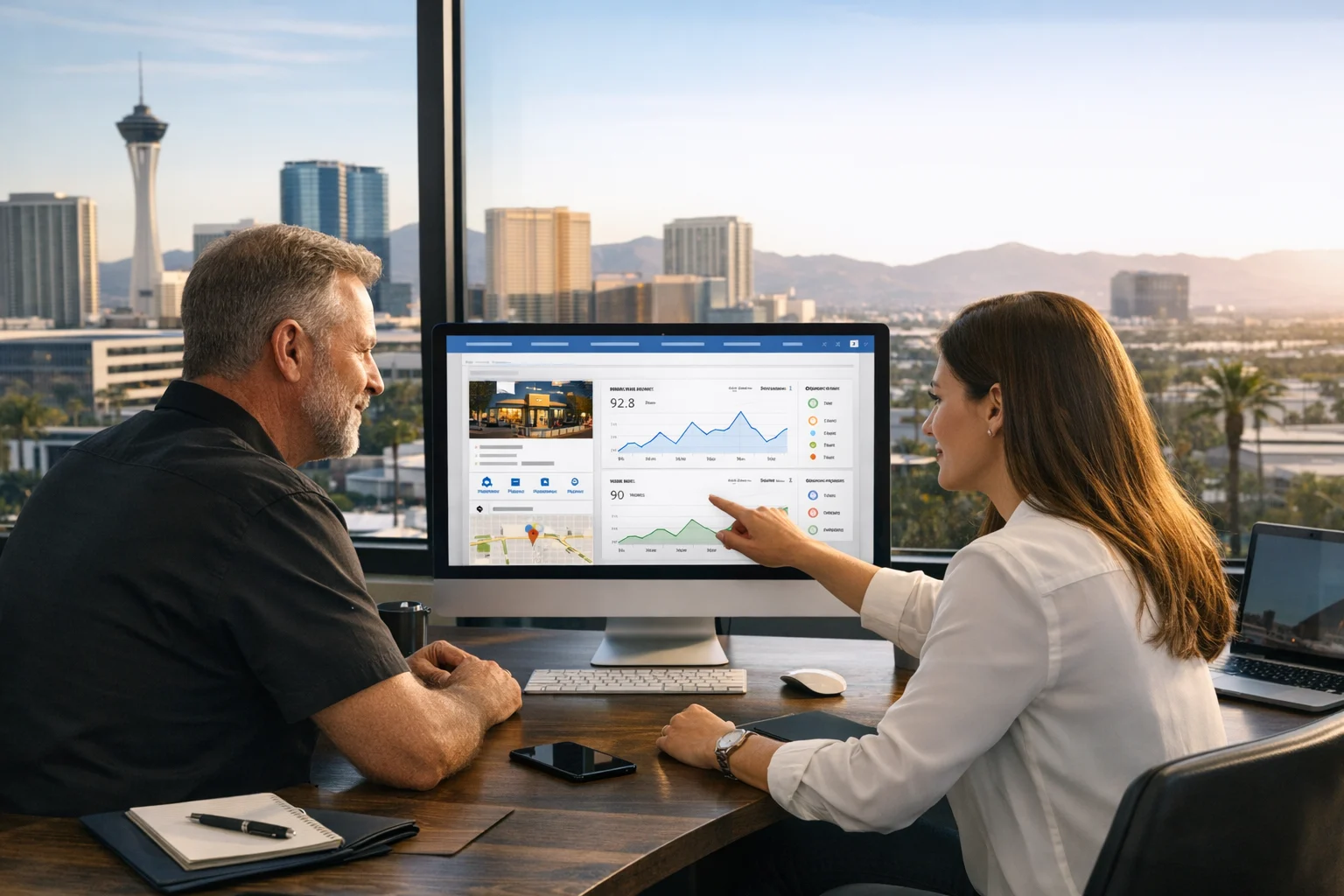
Your Google Business Profile remains one of the strongest local trust assets on the web. Even when people use AI tools, those tools often rely on local business data, reviews, categories, and map relevance to shape recommendations. For businesses targeting Las Vegas neighborhoods or service areas, this is not optional work. SiteLiftMedia has already shared practical Google Business Profile tips for Las Vegas companies that are worth applying.
Build real location relevance
Do not fake local presence with templated pages. If you serve Las Vegas, Henderson, Summerlin, North Las Vegas, and nearby markets, create location content that reflects how buyers in those areas search and what they care about. Mention service specifics, local proof, neighborhood context, and relevant campaign timing. Summer campaigns, tourism surges, event-driven demand, and seasonal competition are all part of the local market reality.
Match your website to local intent
People searching for Las Vegas SEO, SEO company Las Vegas, or web design Las Vegas are often comparing providers quickly. Your local landing pages should make it easy to evaluate fit. Show the services, process, proof, response times, and industries you support. Do not bury your capabilities under vague agency language.
If your business is not an agency, the same principle still applies. A plumbing company, law firm, or medical practice that wants stronger local discovery needs service pages and local pages that answer specific search intent, not just city plus service repeated ten times.
Use reviews and reputation strategically
AI systems are heavily influenced by credibility signals. Reviews, testimonials, ratings, and off-site mentions help shape that credibility. Encourage reviews that mention the actual service delivered, location context, and business outcome. A review saying great company is fine. A review saying they improved our local SEO Las Vegas performance and doubled qualified calls is far more useful.
Authority now comes from more than backlinks alone
Backlinks still matter. Strong backlink building services can improve rankings, trust, and discovery. But authority in AI-driven search is broader than traditional link metrics.
Search systems look for corroboration. They want to see whether your brand is mentioned across relevant sites, directories, profiles, review platforms, local publications, podcasts, social channels, and industry resources. That means businesses should think beyond classic link outreach.
Here are a few authority plays that are working well:
- Digital PR and local mentions that connect your business to real expertise or community involvement
- Case studies with measurable outcomes, specific industries, and service context
- Expert commentary published on your site and referenced elsewhere
- Consistent branded profiles across social and business platforms
- Social media marketing that reinforces topical authority and keeps branded search demand active
One thing many companies miss is the role of brand search. If people actively search your name along with your service, market, or location, it sends a strong relevance signal. A business that is searched for directly in connection with technical SEO, custom web design, or cybersecurity services has a stronger identity than one that only tries to rank for broad generic terms.
Use your service stack as a competitive advantage
One of the most effective AI SEO strategies is not purely editorial. It is operational. Businesses with better websites, faster infrastructure, stronger security, and cleaner user journeys tend to perform better because every signal works together.
That is especially true for agencies and service providers. If your firm offers web design, SEO, PPC, app development, cybersecurity, system administration, and website maintenance under one roof, you can build a stronger digital experience than a provider who treats each channel in isolation.
At SiteLiftMedia, this matters because search visibility is rarely just a content problem. Sometimes rankings stall because site architecture is weak. Sometimes lead generation suffers because the page is slow on mobile. Sometimes local performance drops because listings are inconsistent. Sometimes AI visibility is limited because your business category, services, and authority signals are muddy. Sometimes a hacked plugin or server issue quietly damages trust.
When those issues are solved together, results compound. Better custom web design improves engagement. Better technical SEO improves crawlability. Better website maintenance supports uptime. Better server hardening protects site integrity. Better cybersecurity services reduce risk. Better content helps your brand get cited. Better local signals improve Las Vegas search visibility. That is the kind of integrated work that produces durable growth.
Measure what visibility beyond Google actually produces
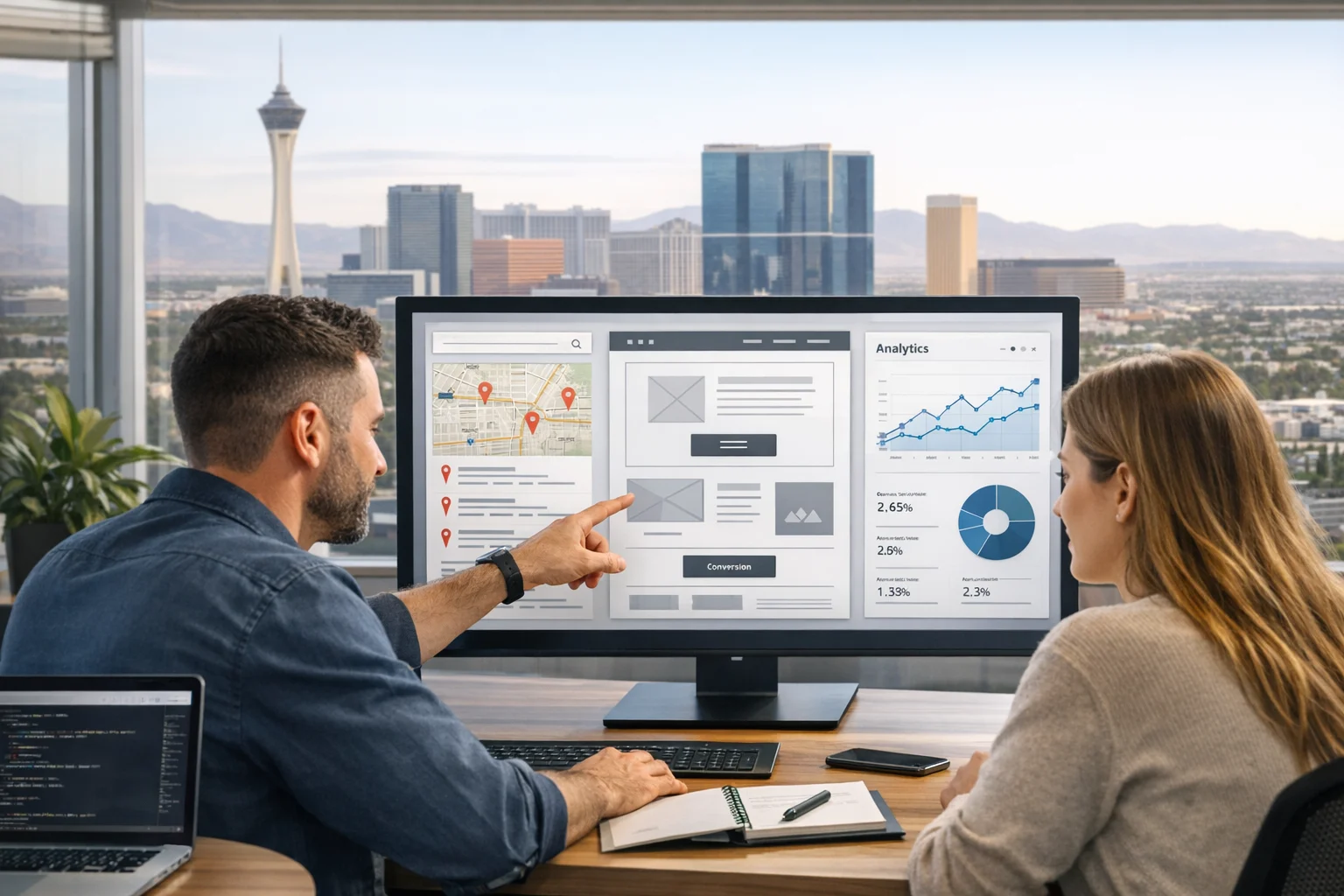
If your reporting still centers only on rankings for a few keywords, you are missing the bigger picture. AI SEO requires broader measurement.
Look at metrics such as:
- Branded search growth
- Referral traffic from AI and assistant tools where trackable
- Growth in impressions across informational and comparison queries
- Lead quality by landing page and service line
- Google Business Profile interactions
- Assisted conversions from blog, FAQ, and resource content
- Share of visibility for local service queries in target markets like Las Vegas
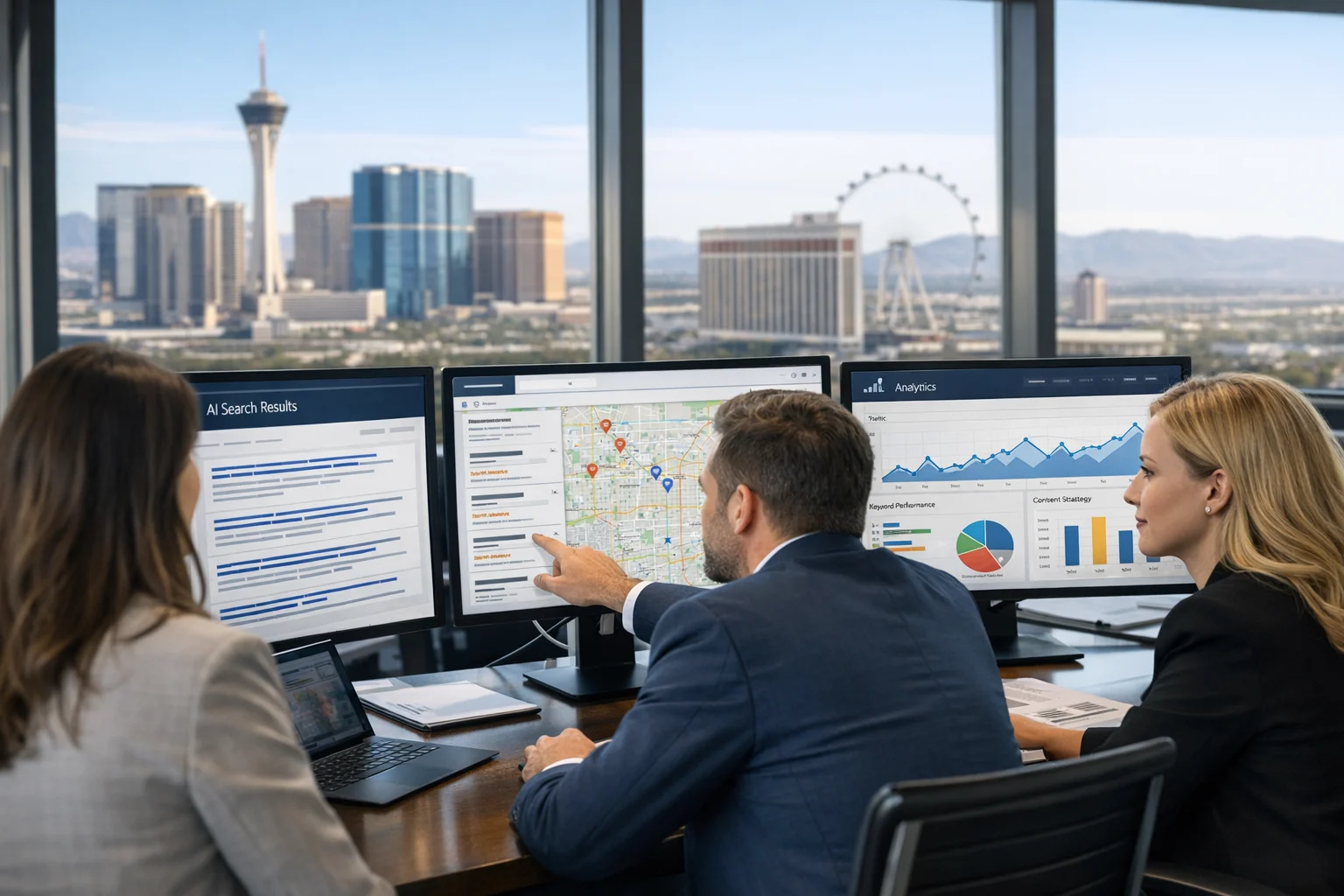
You should also test your brand in AI search environments directly. Ask the same kinds of questions your prospects ask. See which competitors get named. Check which pages are being cited. Review whether your service descriptions are accurate. If the answers are weak or inconsistent, that is not just an AI problem. It is a digital footprint problem.
Where agency support changes the outcome
Most in-house teams do not lack ideas. They lack time, cross-functional depth, or a practical framework for execution. AI SEO touches content strategy, local optimization, technical SEO, analytics, site performance, design, and brand authority. It moves faster when one team can connect those pieces.
An experienced agency can make a real difference here. A good partner should be able to audit your current footprint, identify where your brand is easy or hard for AI systems to understand, fix technical barriers, sharpen location and service pages, build stronger authority signals, and connect those improvements to lead generation.
For businesses in Nevada, it also helps to work with a team that understands the pace and competition of the local market. Las Vegas companies often need campaigns that move quickly, support seasonal demand, and keep performance stable during spikes in traffic and competition. For nationwide brands, the challenge is usually scale, consistency, and market-specific messaging.
If your business wants visibility beyond Google without losing the fundamentals that still drive revenue, SiteLiftMedia can help you map the next steps. Whether you need Las Vegas SEO, technical SEO, custom web design, backlink building services, stronger local search performance, or a more secure website foundation, reach out and build a search presence AI systems and real buyers can trust.
Photo Gallery