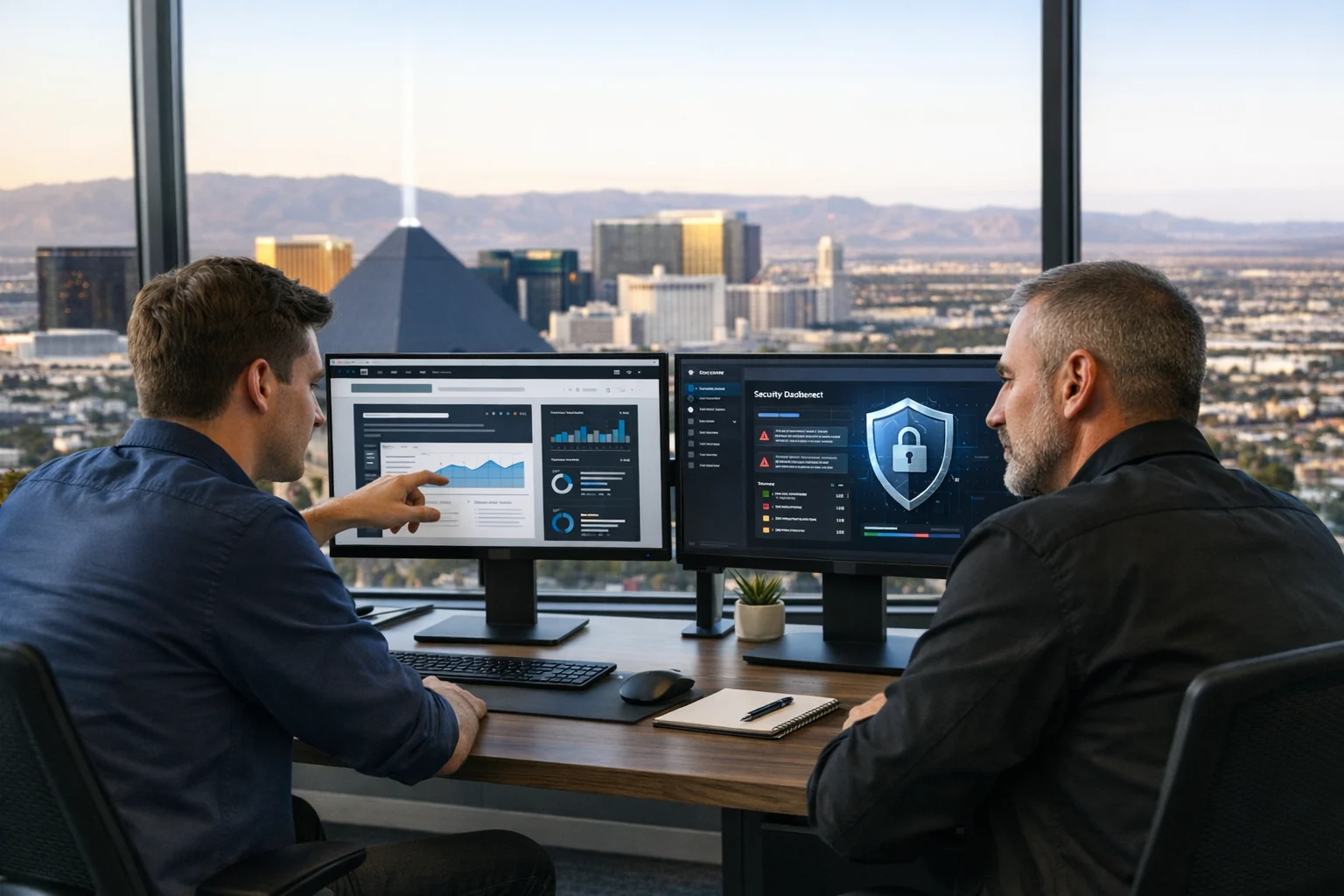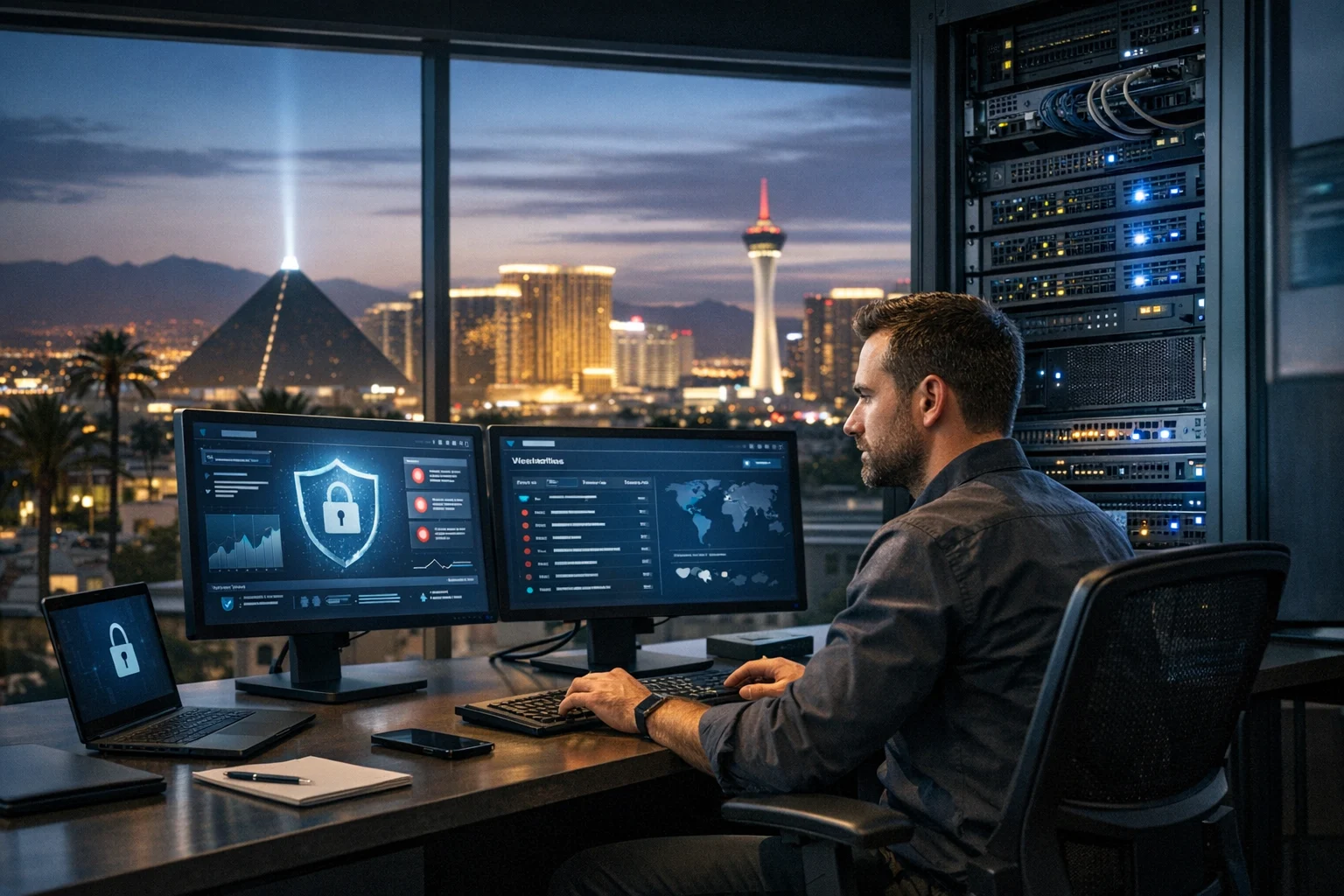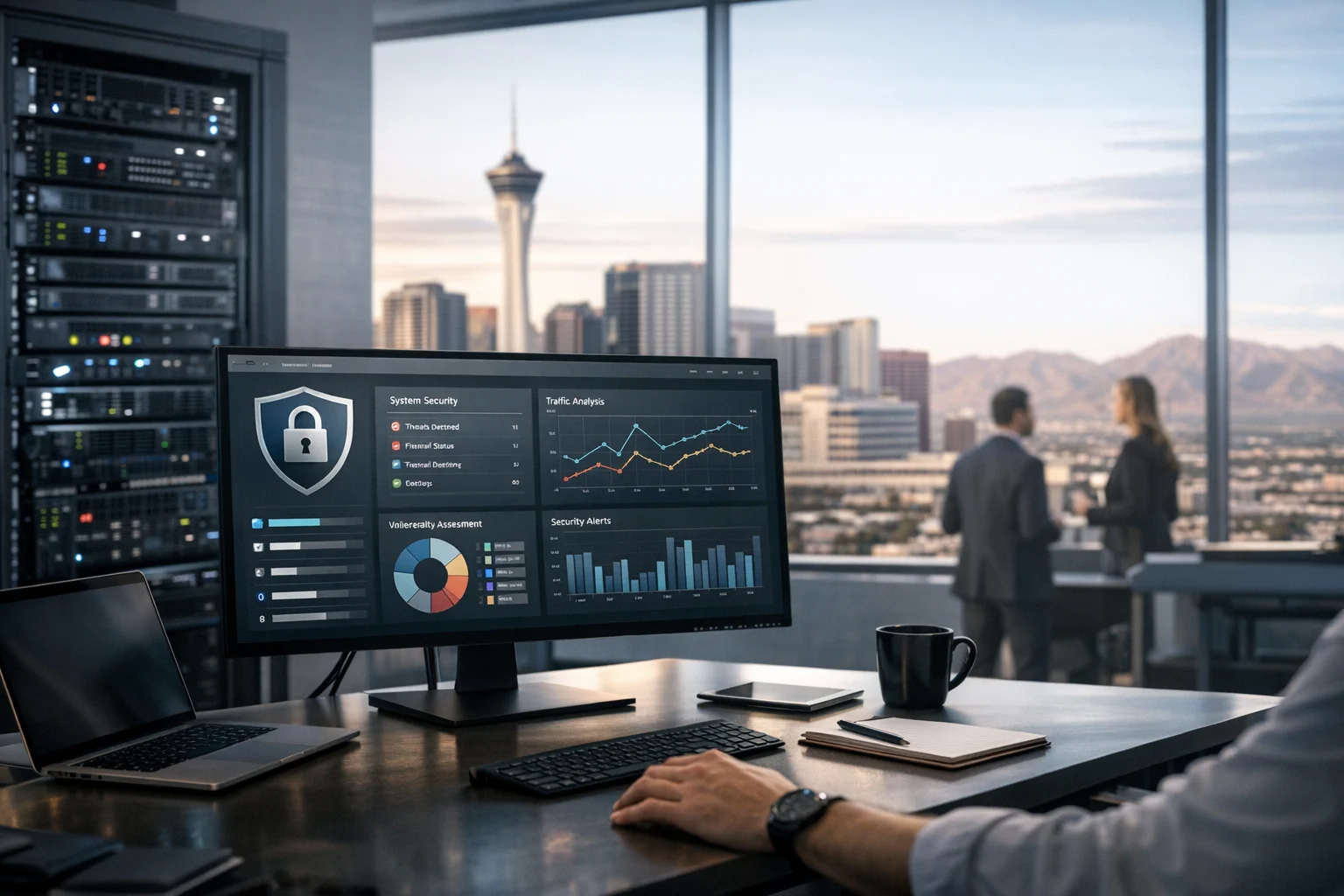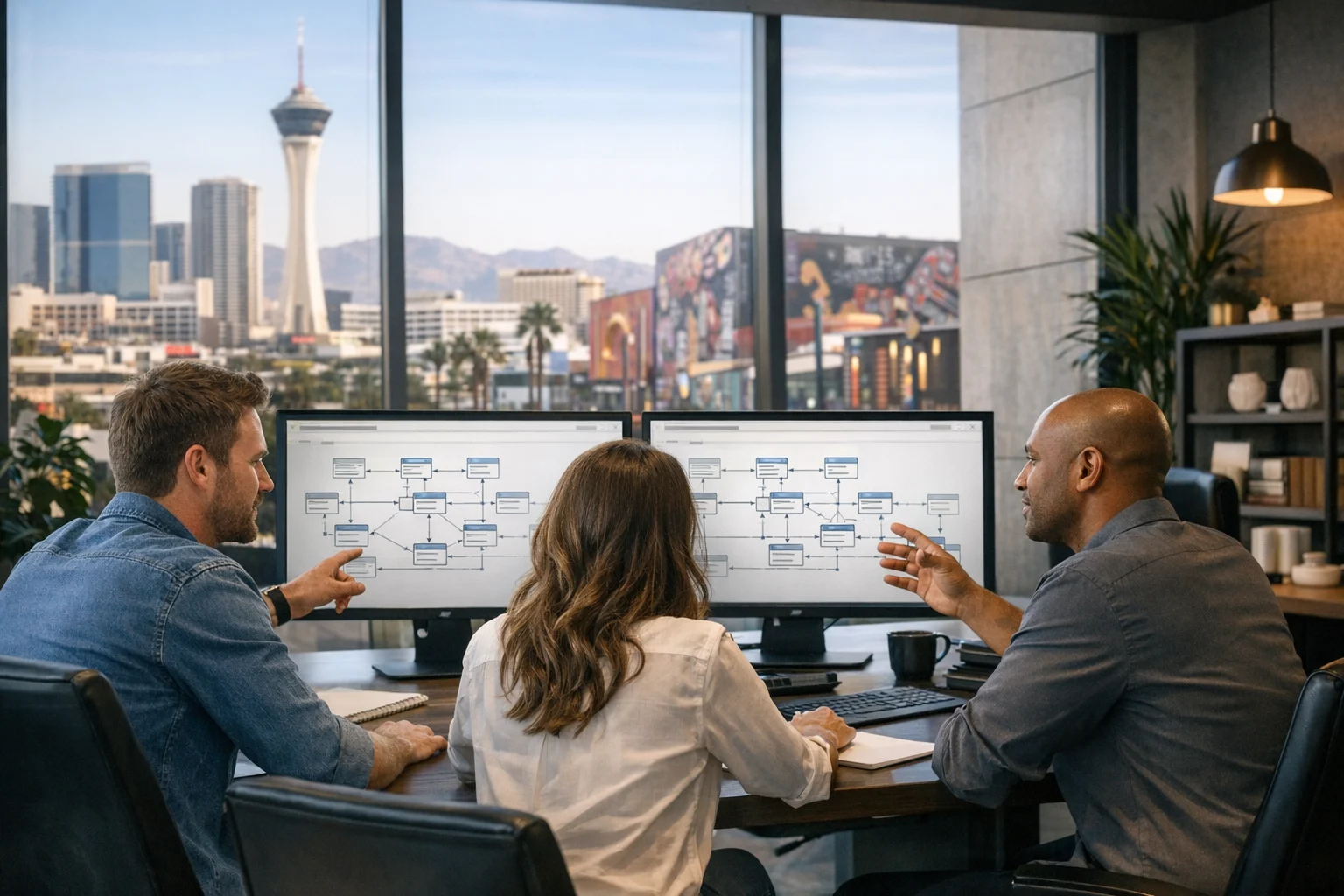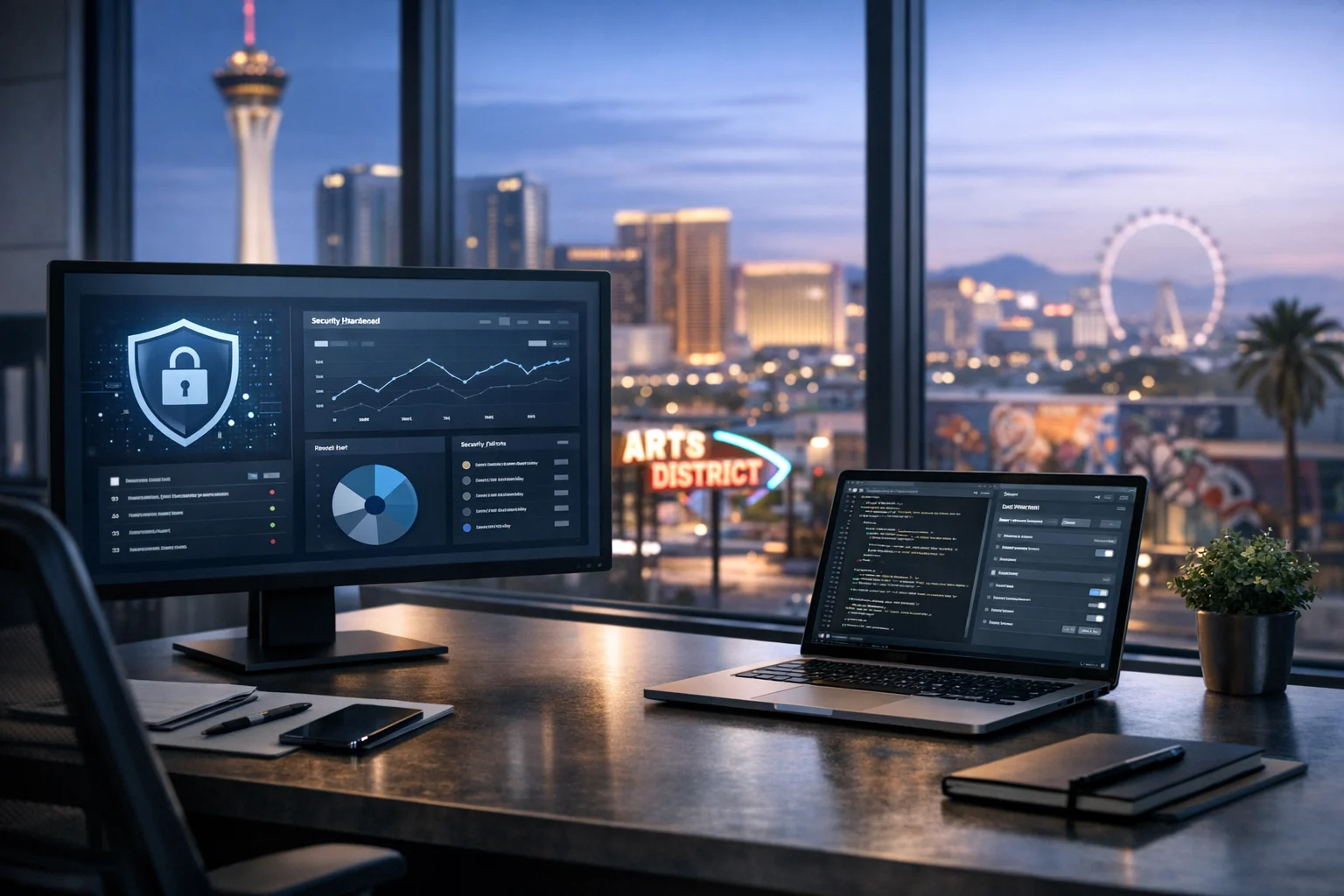
For Las Vegas businesses, a website is not just a digital brochure. It is your storefront, lead generator, reservation tool, portfolio, sales rep, and often the first real impression someone gets before they call, book, visit, or buy. When that site gets hacked, slowed down, blacklisted, or knocked offline, the damage goes far beyond your hosting account. It affects revenue, search visibility, customer trust, and the momentum behind every campaign you are running.
Cybersecurity and server hardening matter for companies in Las Vegas, Nevada. If you are a restaurant near the Las Vegas Arts District, a contractor competing for local search traffic, a medical practice protecting patient inquiries, or a creative brand trying to stand out during tourism season, your website needs to stay secure and stable. A single vulnerability can undo months of Las Vegas SEO work, hurt paid campaign performance, and make your brand look unreliable at the worst possible time.
At SiteLiftMedia, we see this firsthand. Businesses often come to us focused on Las Vegas web design, lead generation, or stronger rankings. Then we audit the site and find outdated plugins, weak login security, poor server configuration, spam pages, broken forms, missing backups, or hosting environments that are one bad bot wave away from downtime. Good marketing cannot sit on a weak technical foundation. Security is part of growth.
Why security matters even more in a high visibility market like Las Vegas
Las Vegas is competitive by default. Businesses here are fighting for attention from locals, visitors, event traffic, convention traffic, and people comparing multiple options quickly. When your site is down, painfully slow, or flagged as unsafe, those users do not wait around. They leave, and they often end up on a competitor's website instead.
This is especially true for businesses that depend on strong brand visibility. In the Las Vegas Arts District, for example, creative brands, restaurants, nightlife companies, studios, and local retailers rely on presentation just as much as performance. A hacked homepage, broken menu page, or compromised booking form is not just a technical issue. It undercuts the brand experience you worked hard to build.
Security also matters because local search intent is highly action driven. Someone searching for a service company, lawyer, med spa, restaurant, or e-commerce product in Las Vegas usually wants to act soon. If your site loads poorly, redirects strangely, or triggers browser warnings, you lose that click and the future conversions tied to it.
That is one reason a smart Las Vegas web design strategy should always include cybersecurity planning. Strong design gets attention. Strong security protects the asset generating that attention.
What cyber incidents really cost a local business website
Many business owners think of hacking as a worst case scenario that mostly affects large corporations. In reality, smaller and mid sized business websites are frequent targets because they are often easier to exploit. Attackers look for outdated CMS installs, vulnerable plugins, exposed admin paths, weak passwords, and poorly configured hosting. They do not need your business to be famous. They just need it to be unprotected.
When a site gets compromised, the cost shows up in several places at once:
- Lost leads and sales from downtime, broken forms, or checkout failures
- SEO damage from spam pages, malicious redirects, malware warnings, or deindexing
- Paid media waste when traffic from ads lands on a page that is slow, broken, or unsafe
- Brand trust issues if users see suspicious popups, phishing behavior, or security alerts
- Operational disruption when teams stop normal work to deal with cleanup and restoration
- Recovery costs for emergency support, development time, and forensic review
For a business running seasonal promotions, summer campaigns, local events, or weekend traffic pushes, even a short interruption can be expensive. That is why cybersecurity services should not be treated like a back burner IT item. They directly protect the return on your marketing investment.
What server hardening actually means
Server hardening is the process of reducing security risk at the hosting and infrastructure level. In plain English, it means making the environment that runs your website harder to exploit. That includes locking down unnecessary access, keeping software patched, tightening permissions, and monitoring for suspicious behavior before it turns into a full incident.
Business owners often hear the phrase and assume it is something abstract or overly technical. It is not. Server hardening is practical, and it directly affects website reliability.
Depending on the setup, solid hardening can include:
- Keeping the operating system, server software, CMS, plugins, and dependencies updated
- Disabling unused services, ports, themes, plugins, and admin accounts
- Using strong password policies and multi factor authentication
- Restricting login attempts and blocking malicious IP activity
- Setting proper file permissions and ownership rules
- Installing SSL correctly and forcing secure connections
- Using a web application firewall and malware scanning
- Separating staging from production environments
- Configuring automated backups with tested restore procedures
- Monitoring uptime, server logs, file changes, and resource spikes
When people compare web design Las Vegas providers, they often focus on visuals, page speed, and pricing. Those matter, but the bigger question is whether the site is being launched on a hardened, maintainable foundation. A polished website on a weak server setup is still a business risk.
How security protects SEO, visibility, and local lead flow
There is a strong connection between security and search performance. It is not always obvious at first, but once you have cleaned up hacked pages or recovered a site that lost trust signals, the relationship becomes clear.
Search engines want to send users to reliable destinations. If your site is compromised, redirects to spam, loads erratically, or gets flagged by browsers, that reliability disappears. Even before a full penalty or warning occurs, security issues can affect crawl efficiency, index quality, and user behavior signals.
Security also supports the technical side of search. Good technical SEO depends on a stable environment. Clean code, fast responses, proper redirects, optimized assets, secure forms, and dependable uptime all work better when the server is configured correctly and maintained regularly. For many companies, that maintenance becomes part of a broader Las Vegas website maintenance plan rather than a one time fix.
A secure site can also protect the local signals that matter for local SEO Las Vegas campaigns. If your location pages, service pages, and contact forms stay live and trustworthy, you have a better chance of supporting Google Business Profile optimization, improving engagement, and strengthening map pack rankings. Structured local content, service area pages, and review driven landing pages only work if users can access them without friction.
That includes your schema strategy. Structured data and FAQ schema can help search engines understand your content, but they should be implemented on a site that is actively maintained and monitored. Schema does not rescue a compromised website. It amplifies what is already healthy.
If you want a deeper look at the connection between security controls and local site protection, SiteLiftMedia has also covered how cybersecurity protects Las Vegas business websites in more detail.
Common website vulnerabilities we see on Las Vegas business sites
When we review websites for local companies, the same patterns show up again and again. The business may have invested in design, content, or ads, but the underlying environment has been neglected.
Outdated plugins and themes
This is one of the biggest problems on content managed websites. An old plugin can expose admin access, inject spam, or create server load problems. Businesses often do not realize anything is wrong until rankings drop or customers report issues.
Weak login protection
Shared passwords, no multi factor authentication, default usernames, and unlimited login attempts make it easy for attackers to automate brute force attempts. This is common on smaller business sites where multiple vendors have had access over time.
Poor hosting configuration
Cheap hosting can create real problems if it lacks isolation, monitoring, patching discipline, or sensible security defaults. A business may think it saved money, but the hidden cost is slower performance and greater exposure.
Abandoned landing pages and old campaign assets
We often see old PPC landing pages, expired promotions, hidden staging folders, and test installs left online for years. These forgotten assets can become easy entry points. If you are running frequent campaigns, site hygiene matters.
Broken backup and restore processes
Many businesses believe they have backups. Then an incident happens and nobody has tested the restore, the backup is incomplete, or the retention period is too short. Backups are only useful if recovery is real.
Neglected forms and data handling
Contact forms, quote forms, reservation requests, and patient inquiry forms often collect valuable information. If those forms are not secured properly, you risk spam, lost leads, and possible exposure of customer data.
Security priorities by business type in Las Vegas
Not every business website faces the exact same risks. The security plan should match the type of traffic, the value of the data, and the role the website plays in revenue generation.
Restaurants, nightlife brands, and Arts District businesses
These brands often rely on quick mobile traffic, menus, event pages, galleries, reservations, and social crossover. In the Las Vegas Arts District, presentation and speed matter because people make fast decisions. If the site is slow before a weekend event, or a hacked script breaks the menu and booking flow, business is lost immediately.
For these companies, uptime monitoring, image optimization, form protection, plugin updates, and fast hosting matter just as much as visual polish. Good Las Vegas website design has to be protected at the infrastructure level.
Professional firms, contractors, medical, and wellness brands
These businesses often depend on trust, lead forms, and search visibility for high intent keywords. A law office, dental clinic, med spa, HVAC company, or home service business needs a secure contact path because the website is often the first step in a serious buying decision. If a user hits an unsafe browser warning, trust is gone.
For these brands, stronger access control, form security, routine patching, logging, backups, and safe handling of inquiry data should be standard. This is also where a conversion focused website needs security woven into the user journey, not bolted on afterward.
E-commerce and multi location brands
If you process transactions, manage inventory, or run multiple location pages, the attack surface gets larger. Product filters, account logins, promotional pages, coupons, checkout flows, and third party integrations all increase the number of points that need to be monitored and maintained.
These businesses need disciplined patching, server hardening, secure payment handling, bot mitigation, and strong technical oversight. A security issue during peak tourism or holiday purchasing windows can hurt revenue fast.
Why secure infrastructure improves marketing performance
Security is not separate from marketing. It improves marketing performance by protecting the environment where your traffic turns into leads and sales.
Think about what happens when a company invests in custom web design, paid ads, content, and local optimization. The goal is simple, bring the right visitors in and convert them efficiently. But if the site is unstable, the conversion path breaks down. Forms fail. Pages lag. Tracking gets disrupted. Sessions bounce. The campaign looks weaker than it really is because the site cannot support the traffic.
That is why secure, fast hosting pairs so well with performance centered design. SiteLiftMedia recently wrote about how performance driven design is changing business websites, and security is part of that same conversation. A fast site that stays clean, monitored, and hardened gives your SEO, content, and PPC work a much better chance to convert.
The local side matters too. If you are working on Las Vegas SEO, your website should support your local entity signals, location relevance, and trust. That can include clean service pages, localized content, review integration, and stronger Business Profile alignment. If you are improving your profile language, this guide on better Google Business Profile descriptions can help connect your website messaging with your local presence.
What to ask when comparing Las Vegas agencies and vendors
If you are evaluating a Las Vegas web designer, a Las Vegas SEO agency, a Las Vegas SEO firm, or an SEO company Las Vegas businesses trust for growth, ask direct questions about security. Do not assume it is included. Do not assume your host is handling everything either.
Ask questions like these:
- Who is responsible for plugin, theme, CMS, and server updates?
- Do you use multi factor authentication for admin access?
- What firewall, malware scanning, and login protection are in place?
- How often are backups created, and have restores been tested?
- Do you monitor uptime, file changes, and suspicious traffic patterns?
- How do you secure form submissions and lead data?
- What is the incident response process if the site is compromised?
- How do you separate development, staging, and production environments?
If the answers are vague, security is probably reactive rather than planned. That can create bigger problems later, especially if the website is central to lead generation or e-commerce.
This is one area where working with a digital marketing agency Las Vegas companies can trust for both growth and technical execution makes a real difference. The design, SEO, hosting, content, maintenance, and security sides of the site should work together.
Where AI SEO fits into website security
Many businesses are now comparing traditional agencies with newer providers offering Las Vegas AI SEO or AI SEO Las Vegas services. AI can absolutely help with content workflows, page expansion, research, internal linking, and competitive analysis. But when businesses scale content faster, they also need stronger governance around site quality and platform integrity.
If dozens of new pages are being published, templates are changing, or automations are touching key site areas, controls matter. Permissions matter. Logging matters. Staging matters. The faster a site grows, the more important disciplined maintenance becomes.
AI should not create a messy, unsecured publishing process. Used correctly, it can support better organization and monitoring. Used carelessly, it can multiply weak practices. That is why SiteLiftMedia treats AI SEO as part of a larger technical ecosystem, not a shortcut separate from infrastructure.
What a practical security plan looks like for a Las Vegas business
Most businesses do not need enterprise complexity. They need a disciplined, repeatable process. A practical security plan usually includes hardened hosting, routine updates, access control, malware scans, backups, uptime alerts, tested recovery, and regular review of site health. It should also include content and landing page cleanup, especially after seasonal promotions or campaign cycles.
If you are preparing for stronger competition, peak season traffic, or a website redesign, that is the right time to address security. Do it before the campaign, not after a problem. The brands that stay visible in search and convert consistently usually treat security as part of operations, not as a panic purchase.
If your site supports leads, bookings, phone calls, in store visits, or online sales, and you are comparing providers for Las Vegas web design, local SEO Las Vegas, website maintenance, or cybersecurity support, ask for a real audit of the technical foundation behind the site. SiteLiftMedia can review your setup, identify risk areas, and build a more secure growth platform before those weaknesses cost you rankings or revenue. If you want a practical plan instead of generic advice, contact us.
Local Focus: Las Vegas Search Visibility
SiteLiftMedia works with businesses that want stronger visibility across the Las Vegas valley. The map below highlights the local market context for this article and the kind of location based search intent that matters when people compare a Las Vegas web designer, Las Vegas SEO agency, or local SEO firm.
Frequently Asked Questions
Does cybersecurity affect Las Vegas SEO performance?
Yes. Malware, spam pages, unsafe browser warnings, downtime, and broken redirects can hurt crawlability, user trust, and conversions. A secure site gives your Las Vegas SEO campaign a more stable foundation.
What does server hardening include for a small business website?
Server hardening usually includes updates, firewall rules, stronger login protection, proper file permissions, SSL setup, malware scanning, backup systems, and monitoring. The goal is to reduce vulnerabilities before they become incidents.
What should I ask a Las Vegas web designer or SEO agency about website security?
Ask who handles updates, backups, malware scans, uptime monitoring, access control, form security, and recovery planning. If the agency cannot explain the process clearly, security may not be built into the service.
Can website security improve conversion rates?
Yes. Secure websites tend to load more reliably, protect forms, reduce errors, and build more trust with visitors. That supports better performance on service pages, PPC landing pages, and e-commerce checkouts.
How does AI SEO connect to cybersecurity?
AI SEO can help businesses scale content and optimization, but faster publishing also requires stronger controls. Permissions, staging, monitoring, and maintenance become even more important as the site grows.
Photo Gallery