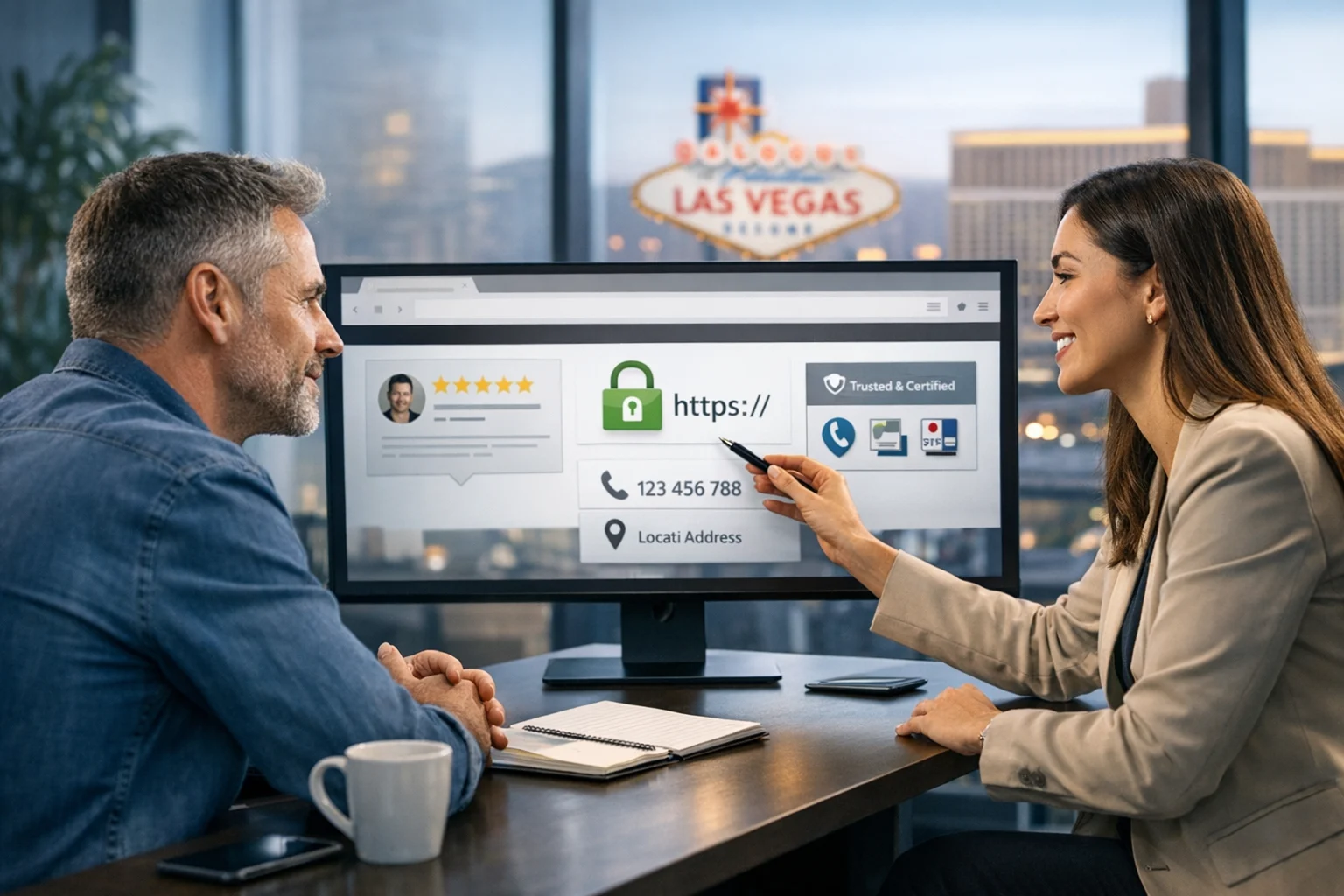
AI search is changing how brands get discovered. People still use Google the traditional way, but they also ask ChatGPT, Gemini, Perplexity, Copilot, and other AI-powered tools to recommend agencies, explain services, compare providers, and surface trusted sources. That shift matters because these systems do more than rank pages. They cite brands, mention companies by name, summarize expertise, and pull from businesses they see as reliable.
If your company wants to show up in those responses, you need more than rankings for a few keywords. You need authority that is clear enough for both search engines and AI systems to recognize. That means building a brand that is consistently referenced, technically trustworthy, easy to understand, and backed by real signals across the web.
At SiteLiftMedia, we see this as the next practical layer of modern SEO. It does not replace strong search optimization. It builds on it. Brands that already invest in content, technical SEO, digital PR, web performance, and reputation management are in a much better position to earn AI search citations and mentions. Brands still relying on thin pages, scattered messaging, or weak off-site signals will have a harder time showing up.
For business owners and marketing leaders, especially in competitive service markets like Las Vegas, that creates a real opportunity. If your competitors are still focused only on blue-link rankings, you can move ahead by building the kind of authority AI platforms actually trust.
What AI search citations and mentions really come from
AI tools do not invent brand authority out of nowhere. They pull patterns from what they can crawl, retrieve, interpret, and validate. In simple terms, they look for evidence. They want to see whether your business is consistently associated with a topic, whether trusted websites reference you, whether your own website clearly explains what you do, and whether your digital footprint lines up across channels.
That is why brand authority for AI search is not just about publishing more blog posts. It is about building a durable set of signals. Some of the strongest include:
- Clear topical expertise on your website
- Brand mentions on reputable industry and local websites
- Strong backlink profiles from relevant publications and resources
- Consistent business data across directories and platforms
- Technical site quality including crawlability, speed, and structured content
- Real-world trust factors like reviews, case studies, credentials, and proof of results
- A secure and stable web presence that does not look neglected or risky
If you want a deeper look at where AI visibility is headed, SiteLiftMedia has also covered why brands should care about GEO as AI search grows. The short version is this: authority is becoming more visible, more reference-based, and more tied to brand reputation than many companies realize.
Start with a website that deserves to be cited
A surprising number of businesses want more mentions in AI search while their websites still make it hard to understand who they are, what they do, and where they work. That is a problem. If your site lacks clarity, AI systems are less likely to pull from it with confidence.
Your website should make these points unmistakable:
- What services you offer
- Who you help
- Which geographic markets you serve
- What makes your process or expertise different
- Why someone should trust you
This sounds basic, but many sites still bury critical information behind vague copy. If you are an SEO company Las Vegas businesses can hire, say that clearly. If you provide nationwide support in technical SEO, custom web design, social media marketing, PPC, app development, website maintenance, cybersecurity services, and system administration, your site should explain each area in plain language.
For many businesses, that starts with better service architecture. Every major service should have a strong standalone page. Supporting topics should be covered in related content. Your homepage should establish brand-level authority, and your service pages should go deeper into the details. If you are rebuilding or expanding your site, custom web design matters here because authority is not just verbal. It is structural. Clean navigation, thoughtful page hierarchy, and strong internal linking help search systems understand your expertise.
We often tell clients that if a human decision-maker cannot quickly figure out whether your company is credible, an AI retrieval system will struggle too.
Build topical authority before chasing citations
Brand mentions in AI search usually follow topical authority, not the other way around. You become worth mentioning when your website shows repeated, high-quality coverage of the topics you want to own.
That means going beyond isolated service pages and publishing connected content around your specialty. For example, if you want to be known for Las Vegas SEO, do not stop at one page targeting that phrase. Publish useful resources on local SEO Las Vegas strategy, map pack visibility, technical SEO fixes for service businesses, content expansion for competitive markets, and how PPC and SEO support each other.
The same principle applies outside search marketing. If your company offers penetration testing, server hardening, business website security, and broader cybersecurity services, your content should show real depth there too. AI systems are far more likely to mention brands that appear consistently across a topic cluster than brands with one shallow page and no supporting material.
SiteLiftMedia has written about how to build topical authority for local service websites, and that framework applies directly here. The more comprehensive and connected your content ecosystem becomes, the easier it is for AI tools to associate your brand with expertise.
Earn mentions from other sites that already have trust
Authority is rarely self-declared. Other websites help validate it. That is why backlink building services still matter, but the goal should be quality references, not volume for its own sake.
If reputable websites in your industry, region, or niche mention your company, link to your content, quote your team, or cite your resources, that strengthens the brand graph around your business. AI systems can pick up on those repeated associations. In many cases, they trust corroborated information more than isolated claims on your own website.
What actually works here?
- Digital PR tied to useful insights, original data, or local market commentary
- Guest contributions on relevant business, marketing, technology, or regional publications
- Local partnerships with chambers, organizations, charities, and events
- Industry resource pages that include your tools, checklists, or expert commentary
- Case study distribution when you have strong, credible outcomes to share
- Podcast, webinar, and interview appearances that reinforce your expertise
For a Las Vegas business, local citations and editorial mentions can be especially valuable. A brand that appears on trusted Nevada business sites, in local media coverage, on regional directories, and across Las Vegas community pages builds stronger contextual relevance than one that only chases generic national links.
That said, national authority still matters. The best approach is usually layered. Build strong local trust in Las Vegas and pair it with niche authority in the wider industry. That combination gives AI systems more confidence when they need to recommend you to someone asking for a local provider or a specialized agency.
Use entity consistency to make your brand easier to understand
AI search works better with brands it can identify cleanly. If your business name, service descriptions, team bios, location details, and online profiles are inconsistent, you create unnecessary ambiguity.
Entity consistency is one of the least glamorous parts of brand authority, but it matters. Make sure your business name is used the same way across your website, Google Business Profile, social profiles, directories, press mentions, and industry listings. Keep your contact details accurate. Use the same service language where appropriate. Build out leadership bios and company information so your expertise is attached to real people, not faceless pages.
Structured data can also support understanding. Schema alone will not make you famous, but it can reinforce key business details, organization information, service relationships, and author identity. Combined with strong page content and external mentions, it makes your digital footprint easier to interpret.
This is one reason redesign planning and infrastructure cleanup matter so much. Many older sites have years of accumulated inconsistencies. If you are heading into a spring marketing push, it is smart to audit these issues before launching new campaigns.
Local authority matters more than many brands think
Even in AI search, local intent is strong. Users still ask for the best agency near them, the right vendor in their city, or a trusted provider for a specific metro area. For businesses targeting Nevada, that means your Las Vegas signals should be deliberate and visible.
If you want to rank and get mentioned for phrases like Las Vegas SEO, web design Las Vegas, local SEO Las Vegas, or SEO company Las Vegas, build your local authority in layers:
- Create well-optimized Las Vegas-focused service pages
- Maintain a strong and accurate Google Business Profile
- Earn reviews that mention actual services and results
- Publish local case studies and local market content
- Get featured on trusted Las Vegas business websites and directories
- Use localized internal linking between service and location content
- Support map visibility with consistent citation management
Map pack performance can reinforce local trust across search environments, so if local lead generation matters to you, this guide on how Las Vegas businesses can improve map pack rankings is worth reading.
One thing we see often is a company trying to target Las Vegas without any real Las Vegas proof on the site. No local examples. No local testimonials. No location-specific service language. No local backlinks. That is not enough anymore. AI systems are trying to surface the most credible answer, not the brand that stuffed city names into a few paragraphs.
Trust is not just content. It is operations too
Brands often think authority is purely a content and PR issue. It is not. Technical stability, security, and infrastructure quality quietly support trust in ways that matter more than most marketing teams realize.
A slow, broken, insecure, or poorly maintained site can undermine authority. If your website throws errors, has pages disappearing, suffers from indexation problems, or shows obvious signs of neglect, it weakens your credibility. The same goes for outdated plugins, malware risks, mixed content warnings, or hacked pages that inject spam.
This is where technical SEO and operational support intersect. A healthy site should have:
- Reliable hosting and uptime
- Fast load performance on mobile and desktop
- Clean crawl paths and indexable page structures
- Secure configurations and SSL properly implemented
- Routine website maintenance
- Strong business website security practices
- Regular backups and monitoring
- Server hardening where needed
If your company handles sensitive data, works in regulated industries, or depends heavily on web lead flow, broader cybersecurity services matter too. Penetration testing, system administration, access controls, and secure deployment practices are not just IT concerns. They protect the integrity of your brand presence.
At SiteLiftMedia, this comes up often with growing businesses that are adding content and campaigns while their infrastructure is still fragile. Authority is hard to build on a shaky foundation. If your site needs performance cleanup, security tightening, or system administration support, fixing that operational layer can directly improve your visibility potential.
Create content AI assistants can actually trust
A lot of brand content still reads like it was written for no one. It is thin, repetitive, generic, and full of broad claims. AI systems are getting better at spotting the difference between surface-level copy and content with real informational value.
Trustworthy content usually shares a few traits:
- It answers specific questions clearly
- It reflects firsthand experience or process knowledge
- It includes examples, criteria, tradeoffs, or explanations
- It avoids exaggerated claims that cannot be supported
- It is updated when the market or technology changes
- It connects logically to related service and topic pages
This matters for both conversion and AI citation potential. If a tool is trying to answer a question about local SEO, redesign planning, infrastructure cleanup, or combining SEO with social media marketing, it will lean toward content that feels grounded and specific.
SiteLiftMedia has also covered how to build content AI assistants actually trust, and it is a useful framework for any brand that wants to become more visible in answer-based search.
Use social proof that reinforces expertise, not just popularity
Brand authority gets stronger when your proof points are concrete. That means showing work, outcomes, and real business context instead of relying only on slogans.
Useful trust assets include:
- Detailed case studies with measurable results
- Client testimonials that mention specific services
- Named team expertise and certifications where relevant
- Project examples for custom web design and development work
- Documented technical wins such as site speed, indexation, or security improvements
- Before-and-after examples tied to SEO, PPC, or web performance
For an agency, this is especially important. If you want to be cited as a credible provider, your site should not hide the evidence. A marketing manager comparing agencies in Las Vegas wants to see whether you can actually execute. A business owner evaluating providers nationwide wants proof that your team understands growth, infrastructure, and risk, not just traffic charts.
Social media marketing can help amplify these assets, but do not confuse visibility with authority. Social reach can support brand familiarity, especially when you distribute original insights and case study content. The authority comes from substance, consistency, and validation across channels.
Measure the signals that matter
If your goal is more AI search citations and mentions, traditional ranking reports only tell part of the story. You also need to watch broader authority indicators.
Some of the best metrics to monitor include:
- Branded search growth
- Referral traffic from earned mentions and links
- Growth in high-quality backlinks and unlinked brand mentions
- Increases in local visibility for Las Vegas service terms
- Engagement on key service and thought leadership pages
- Share of voice in search results and AI answer environments
- Lead quality from organic and referral channels
You should also test how your brand appears inside AI tools. Ask the kinds of questions your customers ask. See which brands get cited. Review what sources appear. If the same competitors keep showing up, they are leaving a stronger authority trail than you are. That gives you a roadmap for what to improve.
Common mistakes that keep brands out of AI mentions
Most businesses do not have an authority problem because they lack potential. They have an authority problem because their execution is fragmented.
- They publish scattered content with no clear topical ownership
- They neglect technical SEO and make their sites harder to crawl and trust
- They chase low-quality links instead of relevant editorial mentions
- They target local markets weakly with thin city pages and no local proof
- They ignore site health while pages break, load slowly, or become outdated
- They fail to document results so their expertise never becomes visible
- They outsource content blindly and end up with generic copy that sounds like everyone else
Fixing these issues usually requires coordination between strategy, design, content, SEO, development, and operations. That is exactly why many growing companies reach out to an agency instead of trying to patch everything internally.
What building authority looks like in practice
For most brands, the right plan is not complicated. It is disciplined. Start with a site and service structure that clearly defines your expertise. Improve technical SEO so the site is crawlable, fast, and stable. Expand content around the topics and locations you want to own. Strengthen your local presence if Las Vegas or other metro markets matter. Earn credible mentions and backlinks from relevant sources. Tighten website maintenance, security, and operational reliability so your digital presence does not undermine trust.
That kind of work compounds. One strong service page helps. Ten connected assets help more. One local citation helps. A clean, consistent local authority footprint helps far more. One press mention is useful. A steady pattern of industry references is what turns your brand into a source.
If your team wants help putting that system together, SiteLiftMedia works with businesses across the country and has deep experience supporting companies that need stronger visibility in Las Vegas, Nevada. Whether you need Las Vegas SEO, web design Las Vegas support, technical SEO cleanup, backlink building services, content expansion, cybersecurity services, or a more stable website and infrastructure stack, now is the time to get your authority strategy aligned. Contact SiteLiftMedia to build a brand AI search engines are more likely to cite, mention, and trust.
Photo Gallery