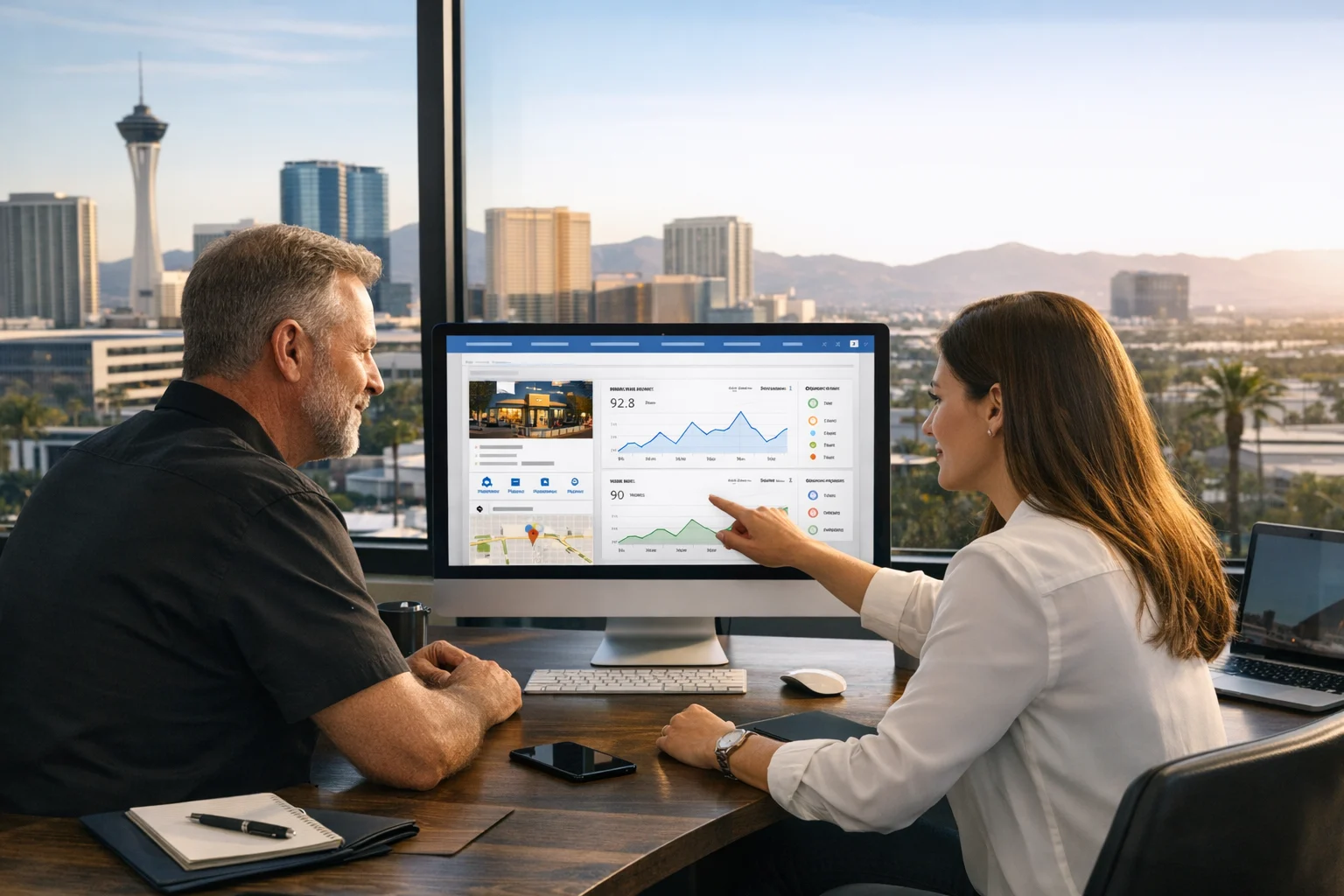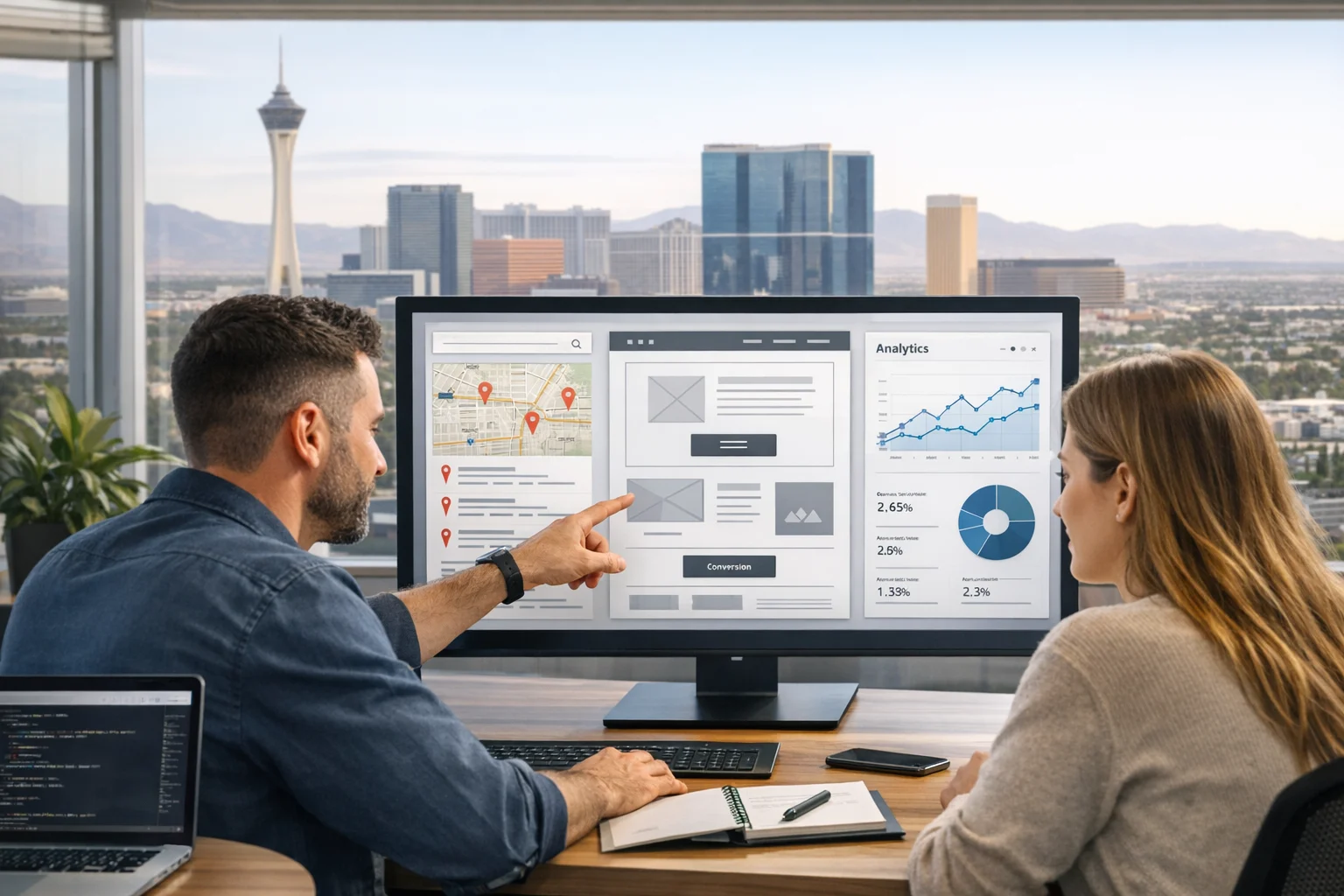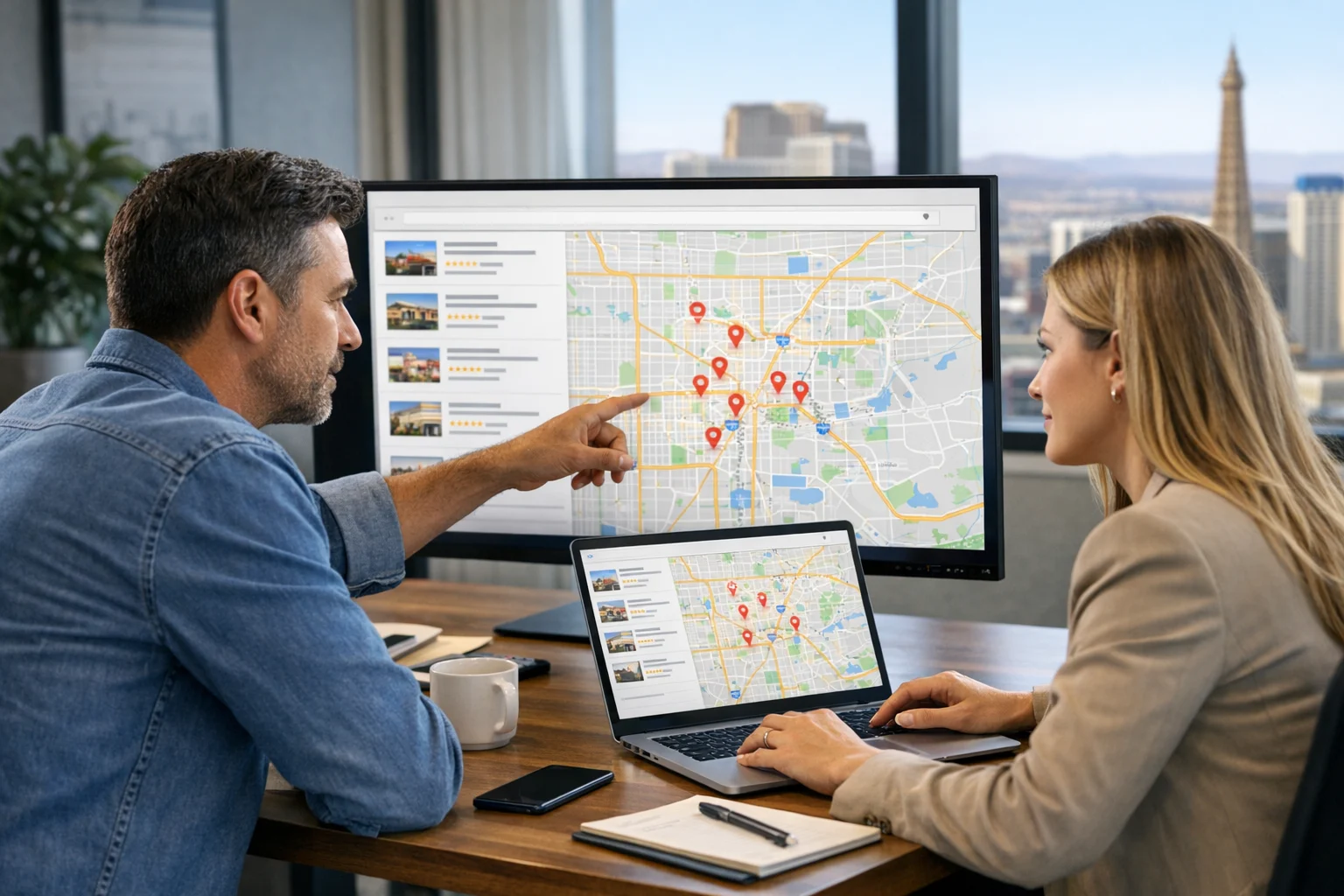
If your business relies on local leads, map pack visibility can have a big impact. When someone searches for a plumber, dentist, lawyer, med spa, HVAC company, or restaurant nearby, Google often shows three local listings before the regular organic results. Those three spots drive calls, direction requests, website visits, and a large share of high intent traffic.
We see this all the time at SiteLiftMedia. A company can have a solid website and still struggle to appear in the map pack. Another business with a less polished site can outrank stronger brands because its local signals are better, its Google Business Profile is more dialed in, and its reputation looks more trustworthy to both customers and Google.
For Las Vegas businesses, competition is even tighter. Search intent around Las Vegas SEO, local SEO Las Vegas, home services, hospitality, healthcare, and legal categories is aggressive. There are more competitors, faster review velocity, and more businesses fighting for a small number of visible positions. The good news is that map pack rankings are not random. There are patterns, and once you understand what Google is looking for, you can improve your odds in a practical way.
This guide breaks down how to improve map pack rankings for local businesses without leaning on vague advice or generic SEO filler. These are the areas we focus on when helping clients across the country, especially businesses targeting Las Vegas, Nevada search demand.
What actually drives map pack rankings
Google has said local rankings are largely influenced by relevance, distance, and prominence. That sounds simple, but each one includes a lot of moving parts.
- Relevance is how closely your business matches the search.
- Distance is how close your verified location or service relevance is to the searcher or searched area.
- Prominence is how established and trusted your business appears online.
In real campaigns, these signals usually show up through your Google Business Profile, website content, reviews, local citations, local backlinks, engagement, and technical site quality. If you want a deeper look at the profile side of this, SiteLiftMedia covered it here: how Google Business Profile drives map pack rankings.
One thing to keep in mind, you cannot fully control distance. If someone searches from Summerlin, businesses closer to Summerlin often have an edge. But you can absolutely improve relevance and prominence, and that is where many local businesses leave rankings on the table.
Get your Google Business Profile right before doing anything else
Your Google Business Profile sits at the center of local map visibility. If this asset is weak, incomplete, or inconsistent, everything else gets harder.
Use the exact business name you operate under
Do not add extra keywords to your business name unless they are part of your real world branding. Keyword stuffing may work for a while in some markets, but it creates risk. Google suspensions are real, and fixing a suspended profile is slower and more expensive than setting it up correctly from the start.
Choose the right primary category
This is one of the highest impact decisions in local SEO. Your primary category tells Google what you most want to rank for. If you are a personal injury firm, your primary category should not be something vague just because it feels broader. If you are a med spa, dental office, electrician, or auto repair shop, category alignment needs to be precise.
Secondary categories matter too, but the primary category usually carries the strongest signal. We often find businesses trying to rank for one service while their profile is categorized around another.
Complete services, descriptions, hours, and attributes
Fill out every legitimate field. Add your services individually. Write a real business description that explains what you do, who you serve, and where you operate. Keep holiday hours updated. Select relevant attributes if Google offers them in your category.
These details will not rank you on their own, but together they strengthen relevance and reduce ambiguity.
Add high quality photos and keep them fresh
Businesses with active profiles tend to look more credible. Upload real exterior, interior, team, product, and service photos. Geotagging images is not the ranking lever some people claim it is, so do not obsess over that. Focus on quality, authenticity, and consistency instead.
Use posts and Q&A where it makes sense
Google Posts are not a silver bullet, but they can help keep your profile active and improve engagement. This is especially useful during spring marketing pushes, seasonal offers, service launches, or local events. If you want to use them more strategically, SiteLiftMedia also covered how Google Business Profile posts drive local SEO leads.
Build stronger location signals on your website
A map pack strategy is not just a profile strategy. Google compares your business profile to your website, and your site needs to confirm who you are, what you do, and where you do it.
Create a clear location page or locally relevant service pages
If you serve a single office location, your contact or location page should do more than list an address. It should include:
- Your full business name, address, and phone number
- Primary services available at that location
- Unique copy about the area you serve
- Driving or landmark context when useful
- Embedded map if appropriate
- Trust elements like reviews, certifications, or project examples
If you are targeting Las Vegas, do not stop at mentioning the city once in the footer. Build pages that actually support local SEO Las Vegas intent. A contractor, law firm, dentist, or spa should have content that reflects real local demand patterns, neighborhoods, and service differences.
For multi location businesses, each location should have its own page with unique content and its own corresponding profile. If you manage multiple offices, this resource on improving local SEO for multi location businesses is worth reading.
Match your profile details with your website
Your business name, address, phone number, business hours, and service positioning should match across your profile and website. Mismatches create trust issues. They can also make it harder for Google to understand which entity is the authoritative one.
Support your local pages with strong on page SEO
Map pack ranking does not happen in isolation. A well optimized local landing page can reinforce profile relevance and improve organic visibility at the same time. Use clear title tags, strong page headings, useful FAQs, service detail, internal links, and schema where appropriate. This is where solid technical SEO and content planning start to overlap with local rankings.
Businesses that invest in custom web design often have an advantage here because they can build cleaner local page structures, stronger conversion paths, and better mobile usability. In crowded markets like Las Vegas, a weak page experience can drag down both visibility and lead quality.
Reviews are not just social proof, they are ranking fuel
Reviews influence map pack rankings, conversions, and brand trust at the same time. That makes them one of the highest leverage parts of local SEO.
Ask consistently, not randomly
Many businesses ask for reviews only when business is slow, then stop when they get busy. That creates unnatural bursts. A better system is ongoing review generation built into your process. Ask after a successful job, after a completed appointment, after delivery, or after support resolution.
Guide customers to leave detailed reviews
You cannot script reviews or gate them, but you can encourage specificity. Reviews that mention services, outcomes, staff names, and city context tend to be more useful. They also help Google connect your business with the topics you want to rank for.
Reply to reviews like a real business owner
Responses show activity and customer care. They also give you a chance to reinforce services and local relevance naturally. Keep replies human. Thank people. Reference the service. Be professional with negative feedback. A generic copy and paste response to every review is a missed opportunity.
If your reputation needs work, this article on how online reviews drive SEO and trust for local businesses gives a stronger framework.
Local backlinks still matter more than many businesses realize
Map pack rankings are local, but they are still influenced by the broader authority of your online presence. One of the best ways to strengthen that authority is through relevant local backlinks.
Examples include:
- Chamber of commerce listings
- Industry associations
- Local sponsorships
- Community events
- Neighborhood publications
- Local business directories with editorial standards
- Partnership pages from vendors or organizations you work with
This is where real backlink building services can help, especially when done with local relevance in mind instead of bulk directory spam. A few strong links from trusted local and industry sources often do more than dozens of weak ones. For businesses trying to win in Nevada search results, SiteLiftMedia explains more in how local backlinks can strengthen Las Vegas SEO.
Citations and consistency still play a supporting role
Citations are mentions of your business name, address, and phone number across the web. They are not as powerful as they once were, but they still matter, especially when your data is messy.
What hurts rankings is not usually a lack of hundreds of citations. It is inconsistency. Old addresses, tracking numbers used carelessly, duplicate listings, and outdated suite numbers can weaken trust signals.
For most local businesses, the right move is:
- Claim the major platforms
- Correct your core business data
- Remove duplicates where possible
- Update industry directories that actually matter
- Stop chasing low quality submissions that add no value
User behavior can reinforce your rankings
Google does not publish a neat list of behavioral signals for the map pack, but in practice, strong local listings tend to earn more clicks, more calls, more direction requests, and more branded search activity over time.
That means your listing needs to drive action, not just impressions.
Improve click appeal
A weak listing title, poor category choice, missing reviews, bad photos, or a low average rating can lower engagement even if you are showing up. A better listing earns more trust right away.
Make the website experience easy after the click
Once users land on your site, the page needs to load fast, work on mobile, and clearly present the next step. This is where many local businesses lose leads. The map pack gets the click, but a poor site kills the conversion.
That is one reason web design Las Vegas searches and local SEO efforts often overlap. If your local pages are hard to use, your phone number is buried, forms are broken, or your site looks dated, rankings alone will not fix the lead problem.
Support your brand outside Google too
Social media marketing does not directly put you in the map pack, but it can increase brand awareness, review generation, mentions, and repeat searches. Those secondary effects can strengthen your local visibility over time.
Technical and trust issues can quietly hold you back
Some businesses focus only on profile edits and never look at the website infrastructure behind the listing. That is a mistake. We regularly find local ranking campaigns being limited by technical issues that have nothing to do with keywords.
Fix crawl and performance issues
Slow pages, broken internal links, indexing problems, duplicate location pages, and messy redirects make it harder for Google to trust and use your site content. This is basic technical SEO, but it affects local performance more than many people realize.
Keep the site maintained and secure
If your site throws warnings, goes down during business hours, or gets compromised, local rankings and lead flow can drop fast. This matters in competitive service markets, especially for businesses that handle sensitive customer information.
For some organizations, website maintenance, system administration, server hardening, and stronger business website security are part of the same conversation as lead generation. If your site is unstable, outdated, or vulnerable, your marketing performance suffers.
At SiteLiftMedia, we also see this with companies that need tighter cybersecurity services or periodic penetration testing. Those may sound separate from local marketing, but secure infrastructure protects uptime, trust, and form reliability. If your map pack traffic is landing on a fragile site, you have a bigger issue than rankings.
Service area businesses need a different approach
If you run a service area business, you can absolutely rank in maps, but the strategy has to reflect how Google treats proximity and local relevance.
Here is what usually works best:
- Use a legitimate business address that qualifies under Google guidelines
- Set service areas accurately inside your profile
- Build location relevant service pages on the website
- Earn reviews from customers across your target markets
- Get local links and mentions in the areas you want to grow
What usually does not work is creating thin pages for every nearby city with nearly identical copy and no local proof. Google is much better at detecting shallow local targeting than it used to be.
Common mistakes that keep local businesses out of the top three
Some ranking losses come from competition. Others are self inflicted. These are the issues we see most often.
- Using the wrong primary category
- Ignoring reviews until there is a problem
- Having no real location page or local content
- NAP inconsistencies across the web
- Low quality directory spam instead of meaningful authority building
- Thin, duplicate city pages
- Broken mobile UX that hurts conversions
- Old websites with weak trust signals
- No process for ongoing profile activity
- Expecting instant results after making a few edits
That last point matters. Map pack improvements often happen in waves. You may update categories and services and see movement within a couple of weeks. Reviews and link authority may take longer. Competitive markets like Las Vegas usually require a more sustained push.
A practical 90 day plan to improve map pack rankings
If you want a clear path instead of a scattered checklist, this is a strong starting plan.
Days 1 through 30
- Audit your Google Business Profile for category fit, completeness, hours, services, photos, and duplicate issues
- Clean up core citation inconsistencies
- Update your location or service pages with stronger local relevance
- Fix obvious technical SEO issues, especially mobile speed and indexation problems
- Set up a review request process your team can actually follow
Days 31 through 60
- Publish locally useful content tied to priority services
- Improve internal linking to local pages
- Collect and respond to new reviews consistently
- Begin outreach for local links, partnerships, and citations that matter
- Post updates to your Google Business Profile when relevant
Days 61 through 90
- Measure ranking improvements by keyword and ZIP code or service area
- Track calls, form fills, and direction requests from local search
- Refine weak pages based on actual user behavior
- Expand into nearby cities or neighborhoods only when you have enough supporting signals
- Plan the next stage of content expansion, redesign planning, or infrastructure cleanup if needed
When it makes sense to bring in agency help
If your team has time, map pack SEO can be managed in house. But many businesses hit the same wall, they know the basics, yet rankings stall because the work now requires stronger execution across profiles, content, links, technical fixes, and conversion optimization.
That is usually when companies start looking for an SEO company Las Vegas or a nationwide partner that understands both local search and the systems behind it. The right agency should not just talk about keywords. It should be able to evaluate your Google Business Profile, local pages, analytics, backlink profile, site performance, review pipeline, and even the infrastructure issues that may be affecting lead flow.
At SiteLiftMedia, we help businesses connect those dots. That can mean local search strategy, Las Vegas SEO execution, conversion driven web updates, custom web design, content expansion, citation cleanup, reputation improvement, and technical support that keeps the site stable while campaigns scale.
If your map pack visibility has plateaued or you are not showing up where you should, contact SiteLiftMedia for a local SEO review. We can show you where rankings are being won, where they are being lost, and which changes are most likely to move the needle for your business in Las Vegas or any target market you serve.
Photo Gallery