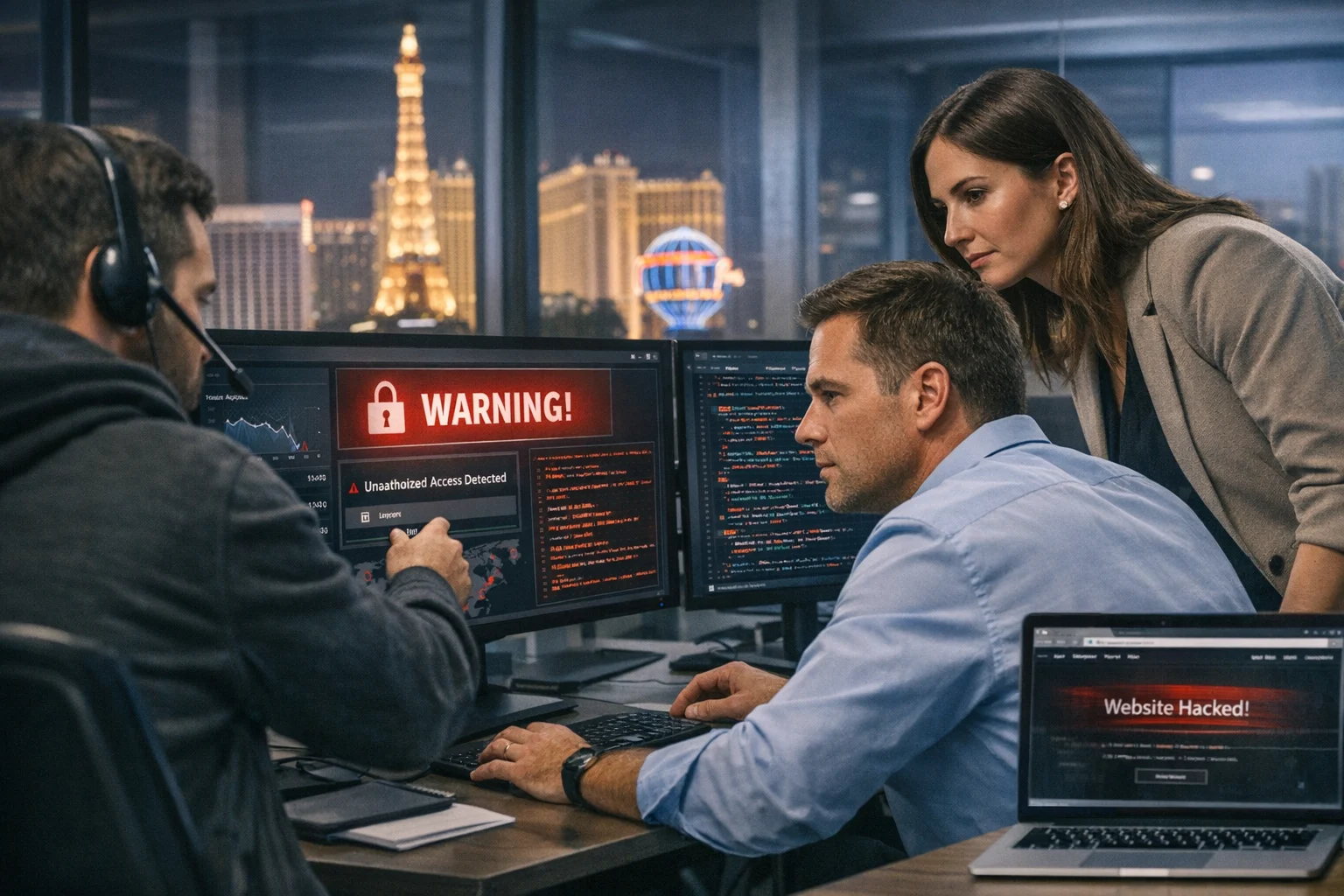
A rootkit on a web server is not a normal malware cleanup job. It changes the trust model. Once an attacker can hide processes, files, users, or network activity from the operating system itself, you cannot assume the server is telling you the truth. That is the part many business owners miss at first. The website may still load. Orders may still come in. Your hosting dashboard may look normal. Meanwhile, the server could be serving spam, redirecting search traffic, or exposing customer data without any obvious warning.
At SiteLiftMedia, we see this issue from both the security side and the business side. A compromised server can damage uptime, reputation, lead flow, and search visibility all at once. For Las Vegas companies competing in hospitality, legal, home services, healthcare, and eCommerce, that kind of incident can hit hard and fast. It can tank technical SEO, waste PPC budgets, undermine backlink building services, and send visitors from social media marketing campaigns to unsafe pages. If your website is part of your sales engine, rootkit response needs to be treated like a serious business event, not a simple plugin cleanup.
This guide covers the basics of rootkit cleanup for compromised web servers in plain language. It is written for business owners, marketing managers, and decision makers who need to understand what is happening, what the first steps should be, and when it makes more sense to bring in cybersecurity services, system administration help, or a full incident response team.
Why a rootkit is different from a normal website hack
Plenty of website compromises stay at the application layer. A bad plugin, a weak password, or an unpatched CMS lets an attacker upload a web shell, inject spam content, or create admin accounts. That is serious enough, but a rootkit goes deeper. It is designed to hide attacker access and persistence inside the server environment.
On a business web server, a rootkit may:
- Hide malicious processes from common system tools
- Mask backdoor user accounts or SSH keys
- Modify logs so intrusions are harder to trace
- Replace core binaries such as ps, netstat, ls, or login related tools
- Load malicious kernel modules or userland libraries
- Maintain remote access even after passwords are changed
- Support secondary payloads such as spam pages, phishing kits, redirect scripts, or crypto mining
For marketing teams, the real world effect can look strange. Rankings dip. Search Console starts showing odd URLs. Branded traffic drops. Ad landing pages get flagged. A site that looked healthy during a website refresh project suddenly behaves inconsistently by user location or device type. For a company investing in Las Vegas SEO, local SEO Las Vegas campaigns, or custom web design, this can quickly become a revenue problem, not just an IT issue.
The first hour matters more than most people realize
Isolate the server without destroying evidence
The first instinct is often to reboot, delete suspicious files, or run random cleanup scripts. Resist that urge. If a rootkit is in play, impulsive changes can wipe evidence, trigger more damage, or leave hidden persistence behind. Your first goal is containment.
- Take the server out of public traffic if possible. Put the site behind a maintenance page, remove it from the load balancer, or restrict inbound traffic.
- Do not trust the server fully. A rooted system may lie about running processes, open ports, cron jobs, or file integrity.
- Record the time and observed symptoms. Note redirects, defacements, outbound spam, CPU spikes, database anomalies, or alerts from your host.
- Preserve memory and disk data if you have the capability. If not, avoid unnecessary changes while qualified help reviews the system.
If the server hosts multiple websites or client environments, isolation becomes even more urgent. Shared compromise is common. One weak application can become the foothold that exposes neighboring sites, email accounts, or staging systems.
Preserve logs from outside the host if you can
When a rootkit is suspected, logs stored on the server may be incomplete or manipulated. Pull what you can from external sources first. That includes cloud snapshots, WAF logs, firewall logs, CDN logs, control panel access records, DNS changes, CI/CD deployment records, and alerts from monitoring tools. If you have centralized logging, that gives you a much stronger starting point than the local machine.
This is one reason mature website maintenance and system administration processes matter. Businesses that keep centralized logs, recent snapshots, clean deployment pipelines, and known baselines usually recover faster and with fewer surprises.
Tell the right people early
Rootkit incidents often cross departments. IT needs to investigate. Leadership needs to understand the business impact. Marketing may need to pause campaigns if landing pages are unsafe. Compliance or legal may need to review notification obligations. If you work with an outside web design Las Vegas team, managed host, or SEO company Las Vegas businesses rely on, loop them in early so they can help preserve data and avoid accidental overwrite.
How to recognize likely rootkit activity on a web server
You do not always get a neat alert that says rootkit detected. More often, you find inconsistencies. The server acts one way locally and another way from the outside. Security tools disagree with each other. Something keeps coming back after cleanup.
Common signs include:
- Unexpected outbound connections or traffic spikes with no matching business activity
- Strange listening services that do not match the server role
- System binaries with altered checksums or timestamps
- Hidden files in temporary or system paths
- Unexplained privilege escalation or new accounts
- Security tools that stop working, return inconsistent data, or fail to launch
- Web spam pages, cloaked redirects, or malicious content that only appears to search engines
- Reinfection after what looked like a successful cleanup
One of the biggest mistakes here is relying only on commands executed from the suspect server. If the machine is compromised at a low level, commands like ps, top, netstat, ss, lsmod, or even package verification tools may be manipulated. Always compare what the server reports with what external scans, network telemetry, or a trusted live environment shows.
On content managed sites, the initial breach often starts higher up the stack. An outdated plugin, weak admin credential, or exposed file manager can lead to shell access, then local privilege escalation, then root persistence. If your environment is WordPress based, it is worth reviewing how outdated WordPress plugins put business sites at risk, because the rootkit may be the second stage of a more ordinary web compromise.
When cleanup makes sense and when it does not
Business owners usually ask one fair question right away: can we clean this or do we need to rebuild? The honest answer is that rootkit cleanup is often less about technical possibility and more about trust, cost, downtime, and risk tolerance.
If a kernel level rootkit is suspected, the safest path is usually a rebuild from known clean infrastructure. Once the operating system trust boundary is gone, proving a server is truly clean becomes difficult and expensive. In many cases, it is smarter to preserve evidence, stand up a fresh server, restore vetted application data, rotate credentials, and move traffic only after validation. SiteLiftMedia has covered that decision in more detail here: when to rebuild a compromised server instead of cleaning it.
Targeted cleanup may be reasonable when:
- The compromise appears limited to userland and has been well scoped
- You have strong file integrity baselines and external logs
- The business needs a short term containment step before a full migration
- The affected system is noncritical and can be forensically verified offline
- You have experienced incident responders handling the work
What rarely works is half cleanup. Deleting one web shell, changing a couple of passwords, and calling it done usually leads to the same server getting hit again within days or weeks.
Practical rootkit cleanup basics
If a qualified team decides to attempt cleanup, or perform a controlled forensic review before rebuilding, the process needs to be disciplined. This is the basic order we recommend.
1. Work from a trusted environment
Do not investigate only from the compromised host. Mount disks from a trusted rescue system, inspect snapshots offline, or use an external forensic workflow. That is how you avoid being misled by altered binaries and hidden processes.
2. Collect indicators of compromise
Before making changes, gather what you can about attacker behavior:
- Suspicious IP addresses and login times
- Unexpected scheduled tasks or service definitions
- Modified binaries and libraries
- Backdoor users, SSH keys, sudo rules, or PAM changes
- Web shells, upload artifacts, encoded PHP payloads, or hidden admin accounts
- Injected JavaScript, redirect rules, rogue cron jobs, or spam page generators
This matters for two reasons. First, you need to remove all persistence, not just the visible symptom. Second, you will likely need these indicators to review other servers, staging nodes, or developer machines.
3. Rotate every credential that touched the server
Assume secrets are exposed. That usually means SSH keys, admin passwords, database credentials, API tokens, deployment keys, hosting access, control panel accounts, and service credentials for backups or email. Rotate them from a clean machine, not from the suspect server itself.
If the compromised host integrated with third party tools, remember the business side too. Marketing platforms, CRM forms, transactional email services, analytics connectors, and CDN credentials can all become attack paths. This is where cybersecurity services and web operations need to coordinate with the marketing team.
4. Remove persistence and restore trusted packages
The actual cleanup work depends on what the investigation shows, but the basics include removing malicious users and keys, disabling rogue services, restoring tampered configuration files, reinstalling compromised packages from trusted repositories, and reviewing startup hooks, cron entries, service units, shell profiles, and library preload tricks.
On Apache or Nginx hosts, review virtual host files, reverse proxy rules, redirects, hidden include files, SSL termination points, and upload directories. If you need a stronger baseline after recovery, this guide on securing Apache and Nginx for business websites is a useful next reference.
5. Audit the application layer, not just the server
Many teams clean the operating system and forget the website code. That is a mistake. If the initial foothold came through WordPress, Laravel, Magento, a custom plugin, or an abandoned admin path, the attacker may simply walk back in after the server is fixed.
Look for:
- Modified core files
- Backdoored themes or plugins
- Obfuscated code in uploads and cache directories
- Unexpected admin users
- Database injected scripts, hidden options, or rogue cron tasks
- Exposed staging sites, backup archives, or debug endpoints
If the site supports lead generation, bookings, or transactions, test every business critical workflow after cleanup. Security work that breaks forms, checkout, or tracking can create a second problem right after the first one.
6. Patch the stack before reconnecting to production traffic
Once you know how the attacker got in, close that gap before the server goes back live. Update the OS, packages, CMS, extensions, libraries, control panel, and any middleware in the path. If patching discipline has been loose, this is a good time to tighten it with a documented process. SiteLiftMedia has a deeper breakdown of why patch management matters for website security, especially for businesses that rely on always on lead generation.
How to validate a cleaned server before it goes back online
Validation is where a lot of rushed recoveries fail. The site loads, so teams flip DNS or reopen the firewall, then discover the attacker still has persistence or the SEO damage is still active. Put the cleaned or rebuilt environment through a real checklist first.
- Scan from outside the host using vulnerability and port scans from trusted systems.
- Check file integrity against known good versions or deployment artifacts.
- Review logs centrally for fresh outbound connections, login attempts, or process anomalies.
- Crawl the site for spam URLs, cloaked redirects, injected links, and weird status codes.
- Inspect robots.txt, sitemaps, canonicals, and templates so technical SEO damage does not linger.
- Test forms, ecommerce, analytics, and CRM handoffs to confirm business operations are intact.
- Verify DNS, SSL, and CDN settings in case the incident included infrastructure tampering.
That SEO check matters more than many companies realize. A rooted server can quietly generate doorway pages, link out to malware, or show different content to crawlers than to normal users. That can hurt national rankings and local search performance alike. For companies targeting Las Vegas SEO and local SEO Las Vegas lead opportunities, search damage can outlast the actual server incident if nobody cleans up the indexed junk and monitors recovery.
Hardening after the incident
Once the emergency is under control, the goal shifts from cleanup to resilience. This is where strong system administration and business website security practices pay off.
Post incident hardening should usually include:
- Fresh server builds from clean images where possible
- Least privilege access for admins, developers, and services
- MFA on hosting, control panel, repository, and DNS accounts
- Restricted SSH access and IP allowlisting where practical
- Centralized logs with retention outside the production server
- Scheduled vulnerability scanning and periodic penetration testing
- Immutable or protected backups with restore testing
- File integrity monitoring and alerting on key system paths
- Documented patching cadence for OS and applications
- Review of public attack surface before launches and redesigns
For many organizations, this is also the right time to align security work with annual planning, Q1 growth strategies, or a broader website refresh. A fast custom web design launch or traffic growth campaign is great, but not if the underlying server stack is brittle. Security hardening should sit alongside performance tuning, technical SEO improvements, and conversion work, not behind them.
What business owners should ask their agency or IT partner
If you are not the person doing server forensics yourself, ask better questions. Plenty of providers can reinstall a plugin or restore a backup. Far fewer can handle a likely rootkit the right way.
- How are you determining whether this is application malware or deeper system compromise?
- Are you validating findings from outside the host?
- What logs and evidence are being preserved before changes are made?
- Which credentials need rotation right now?
- Are we cleaning, rebuilding, or doing both in phases?
- How are you verifying the restored site is free of spam, redirects, and SEO damage?
- What hardening steps will prevent the same issue from returning?
If you are comparing vendors, this is where the difference shows. A pure marketing shop may notice ranking loss but miss the server layer. A generic host may restore uptime but leave hidden persistence in place. The right partner understands the overlap between cybersecurity services, website maintenance, system administration, and digital growth. That matters even more if your business depends on search visibility, ad landing pages, and continuous lead flow in a competitive market like Las Vegas.
SiteLiftMedia works with businesses in Las Vegas, across Nevada, and nationwide on incidents like this because the fix is rarely just one step. You may need root cause analysis, cleanup, server hardening, technical SEO review, application repair, and a safer deployment path moving forward. If your server is acting strangely, search traffic has dropped for no clear reason, or you suspect hidden persistence after a hack, contact SiteLiftMedia before anyone starts deleting files or rebooting blindly.
Photo Gallery