Trust is often decided before a prospect ever fills out a form or picks up the phone. For service businesses, that judgment usually happens on a screen in a matter of seconds. People land on your website, scan the page, and ask themselves a simple question: does this business look credible enough to trust with my money, my property, my legal issue, my marketing, or my security?
That makes web design more than a branding exercise. It directly affects lead quality, conversion rates, local visibility, and how seriously people take your business. At SiteLiftMedia, we see this every time we evaluate contractor sites, law firm sites, healthcare sites, home service sites, and B2B service websites. The businesses that convert best usually do not rely on flashy design alone. They use specific design elements that reduce doubt and make the next step feel safe.
If you're competing in a crowded market like Las Vegas, the trust bar is even higher. Prospects searching for web design Las Vegas, local SEO Las Vegas, or an SEO company Las Vegas are often comparing multiple providers at once. The same goes for plumbers, med spas, HVAC companies, financial firms, and consultants. A website that feels vague, outdated, thin, or insecure gets filtered out fast. A website that feels clear, polished, proven, and easy to use earns attention.
Here are the web design elements that consistently build trust for service businesses, and why they matter when people are ready to buy.
Clear positioning above the fold
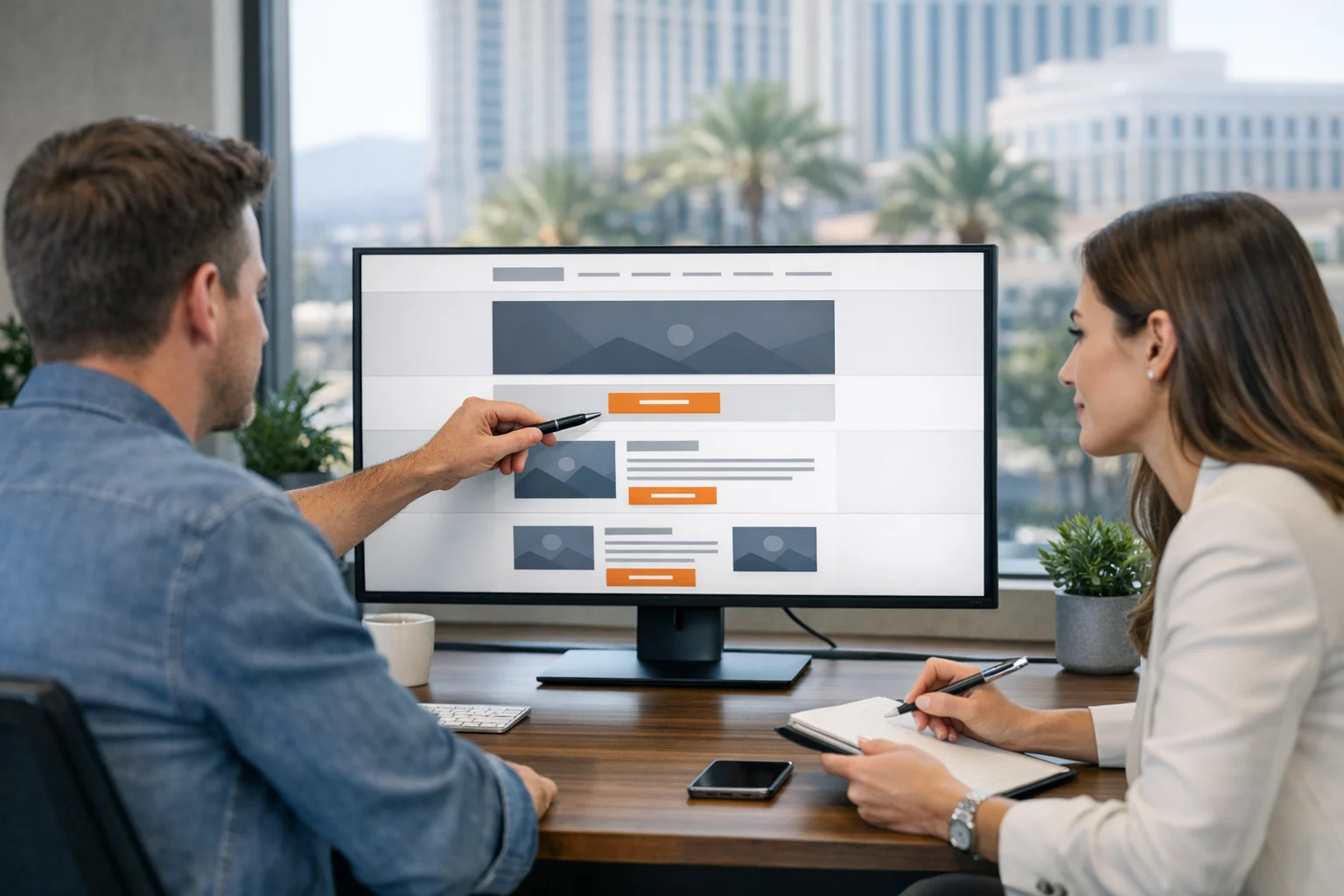
The first visible section of a page does a lot of heavy lifting. Visitors should understand who you help, what you do, where you operate, and what action to take next without hunting for answers. One of the fastest ways to lose trust is to make people work too hard to figure out your business.
Strong hero sections usually include a direct headline, a supporting sentence that explains the offer, a clear call to action, and at least one reinforcing proof element. That proof could be a review count, years in business, certifications, industries served, or recognizable client logos. It does not need to be loud. It does need to be obvious.
For example, if you're a Las Vegas commercial roofer, a headline like Trusted Commercial Roofing for Las Vegas Properties says more than a clever slogan ever will. If you're a digital agency, something like Custom web design, Las Vegas SEO, and growth strategy for service businesses immediately orients the visitor. Clear positioning feels honest, and honesty builds trust.
Professional visual consistency that matches the price point
People make assumptions from design quality, whether they admit it or not. A service business charging premium rates cannot afford a website that feels pieced together. Inconsistent typography, random colors, low quality imagery, and crowded layouts signal inexperience. Even if your team does excellent work, the site may quietly suggest otherwise.
Trustworthy design feels intentional. Fonts are consistent. Spacing is balanced. Buttons look like they belong to the same system. Photos feel current and relevant. The site uses color strategically instead of decorating every inch of the page. This kind of consistency tells visitors that your business pays attention to detail, and for service businesses, that matters.
That doesn't mean every brand needs to look sterile or corporate. A local family owned business can still feel warm and approachable. A law firm can feel established without looking dated. A medical practice can feel modern without feeling cold. The key is alignment between your market position, your audience expectations, and your visual presentation. That is a big reason why custom web design for Las Vegas businesses tends to outperform generic templates in competitive markets.
Real contact information and local signals
One of the easiest trust wins is also one of the most overlooked: show that you are real and reachable. Service businesses should make contact details visible in the header, footer, and contact page. That includes a working phone number, business email, service area, and in many cases a physical address or office location. If you serve multiple regions, make that clear. If you're a Las Vegas business with national reach, say so plainly.
Local trust signals matter for conversions and search visibility. Visitors often look for clues that confirm you understand their area, especially when the service has a local component. A Las Vegas homeowner wants to know that a contractor understands desert wear, heat load, water restrictions, and neighborhood expectations. A business owner looking for local SEO Las Vegas support wants to know the agency understands local competition, Google Business Profile strategy, and how people actually search in the market.
Good design makes those signals easy to spot. Think location specific service pages, local testimonials, embedded maps where appropriate, team photos in recognizable areas, and copy that references actual service zones naturally. Trust grows when your website feels grounded in the places you claim to serve.
Service pages that answer buying questions
Homepages do not close the trust gap on their own. Service pages are where many decisions are made, especially for organic traffic from technical SEO and local search. If someone lands directly on a service page from Google, that page has to do more than mention the service name. It needs to answer the practical concerns buyers have before they contact you.
Strong service pages usually explain what the service is, who it is for, common problems, what the process looks like, expected outcomes, proof of experience, and how to get started. They should also reduce ambiguity. If you offer website maintenance, explain what is included. If you provide cybersecurity services, explain whether that means monitoring, compliance, incident response, penetration testing, or business website security hardening. If you provide system administration, say whether that includes cloud environments, patching, backups, and uptime monitoring.
This is where design and content structure work together. A page can have attractive visuals and still underperform if it buries key information or rambles. Clean hierarchy, readable sections, and intuitive calls to action help visitors move from curiosity to confidence. SiteLiftMedia has written before about why clean page structure has such a strong effect on both trust and conversions.
Reviews, testimonials, and case proof that feel believable
Social proof is powerful, but only when it feels real. Generic testimonial sliders full of vague praise do not build much confidence anymore. Visitors have seen too many websites stuffed with stock quotes that could apply to any business.
Better proof elements include:
- Named testimonials with a first name, company name, neighborhood, or role when appropriate
- Review snapshots from Google or another platform your audience recognizes
- Case studies that show the problem, the work, and the result
- Project photos of real work instead of generic stock imagery
- Industry badges, licenses, and certifications that matter to the service being sold
Placement matters too. Do not isolate all trust proof on one page and expect visitors to find it. Put meaningful proof near calls to action, on service pages, and at the decision points where people are most likely to hesitate.
For agencies, trust proof can include ranking improvements, lead growth, better conversion rates, and examples of work across web design, PPC, SEO, and social media marketing. If you offer more technical services, such as server hardening or penetration testing, use proof carefully and professionally. Show competence without exposing sensitive client details. The message should be clear: you know what you are doing, and you have done it for businesses like mine.
Fast load times and a friction free mobile experience
People rarely describe speed as a trust factor, but they absolutely feel it that way. A slow site suggests neglect. A site that jumps around while loading feels unstable. A mobile layout with tiny buttons and cut off text makes users wonder what else is being handled carelessly behind the scenes.
For service businesses, mobile performance is especially important because a large share of high intent traffic comes from phones. Someone searching for emergency help, a local service provider, or an agency during business hours is often ready to take action right away. If the page stalls, they leave.
Responsive design, compressed images, sensible scripts, and clean code all affect this experience. They also support SEO. Google has been clear for years that user experience, mobile usability, and performance are tied to search visibility. That is one reason why responsive web design tactics that improve SEO and conversions are not optional anymore for businesses that want leads.
In a market like Las Vegas, where users compare several options quickly, a fast site can quietly become a competitive advantage. Good speed supports Las Vegas SEO, improves PPC landing page performance, and lowers the odds that paid traffic gets wasted.
Easy navigation and predictable user paths
Trust drops when visitors feel lost. Confusing menus, too many navigation items, and unclear labels force users to guess where things are. Guessing is not what you want from someone who is about to contact your business.
Simple navigation usually works best for service businesses. Keep primary categories intuitive. Group related services logically. Make the contact path obvious. If you serve multiple locations or industries, organize them in a way that feels useful rather than bloated.
A few practical examples:
- Use Service Areas or Locations if geography matters
- Use Industries or Solutions if your service varies by market
- Keep About, Reviews, Contact, and core services easy to find
- Include sticky calls to action on long service pages when appropriate
Predictable user paths help trust because they reduce friction. The visitor feels guided rather than pushed. That subtle difference matters in lead generation.
Strong imagery, real team presence, and visual proof of work
Stock photography has its place, but service businesses build more trust with reality. Real team photos, office photos, project photos, before and after examples, screenshots, and process visuals make a business feel tangible. They answer the unspoken question visitors always have: who am I actually hiring?
This is especially true in local markets. Las Vegas businesses benefit when websites include real local context, whether that is on site work, familiar commercial settings, or recognizable community references. It makes the business feel established, not pulled from a template.
Professional photography is worth the effort. It quickly raises perceived quality. It also supports social media marketing, local SEO assets, directory consistency, ad creatives, and future redesign planning. If a business is doing year end audits or preparing a next year SEO strategy, updating visual assets should be part of that conversation.
Visible security signals and proof of active maintenance
Trust does not stop at appearance. Security and upkeep are part of modern web design because visitors notice when a site feels neglected or risky. Broken plugins, outdated copyright years, dead forms, browser warnings, and mixed content errors can quietly kill confidence.
At a minimum, service business websites need HTTPS, secure forms, dependable hosting, backups, updates, and malware monitoring. For businesses in regulated sectors or high risk industries, trust also comes from showing that security is taken seriously behind the scenes. That may include secure client portals, access controls, privacy disclosures, and infrastructure practices supported by proper system administration.
For some companies, especially those handling sensitive information, it makes sense to mention deeper protections such as penetration testing, server hardening, cybersecurity services, and business website security reviews. You do not need to overwhelm visitors with technical jargon. You do want to communicate that your site is maintained by professionals and not left unattended for months.
This is an area where SiteLiftMedia often sees avoidable losses. Businesses invest in a redesign, then neglect website maintenance. Six months later, the site is slower, forms are unreliable, plugins are outdated, and trust signals start to erode. Reliability is part of design, whether people call it that or not.
Transparency around process, pricing, and expectations
Visitors trust businesses that reduce uncertainty. You do not have to publish exact pricing for every service, but you should make the buying process feel understandable. Explain how someone gets started, what happens after the first call, how long a project usually takes, and what factors affect scope or cost.
That kind of transparency works especially well for higher consideration services like custom web design, SEO retainers, PPC management, cybersecurity reviews, or app development. Buyers are often less afraid of price than they are of confusion. If the website helps them understand the process, they feel more comfortable taking the next step.
Useful trust building elements here include:
- Step by step process sections
- FAQ blocks that address timeline, support, and fit
- Clear scope language around what is included and what is not
- Consultation expectations so the first call does not feel mysterious
These details reduce lead friction and help filter out mismatched inquiries.
Design that supports SEO, not design that fights it
Some websites look polished but struggle to rank because the design ignores how search engines and users interact with content. Trust and SEO are closely linked. If your pages are hard to crawl, thin on relevant information, or built with weak structure, you lose visibility. If users land on pages that are difficult to scan or impossible to navigate, you lose trust.
Well designed service sites support keyword targeting naturally through page hierarchy, internal linking, local landing pages, and content sections that answer intent. For example, a page targeting web design Las Vegas should not just repeat the phrase. It should clearly explain the service, show work, establish local relevance, and guide the visitor toward a conversation. The same principle applies to pages targeting Las Vegas SEO, technical SEO, backlink building services, or website maintenance.
If a business is preparing for a redesign, it helps to treat design and SEO as one project instead of two separate efforts. SiteLiftMedia often recommends reviewing analytics, lead flow, local rankings, and content gaps before new layouts are finalized. For businesses considering a major update, this guide to planning a conversion focused website redesign in Las Vegas is a useful starting point.
Accessibility and readability as trust builders
Good design should be easy to use for as many people as possible. That means readable text sizes, strong contrast, descriptive buttons, form labels that make sense, and page layouts that do not rely on visual gimmicks to function. Accessibility is often discussed as a compliance topic, but it also affects trust directly. When a site is easier to read and easier to use, people feel more confident staying on it.
Readable design is particularly important for service businesses whose visitors may be stressed, short on time, or comparing options quickly. A person looking for urgent legal help, a managed IT provider, or cybersecurity services is not in the mood to decode tiny text and vague buttons. Clarity earns goodwill.
Freshness signals that show the business is active
People notice stale websites. They may not always say it out loud, but they notice old blog dates, dated team photos, outdated promotions, and service pages that look abandoned. That does not mean you need to redesign your site every year. It does mean the website should show signs of life.
Freshness signals can include recent testimonials, updated project examples, current staff photos, revised service pages, and useful articles tied to current business needs. For service firms, year end audits, redesign planning, next year SEO strategy updates, and cybersecurity reviews make strong topics because they line up with real decision cycles.
Active websites feel safer to contact. Inactive websites feel uncertain. That perception alone affects lead volume.
What decision makers should audit first
If you're a business owner or marketing manager reviewing your current website, start with the trust blockers that have the biggest commercial impact:
- Is your core offer obvious in the first screen?
- Do your service pages answer real buying questions?
- Can visitors find proof, contact details, and location relevance quickly?
- Does the site feel current on mobile?
- Is it fast, secure, and actively maintained?
- Do design, SEO, and conversion goals support each other?
If the answer to several of those is no, the problem usually is not one missing feature. It is that the website is not doing enough to reduce doubt. That is the real job of trust focused web design.
If your site looks decent but still is not bringing in the right leads, SiteLiftMedia can audit the trust, SEO, speed, structure, and security issues that may be holding it back. Whether you need custom web design, local SEO Las Vegas support, website maintenance, cybersecurity services, or a full redesign plan, get your current site reviewed by a team that builds for both credibility and growth.
Photo Gallery