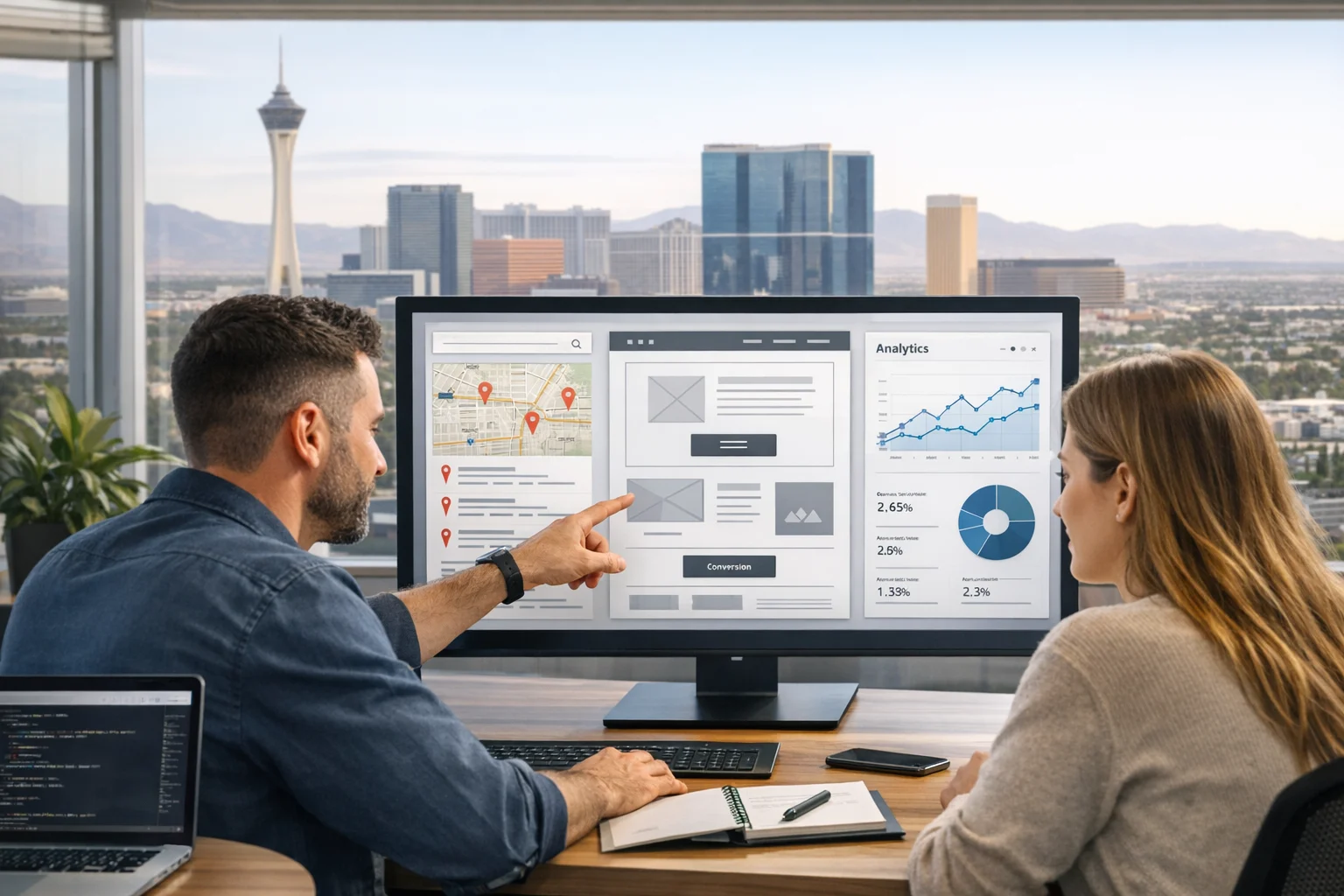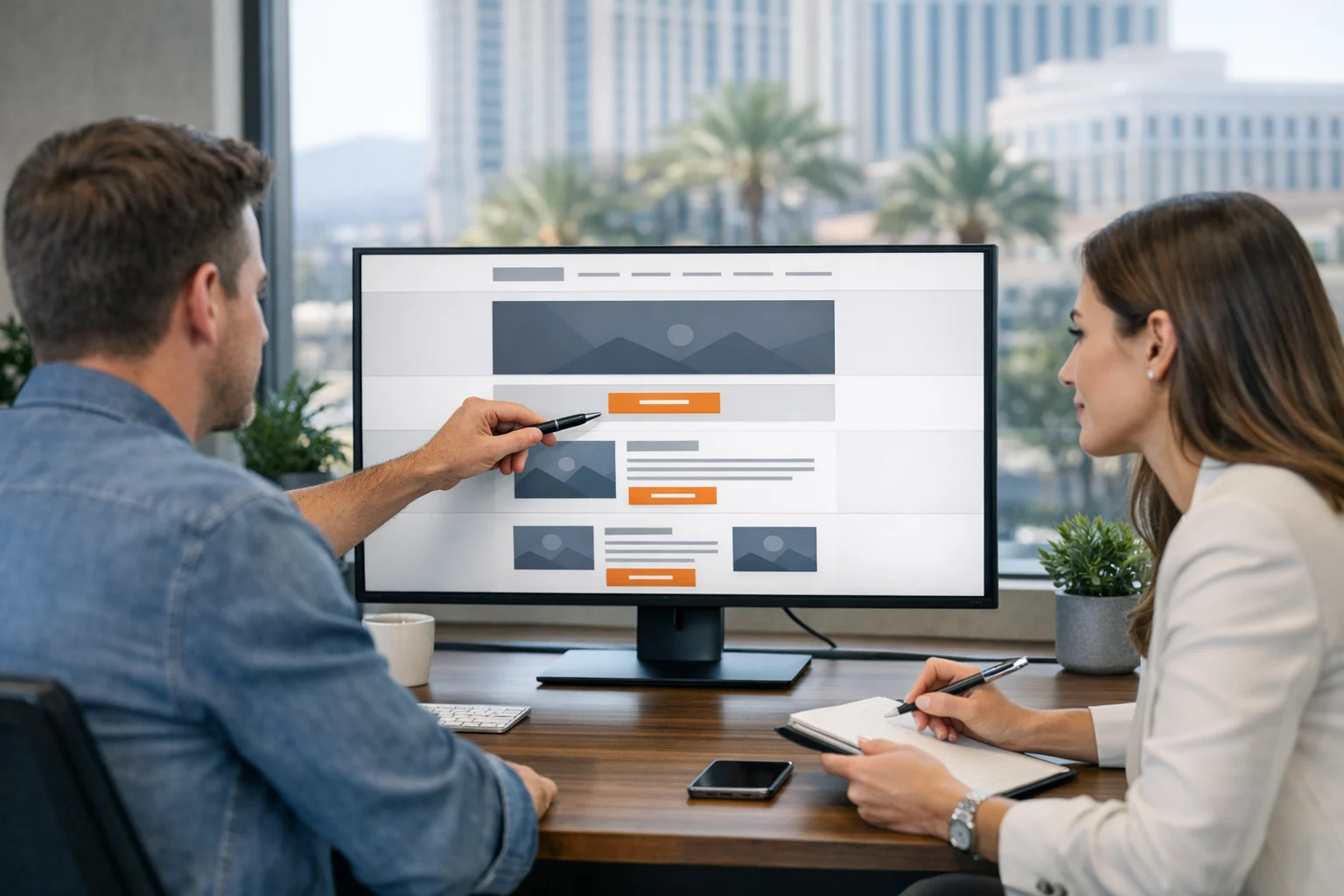
Las Vegas businesses compete in one of the fastest-moving local markets in the country. That pressure shows up online first. Whether you're selling legal services, hospitality, home services, healthcare, ecommerce, or B2B consulting, your website has to do more than look polished. It needs to load fast, explain what you do in seconds, support Las Vegas SEO, and convert traffic coming from search, PPC, referrals, and social media marketing.
At SiteLiftMedia, we've seen the same pattern across industries. Companies that treat web design like a living sales asset outperform those that treat it like a one-time branding project. The best sites are built strategically. They combine custom web design, technical SEO, performance tuning, and business website security into one system that can grow with the company.
If you're researching web design Las Vegas trends, the goal isn't to chase flashy visuals just to look modern. It's to understand which changes are actually helping businesses generate more leads, earn better rankings, and increase conversion rates. Those are the trends worth paying attention to right now.
Why web design trends matter more in Las Vegas
Las Vegas has a unique mix of local and transient traffic. Some businesses rely heavily on nearby customers searching for services the same day. Others attract convention visitors, tourists, remote buyers, or regional clients comparing several providers at once. That creates a tougher web design challenge than many markets face.
Your site has to work for impatient users on mobile devices, for people finding you through local SEO Las Vegas searches, and for decision-makers reviewing three competitors in separate tabs. Design trends matter because user expectations change quickly. What felt acceptable two years ago now often feels slow, cluttered, or generic.
Design affects more than appearance. It influences bounce rate, form submissions, search visibility, ad quality scores, and trust. That's why a serious SEO company Las Vegas businesses can rely on should care about layout, speed, content hierarchy, and technical SEO just as much as keywords.
Conversion first layouts are replacing brochure style websites
One of the clearest shifts in modern web design is the move away from brochure-style pages. Many older business sites still open with oversized images, vague taglines, and very little guidance. They may look clean, but they don't help visitors make a decision.
High-performing sites now lead with clarity. They answer a few questions right away:
- What does the business do?
- Who is it for?
- Why should the visitor trust it?
- What action should happen next?
That means stronger headline structure, shorter value propositions, visible calls to action, and service sections that move people forward instead of forcing them to hunt for answers. In Las Vegas, where users often compare options quickly, this matters. A visitor looking for a contractor, dentist, med spa, lawyer, or HVAC company isn't studying your homepage for fun. They're trying to solve a problem fast.
We've also seen stronger results from layouts that break the page into decision-friendly sections. Think benefit-driven copy, proof points, FAQs, review snippets, and clear lead capture points instead of one long generic sales pitch. If your current site still feels like an online brochure, it's worth reviewing the website design mistakes hurting Las Vegas conversions because many of them come down to structure, not aesthetics.
Speed and lightweight performance are now core design features
Fast websites are no longer a bonus. They're part of modern design. Users notice when pages lag, but they rarely think about why. They just leave. Search engines notice too. Slow rendering, bloated scripts, oversized media, and poorly managed third-party tools can drag down rankings and conversion rates at the same time.
This is especially important for companies investing in Las Vegas SEO, paid ads, and seasonal campaigns. If you're preparing for Q4, holiday traffic planning, or a promotion tied to an event calendar, your website needs to hold up under traffic spikes. Design decisions affect that, and so do development and hosting choices.
Good performance-driven design usually includes:
- Compressed and properly sized images
- Lean front-end code
- Streamlined fonts and animations
- Fast hosting infrastructure
- Clean mobile rendering
- Ongoing website maintenance and performance tuning
This is where many businesses get stuck. They redesign the site visually but keep the same technical problems underneath. SiteLiftMedia approaches this differently because performance is tied to system administration, server configuration, and real-world monitoring. If speed is costing you leads, this guide on why website speed matters for Las Vegas local businesses is a useful next read.
Custom design is beating template sameness
Templates still have a place for very small projects, but they create obvious limitations for companies that want to compete seriously. A lot of businesses in Las Vegas use nearly identical layouts, stock imagery, and predictable section patterns. That makes it harder to stand out and even harder to build trust.
The current trend is not just prettier design. It's smarter custom web design that reflects how a specific business sells. That includes custom service page structures, tailored conversion paths, visual branding that doesn't feel recycled, and flexible content blocks that the marketing team can actually use.
Custom design also supports scalability. If you plan to grow content, add locations, launch new campaigns, or improve your local SEO Las Vegas footprint, a custom build gives you more control over the architecture. You're not trying to force business goals into a generic theme.
For businesses trying to position themselves as premium, established, or technically advanced, custom design usually pays for itself in perception alone. It also makes it easier to align your brand with your sales process. That's one reason we often recommend reading how custom web design helps Las Vegas businesses win before starting a redesign.
SEO friendly architecture is becoming part of the design brief
Design and SEO can't live in separate silos anymore. A beautiful site that hides key services, buries location signals, or creates crawl issues will underperform. One of the most important trends right now is the shift toward SEO-aware design from day one.
That means planning the site around search intent and content discoverability, not just visuals. For a business targeting web design Las Vegas queries or working with an SEO company Las Vegas firms trust, that usually involves:
- Clear page hierarchy for services and subservices
- Dedicated location pages when relevant
- Internal linking that supports topical depth
- Clean navigation that search engines can crawl
- Technical SEO foundations such as metadata, heading structure, schema, and indexation control
- Content blocks that support rankings without cluttering the user experience
Good design also supports backlink building services. When a site has stronger content structure, cleaner resource pages, original visuals, and more authority signals, it becomes much easier to earn links or support outreach campaigns. In other words, good design helps your SEO team work more effectively.
We've found that businesses get the best results when their design team and SEO team are aligned early. Otherwise, you end up redesigning key pages twice.
Mobile UX is being built for urgency, not just responsiveness
Responsive design is expected. The newer trend is building specifically for mobile decision-making. That's a different mindset. It's not enough for a desktop layout to shrink down cleanly. The mobile experience has to reflect how people actually behave.
In Las Vegas, that often means urgency. Someone may be searching from a parking lot, hotel room, event venue, or job site. They need fast answers, obvious contact options, and a page that feels effortless to use with one hand.
Strong mobile UX now includes:
- Click-to-call buttons placed early and often where appropriate
- Short forms that don't feel like work
- Sticky navigation or action bars
- Readable type without zooming
- Maps, directions, and local trust signals
- Page sections designed around scanning behavior
If your analytics show mobile traffic but poor mobile conversions, that's usually not a traffic problem. It's a design problem, a message problem, or both.
Traffic source specific landing pages are replacing one size fits all pages
Businesses running PPC, SEO, and social campaigns at the same time are seeing better results with purpose-built landing experiences. This is a major trend because traffic sources come with different intent. Someone who clicked a Google Ads offer behaves differently than someone who found your site through an informational blog post or a social media marketing campaign.
Modern web design accounts for that by creating landing pages matched to audience, service, and buying stage. The best ones keep branding consistent while tailoring copy, proof, and calls to action. That makes them more effective for ad quality, lead quality, and conversion tracking.
This matters for Las Vegas businesses spending aggressively on paid traffic during event peaks, seasonal promotions, or Q4 campaigns. When ad costs rise, design inefficiency gets expensive. A stronger landing page system can often improve results faster than simply increasing ad spend.
Trust signals are becoming more visual and more immediate
People don't want to dig for credibility. They want to see it fast. That's why one of the strongest design trends right now is moving trust elements higher on the page and presenting them in a more visual way.
That can include:
- Review highlights near the top of service pages
- Before-and-after examples where appropriate
- Case studies with measurable outcomes
- Industry certifications and memberships
- Client logos and partner badges
- Clear photos of the real team, office, or completed work
For local service businesses, local proof matters even more. A Las Vegas homeowner, executive, or operations manager wants to know you've served businesses like theirs in the same market. Generic trust language isn't enough.
We've also seen trust design become more important for firms selling technical services. If you offer cybersecurity services, managed IT, compliance support, or technical consulting, your site has to communicate competence without overwhelming the visitor. Good design helps translate complex expertise into confidence.
Accessibility and readability are quietly separating strong sites from weak ones
Some trends get attention because they're flashy. Accessibility is different. It improves performance in a quieter but more valuable way. Sites that are easier to read, navigate, and interact with tend to convert better across the board.
We're seeing more businesses prioritize cleaner spacing, stronger contrast, simpler forms, and more disciplined copy hierarchy. That's not just good for accessibility. It's good for tired users, mobile users, older users, and anyone skimming a page between meetings.
Readable design also supports SEO. Search-friendly content doesn't need to be dense or awkward. Well-structured pages can support technical SEO goals while still feeling easy to consume.
Security forward design is becoming part of brand trust
Security used to be treated as a back-end task. Now it's part of how people evaluate a business online. If your site looks outdated, throws browser warnings, uses clunky forms, or behaves inconsistently, users notice. They may not say the word security, but they feel the risk.
That's one reason security-conscious design is gaining ground. Businesses are asking smarter questions about form protection, user data, admin access, hosting configuration, and plugin exposure. They should. Design choices can create or reduce risk, especially when sites rely on multiple integrations.
For companies collecting leads, processing transactions, or managing customer data, security readiness should include:
- Encrypted forms and secure submission handling
- Reliable website maintenance schedules
- Hardened hosting environments
- Server hardening where appropriate
- Role based admin controls
- Routine updates and monitoring
- Business website security reviews
- Penetration testing for higher risk environments
SiteLiftMedia often sees web projects where design, development, and cybersecurity services need to work together from the start. That's especially true for businesses with compliance concerns, valuable client data, or high-visibility brand exposure. If this is top of mind, the article on cybersecurity trends hitting websites and businesses this year gives a broader view of what to prepare for.
Design systems that support ongoing growth are replacing set it and forget it launches
Another important trend is operational, not visual. Smart businesses are moving away from the idea that a site launches once and then sits untouched for years. The better model is a design system that can evolve.
That means reusable page components, cleaner content workflows, easier campaign updates, and a site structure that supports future SEO, new service lines, and seasonal offers. When design is modular, your team can move faster without breaking consistency.
This approach works especially well for businesses coordinating multiple channels. Maybe your SEO team needs content flexibility, your paid team needs campaign pages, and your operations team needs reliable website maintenance. A well-built system supports all three.
It also makes life easier for the agency or internal team responsible for system administration and updates. Fewer brittle templates. Fewer random page builders. Fewer surprises every time a change is needed.
What Las Vegas businesses should prioritize next
If you're evaluating your current site, focus on the trends that drive measurable business value first. In most cases, that means:
- Clarifying the message above the fold
- Improving page speed and mobile performance
- Strengthening service page structure for local SEO Las Vegas visibility
- Creating custom landing paths for core services and campaigns
- Adding stronger trust signals and local proof
- Reviewing security readiness before traffic increases
You don't need to rebuild everything at once. But you do need an honest assessment of what's helping growth and what's getting in the way. For some companies, the answer is a focused refresh. For others, it's a full redesign tied to Las Vegas SEO, content strategy, and better infrastructure under the hood.
If your site feels dated, underperforms in search, or isn't turning traffic into leads the way it should, SiteLiftMedia can help you map out the right next move. From custom web design and technical SEO to website maintenance, cybersecurity services, and performance support, our team works with Las Vegas businesses and nationwide brands that need a site built to compete, not just exist. Reach out when you're ready to review what your website should be doing better.
Photo Gallery