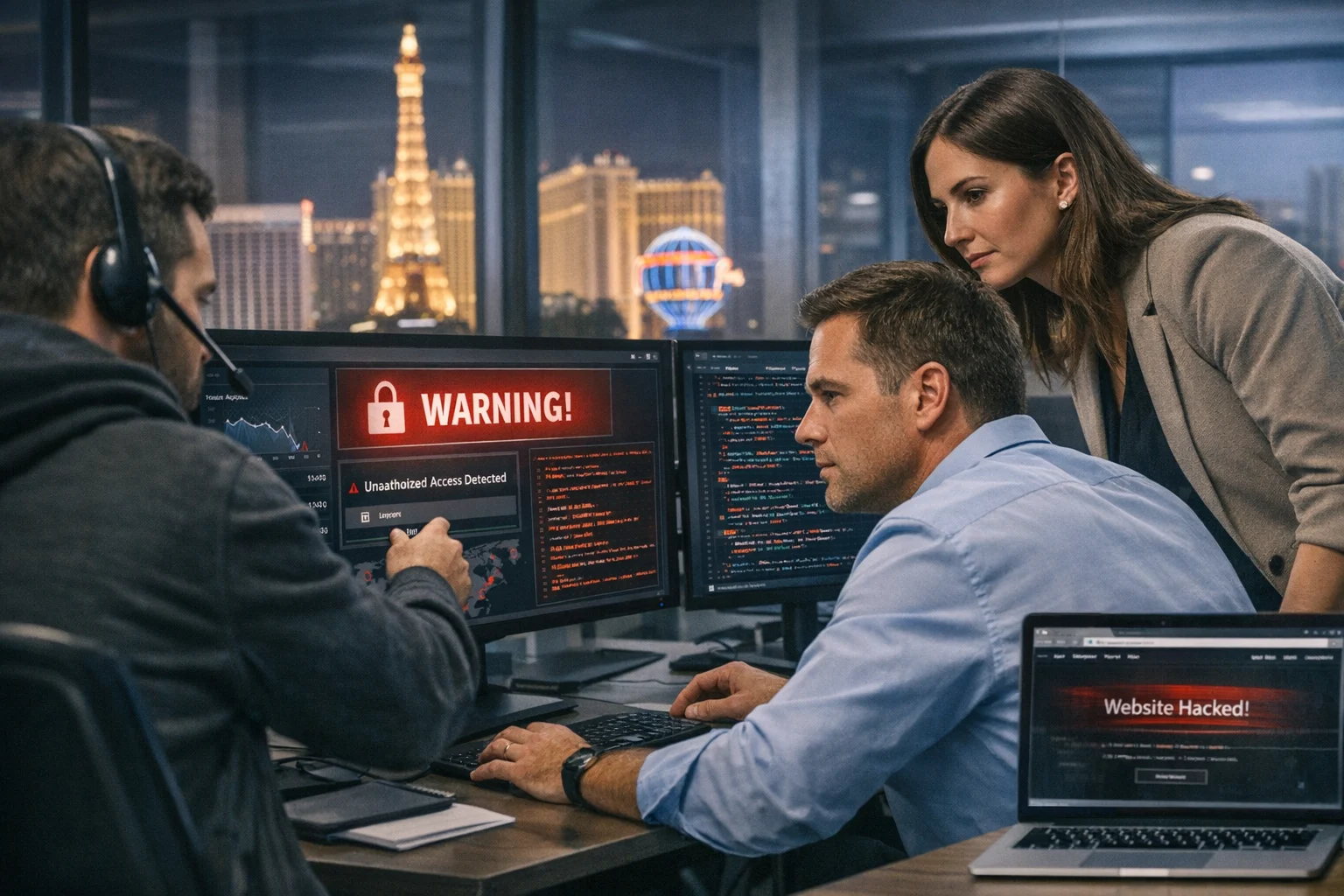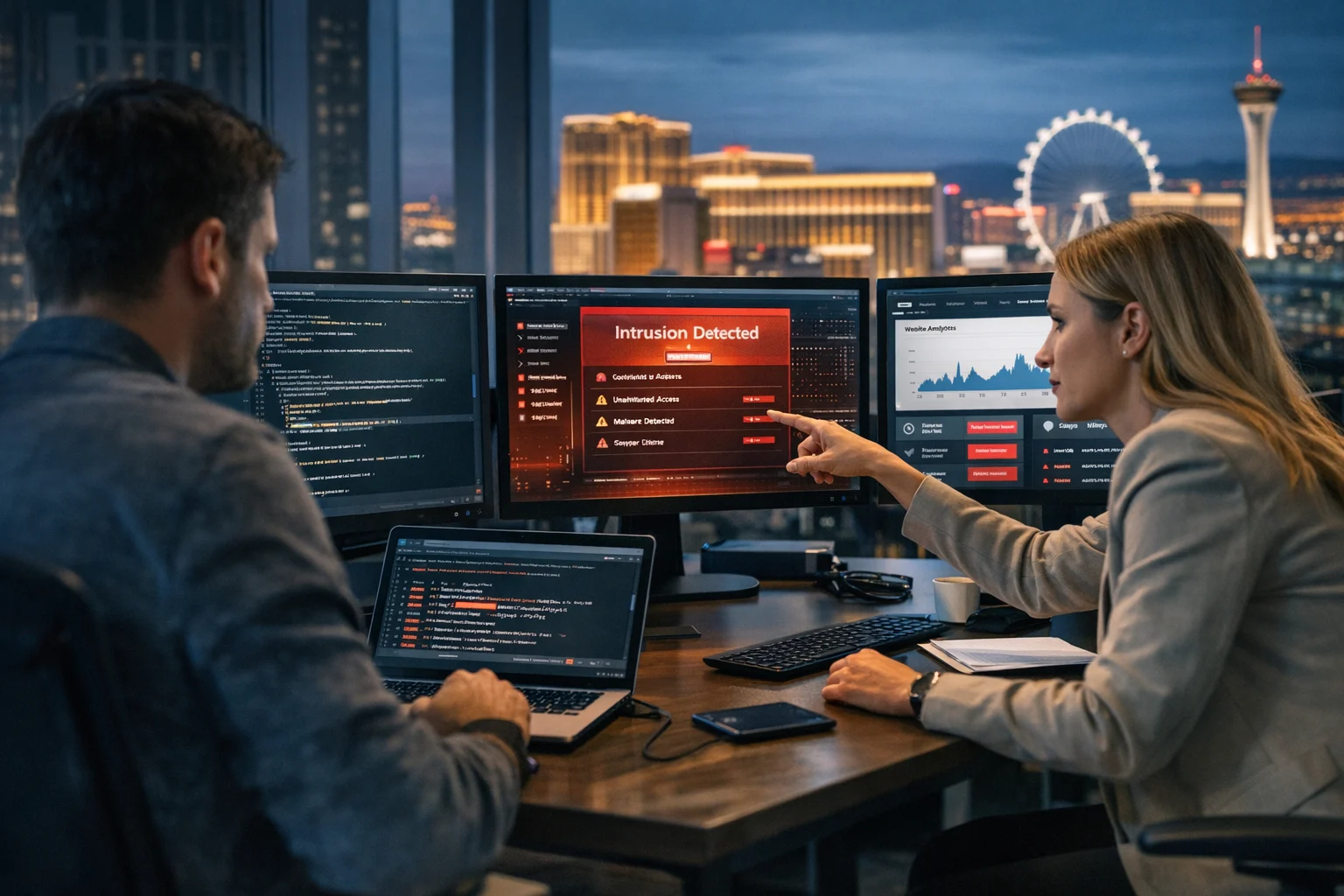
A zero day exploit can sound like the kind of threat that only affects big brands, software vendors, or companies with full security teams. In reality, it often hits small and mid sized businesses the hardest, especially those that assume their website is too small to be a target. That assumption gets expensive fast.
When a new vulnerability is discovered before a patch is widely available, attackers move quickly. They scan the internet for exposed websites, outdated plugins, weak server configurations, and public facing applications that can be exploited before the business even knows anything is wrong. If your site is unprepared, a zero day issue can turn from technical news into a business crisis within hours.
At SiteLiftMedia, we’ve seen this pattern again and again. A company invests in custom web design, content growth, paid ads, local SEO Las Vegas campaigns, and maybe social media marketing, then treats security like an afterthought. The website launches, traffic grows, and the attack surface grows with it. When something goes wrong, it does not stay an IT issue. It becomes a lead generation issue, a reputation issue, and a revenue issue.
If you want a deeper look at prevention basics, this guide on reducing zero day risk on public facing websites is a strong companion read. For business owners and marketing decision makers, the bigger question is more direct: what can a zero day exploit actually do to an unprepared website?
Why zero day exploits hit unprepared businesses so hard
A zero day exploit takes advantage of a vulnerability before defenders have enough time to patch, test, or block it properly. That matters because many business websites are already behind on maintenance. The exploit may be new, but the real damage usually happens because the environment around the site is already weak.
An unprepared website usually has at least a few of these issues:
- Outdated CMS core files, plugins, themes, or libraries
- Weak admin access controls and poor password hygiene
- No web application firewall or tuned bot protection
- Infrequent backups or backups stored on the same compromised system
- Little logging, poor alerting, and no real incident response plan
- Loose server permissions and weak server hardening
- No meaningful website maintenance process after launch
That combination gives attackers room to do more than exploit a bug. It gives them room to stay hidden, move laterally, change files, inject code, steal data, and return later. In other words, the vulnerability opens the door, but weak business website security lets the attacker make themselves at home.
What an unprepared business website can lose in a single incident
Site takeover and malicious code injection
One of the most common outcomes is code injection. An attacker exploits the vulnerability, writes malicious scripts into the site, and starts using your domain for their own purposes. Sometimes that means redirecting visitors to scam pages. Sometimes it means injecting spam pages, fake product listings, pharma content, or malware downloads. Sometimes it means quietly loading harmful JavaScript only under certain conditions so the business owner does not notice right away.
To the average visitor, your site may still look normal at first. To search engines, browsers, and security scanners, it can start looking toxic very quickly.
This is where marketing teams get blindsided. You can spend heavily on Las Vegas SEO, backlink building services, and technical SEO improvements, but if your pages become a delivery system for malicious code, those gains can disappear fast. Rankings can drop. Indexed junk pages can multiply. Google can start surfacing the wrong URLs. Traffic quality falls right when the business expects growth.
Lead theft and form interception
Not every attack is loud. Some are quiet enough to sit undetected for weeks.
A compromised contact form can copy every lead submission to an attacker. A hacked checkout page can skim payment details. A quote request form can send customer names, phone numbers, and emails somewhere else before your own CRM ever sees them. If you’re a law firm, med spa, contractor, clinic, or home services business in Las Vegas, those are not minor losses. They are valuable live inquiries with immediate revenue potential.
Business owners often ask how this shows up in the real world. Usually it looks like this:
- Lead volume looks inconsistent for no obvious reason
- Customers say they submitted forms, but no one on your team received them
- Spam complaints start appearing
- Your CRM fills with strange or malformed submissions
- Customers report suspicious follow ups after contacting your business
That kind of compromise can quietly drain a company for weeks before anyone connects it back to the website.
SEO collapse, blacklisting, and ad disruptions
For many businesses, the website is not just a brochure. It is the center of lead generation. That means a zero day exploit can quickly turn into a visibility problem.
If malicious pages are added to your site, search engines may crawl and index them. If malware is detected, browsers can show warning screens that scare users away before the homepage even loads. If your domain reputation drops, email deliverability can suffer too. Paid campaigns may get flagged for destination quality issues. Social ad traffic, organic traffic, and referral traffic can all weaken at the same time.
This becomes even more serious for companies investing in local search. If you’re working on local SEO Las Vegas, optimizing service pages, improving Google Business Profile visibility, and building authority in a competitive market, a hacked site can interrupt months of progress. Search engines do not care how much work went into the campaign if the destination is unsafe.
Server level compromise and persistence
The worst case is not always the visible website issue. It is what happens underneath it.
Once an attacker gets a foothold, they may try to escalate privileges, create hidden admin users, install backdoors, schedule malicious tasks, or tamper with the server environment itself. On a poorly secured stack, that can lead to a much deeper compromise than a few infected pages.
We’ve seen cases where the visible problem looked like a simple spam injection, but the server had already been altered to preserve persistent access. If you suspect something deeper than a front end hack, this article on warning signs of a Linux server rootkit is worth reviewing. Once a compromise reaches that level, cleanup becomes far more complicated and costly.
The business damage goes far beyond the website
Decision makers sometimes hear the word exploit and think only about downtime. Downtime is just one part of it.
A zero day event can affect brand trust, customer communication, paid media performance, search visibility, legal exposure, vendor relationships, and internal productivity. Staff gets pulled into emergency calls. Agencies pause campaigns because the landing pages are unsafe. Sales teams lose confidence in the CRM. Owners start wondering whether the redesign from last year was built on a shaky foundation.
For businesses in Las Vegas, the speed of the local market makes that even more painful. Hospitality, legal, real estate, home services, medical, events, and entertainment businesses often depend on fast lead flow and immediate response times. If the site fails during a seasonal push, a spring marketing campaign, or a high demand event period, the cost is not theoretical.
That is why a mature agency conversation needs to include both marketing and security. A website can be beautiful, fast, conversion oriented, and technically optimized, but if no one is watching the infrastructure, the whole revenue engine stays exposed.
Weak points that make zero day damage worse
Most zero day stories do not start with a perfectly maintained system that simply got unlucky. They start with a site that already had gaps.
Outdated plugins and neglected application layers
WordPress remains a strong platform when it is managed well, but neglected plugin stacks are still one of the easiest paths to compromise. Older plugins, abandoned add ons, and poorly vetted integrations widen the attack surface. If you have not reviewed your stack recently, this breakdown of outdated WordPress plugin risks is highly relevant.
Even when the initial exploit is not in a plugin, old components make post exploitation easier. Attackers love environments with multiple weak points because they give them fallback paths.
Redesigns that prioritize launch speed over security posture
Businesses often focus hard on launch dates, mobile layouts, copywriting, and conversion design, especially during redesign planning. Security review gets pushed to the end or left out entirely. That creates a predictable mess: unnecessary plugins, exposed admin paths, legacy scripts, unused forms, open staging environments, and weak file permissions.
Before any relaunch or content expansion push, it helps to review how to reduce website attack surface before a redesign launch. This matters for any business, but especially for companies investing in web design Las Vegas and expecting the new site to support SEO, paid campaigns, and ongoing growth.
Poor visibility into what the website is doing
Many organizations have no meaningful monitoring. They know traffic volume, but not file integrity changes. They can see form submissions, but not unusual login patterns. They know when a page is slow, but not when malicious requests spike against an endpoint.
That lack of visibility lets attackers sit quietly. By the time the business notices, the site may already be blacklisted, customer data may be exposed, and the cleanup window may have moved from a quick fix to a full forensic review.
Weak infrastructure practices
This is where system administration matters. Secure hosting alone does not solve the problem. You need disciplined patching, principle of least privilege, isolated environments, hardened access, tested backups, and a server hardening process that fits the stack. The businesses that recover fastest are usually the ones that prepared before anything happened.
How a zero day incident usually unfolds in the real world
The sequence is often more ordinary than people expect.
- An attacker scans for a newly exposed vulnerability across thousands of public facing websites.
- Your site gets identified because a component is reachable and the environment is weak enough to abuse.
- Initial payloads are dropped or commands are executed.
- Persistence is established through hidden users, web shells, cron jobs, malicious scripts, or altered files.
- Data is exfiltrated, spam pages are generated, redirects are inserted, or malicious JavaScript is loaded.
- The business notices only after rankings drop, customers complain, or a browser warning appears.
That timeline can move incredibly fast. It is one reason purely reactive security is a losing strategy. If your only plan is to fix problems after they become visible, you are already behind.
Why this matters for marketing teams and growth focused businesses
Marketing managers are often handed security problems they did not create, but they still pay the price. A compromised website undercuts campaign performance from multiple directions at once.
Your SEO team may be chasing crawl errors, index bloat, and strange redirect chains instead of building authority. Your PPC team may see landing page trust issues. Your social media marketing efforts may send paid traffic to a domain visitors no longer trust. Your backlink building services may be trying to strengthen domain authority while malicious pages dilute it. Your technical SEO roadmap gets pushed aside because emergency remediation takes over the sprint.
That is why the right agency partner does not treat security as separate from growth. At SiteLiftMedia, we look at websites the way businesses actually use them, as revenue producing infrastructure. A site that supports Las Vegas SEO, national lead generation, content publishing, and campaign landing pages needs both performance and resilience.
If you’re evaluating an SEO company Las Vegas, a web design Las Vegas provider, or a broader digital partner, ask a simple question: who is responsible for the website after launch? If the answer is vague, that is a warning sign.
What preparedness actually looks like before the next exploit appears
Preparedness is not one plugin and one backup. It is a system.
- Routine patching and dependency review: Core software, themes, plugins, libraries, and server packages need scheduled maintenance.
- Access control: Enforce strong passwords, MFA, limited admin access, and role separation.
- Web application firewall and bot filtering: Reduce noise, block obvious exploit attempts, and protect exposed endpoints.
- Tested backups: Not just backups that exist, but backups you can actually restore quickly.
- File integrity and log monitoring: Know when code changes, users are added, or suspicious patterns appear.
- Server hardening: Tighten permissions, remove unused services, isolate environments, and reduce unnecessary exposure.
- Website maintenance ownership: Someone needs to be responsible for updates, review cycles, cleanup, and incident response.
- Penetration testing and periodic audits: Validate assumptions before attackers do it for you.
This is where cybersecurity services become commercially practical. You are not paying for security just to feel careful. You are reducing the chance that your lead generation system, brand reputation, and search visibility get derailed by a preventable exposure.
For companies with active growth plans, it also helps to align this work with other business cycles. Spring marketing pushes, platform migrations, redesign planning, and infrastructure cleanup are all good moments to tighten the environment. If content expansion and campaign spending are about to increase, your security posture should improve with them.
What Las Vegas businesses should pay especially close attention to
Las Vegas is competitive online. Businesses across the valley are fighting for visibility in search, maps, paid media, and social channels at the same time. That creates pressure to publish faster, launch new landing pages, add integrations, and keep forms open on every important page. Those are all reasonable business moves, but each one can increase risk if no one is managing the stack properly.
If your business depends on Las Vegas SEO, local SEO Las Vegas targeting, or heavy inbound traffic from service pages, a compromise carries a direct growth cost. The same goes for companies expanding nationwide while still competing hard in Nevada. Search demand does not stop because your server is under review.
We regularly tell clients this: the site that ranks is not always the site that wins. The site that ranks, loads fast, converts well, and stays trustworthy is the one that delivers durable results. Security belongs in that conversation right alongside custom web design, technical SEO, and campaign planning.
The next move that makes sense
If your business website has not had a recent security review, plugin audit, infrastructure check, or penetration testing process, that is the place to start. Not after the next traffic dip. Not after the redesign. Not after someone on your team says a form "seems weird." Before that.
SiteLiftMedia helps businesses combine growth work with real operational protection, including website maintenance, cybersecurity services, system administration, server hardening, and remediation planning for public facing websites. If you’re running lead generation campaigns in Nevada or scaling nationwide and want to reduce zero day exposure before it turns into a business problem, contact SiteLiftMedia and ask for a website security and infrastructure review.
Photo Gallery