A hacked business website can become a revenue problem fast. One minute your site is bringing in leads, supporting paid campaigns, and ranking for valuable searches. The next, it is redirecting visitors to spam, triggering malware warnings in browsers, or showing a blank screen while customers wonder if your company is still open.
If you are a business owner, marketing manager, or operations lead, the most important thing to know is this: don’t panic, but don’t brush it off as a minor website glitch. A compromised site is usually both a security incident and a business continuity issue. It can affect lead flow, ad performance, search visibility, customer trust, CRM integrations, and internal systems, depending on how your website is hosted and connected.
At SiteLiftMedia, we’ve seen hacked websites hit organizations at the worst possible time, right before a product launch, during a spring marketing push, in the middle of a redesign planning cycle, or while a local business is leaning hard on Las Vegas SEO and paid traffic to drive calls. The companies that recover fastest are not always the ones with the biggest IT teams. They are the ones that respond in the right order.
Here’s how to respond when a business website has been hacked, what to avoid, and when it makes sense to bring in outside help.
Recognize the signs before the damage spreads
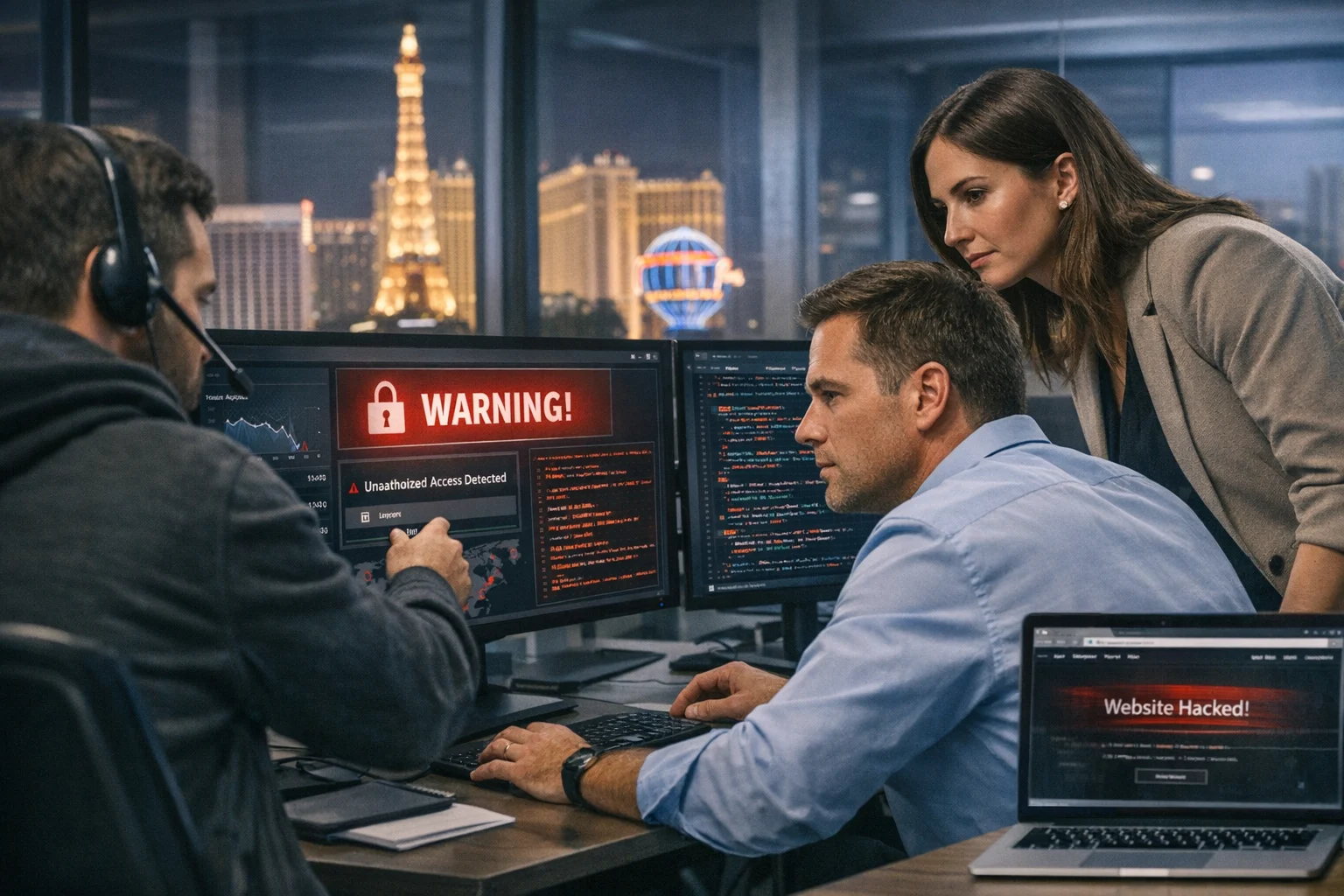
Some hacks are obvious. Others sit quietly for weeks while attackers inject spam pages, create rogue admin accounts, or use your server for phishing and outbound abuse. Many businesses first discover something is wrong because a customer reports odd behavior, or Google starts flagging the domain.
Common signs include:
- Your homepage redirects to another site
- Browser warnings say the site may be dangerous
- Search results show Japanese keyword spam, casino pages, or fake product listings
- Traffic drops suddenly, especially branded and local traffic
- Your CMS has unknown users, plugins, or code snippets
- Pages are defaced, replaced, or broken
- Hosting alerts mention malware, outbound spam, or excessive resource usage
- Forms stop working or start sending submissions somewhere else
- Google Search Console reports hacked content or security issues
If your business depends on local SEO Las Vegas, appointment requests, ecommerce, or lead forms, every hour matters. Even if the front end looks normal, the back end may already be compromised. Assume the issue is bigger than what you can see until you know otherwise.
The first hour: contain the incident
Your first job is containment. Not cleanup. Not redesign. Not posting on social media. Stop the attacker’s access and reduce the damage that is still happening.
1. Take the site offline if necessary
If the site is actively serving malware, redirecting users, or leaking data, put it into maintenance mode or temporarily disable public access. That may feel painful, especially if you’re running campaigns or ranking well, but leaving a dangerous site online causes deeper SEO damage and erodes trust.
For some businesses, a temporary holding page in a clean environment is the safest move. If your site supports transactions or customer logins, you may need to shut down those functions immediately while the incident is investigated.
2. Change credentials right away
Reset passwords for:
- Hosting or cloud control panel
- CMS admins
- FTP and SFTP accounts
- Database users where appropriate
- Domain registrar
- CDN, DNS, WAF, and email accounts tied to the website
Use strong, unique passwords and enable multi factor authentication wherever possible. If you only change the CMS password but leave hosting or DNS unchanged, an attacker may still have a way back in.
3. Suspend suspicious users and sessions
Disable unknown admin accounts, revoke active sessions, and remove any new SSH keys, scheduled tasks, or API tokens you didn’t authorize. On WordPress sites especially, hidden administrator accounts are a common persistence method.
4. Notify the right internal people
Loop in leadership, marketing, IT, and anyone who manages vendor relationships. A hacked website often touches several teams. Marketing needs to know if traffic campaigns should be paused. Leadership needs a status update. IT may need to investigate server access and logs. If your agency manages website maintenance, hosting, or system administration, call them immediately.
Preserve evidence before you start deleting things
This is where many businesses make mistakes. They find strange files, delete them quickly, and think they solved the problem. Then the attacker comes back two days later because the real access point was never identified.
Before you clean anything, preserve evidence:
- Take a full file backup
- Export the database
- Capture server and access logs
- Screenshot visible defacement, redirects, or warnings
- Document suspicious accounts, plugins, cron jobs, and code changes
You need a timeline and a trail. That matters for root cause analysis, insurance, legal review, customer communication, and preventing reinfection. If you want a deeper breakdown of safe cleanup steps, SiteLiftMedia has a guide on how to clean a hacked website without making it worse.
Figure out what was actually compromised
Not every hacked website incident means the same thing. In some cases, the damage is limited to the CMS. In others, the web server, hosting account, or connected systems are affected too.
Ask these questions early:
- Was the compromise limited to one website, or is the whole server affected?
- Did the attacker modify files, database content, DNS, or all three?
- Were customer records, form submissions, or payment data exposed?
- Did the attack come through an outdated plugin, weak password, vulnerable theme, or server misconfiguration?
- Are there signs of lateral movement into email, cloud storage, or internal tools?
This is where technical experience matters. A solid response usually includes malware scanning, log review, integrity checks, account auditing, database inspection, and verification of web server configuration. If the business relies on its site for lead generation, this is also when you start measuring search and conversion impact. A drop in indexed pages, sudden deindexing, or spam URLs in search results can undo months of technical SEO work.
WordPress sites deserve extra scrutiny because plugin and theme vulnerabilities are still one of the most common entry points. If that sounds familiar, read how outdated WordPress plugins put business sites at risk. It mirrors what we see in the field all the time.
Don’t trust a quick cleanup if the server itself is questionable
Many businesses want the fastest possible fix, and that’s understandable. But if the underlying server or hosting environment is compromised, cleaning visible malware from the website may not be enough. Backdoors can hide in system files, scheduled tasks, user accounts, or web server configurations.
In practical terms, that means your team may restore the homepage, remove injected code, and still get reinfected because the attacker kept deeper access.
Sometimes the right answer is not cleanup. It is a rebuild. If the compromise extends beyond the application layer, compare the time and risk of forensic cleaning against deploying a fresh environment with known clean code, patched software, rotated credentials, and hardened configurations. SiteLiftMedia covers that decision in when to rebuild a compromised server instead of cleaning it.
This matters even more for organizations sharing infrastructure across multiple sites, brands, or client properties. A server level compromise can spread the impact much further than one hacked domain.
Clean the site carefully and restore from a known good state
Once you understand the scope, the cleanup should be methodical. The goal is not just to make the site load again. The goal is to remove malicious code, close the entry point, and restore confidence that the environment is trustworthy.
Typical remediation steps include:
- Replacing core CMS files with clean originals
- Removing malicious scripts, backdoors, injected iframes, and unauthorized admin accounts
- Auditing plugins, themes, and third party scripts
- Reviewing the database for spam content, altered settings, and hidden payloads
- Checking .htaccess, Nginx or Apache configs, scheduled tasks, and upload directories
- Updating the CMS, plugins, themes, server packages, and runtime versions
- Restoring from a known clean backup when appropriate
Be careful with backups. A backup from last week is only useful if the compromise happened after the backup was taken. Many businesses restore an infected backup and reintroduce the same malware.
If you run a custom platform or a heavily modified site, cleanup may require a deeper code review and infrastructure audit. That’s where an agency with both development and security experience can save a lot of time. SiteLiftMedia handles custom web design, application support, and security response together, which matters when the attack touches both frontend assets and backend systems.
Harden the environment before reopening the site
Getting the site back online is only half the job. If you reopen without hardening, you risk landing right back in incident mode.
Start with the basics:
- Patch the CMS and all dependencies
- Remove unused plugins, themes, modules, and user accounts
- Enforce multi factor authentication
- Limit admin access by role and IP when possible
- Disable direct file editing in the CMS
- Set correct file permissions
- Deploy a web application firewall
- Verify secure backups and backup retention
- Enable file change monitoring and log alerts
- Review DNS and registrar security
Then move into stronger controls such as server hardening, endpoint isolation for admins, vulnerability scanning, and scheduled patch management. If your environment uses Apache or Nginx, web server configuration should be part of the discussion, not an afterthought.
After cleanup, we also recommend a structured validation pass. SiteLiftMedia has a resource on how to secure a website after malware removal fast that lines up well with post incident hardening.
For businesses that need a higher level of confidence, penetration testing can help verify that the original path has been closed and that no obvious weaknesses remain. It’s a smart move after a serious compromise, especially if the site processes customer information or supports a multi location operation.
Protect search visibility, ads, and lead flow
This part gets overlooked all the time. A hack is not just a security event. It can quickly turn into an SEO and revenue problem if handled poorly.
Here’s what marketing teams should check right away:
- Google Search Console security issues and manual actions
- Indexed pages for spam URLs
- Brand search results and cached snippets
- Google Ads destination approvals and policy flags
- Analytics integrity, including suspicious referral spikes
- Form completions, call tracking, and CRM syncs
If your business depends on SEO company Las Vegas style searches, local map visibility, or service pages built to rank in Nevada markets, a hacked site can wipe out hard earned momentum. We’ve seen businesses lose leads not because the site stayed offline for long, but because spam pages got indexed and trust signals dropped. Recovery may require technical cleanup, reindex requests, content corrections, and active monitoring.
For businesses investing in web design Las Vegas, Las Vegas SEO, or backlink building services, security should be treated as part of digital growth, not a separate silo. Every campaign depends on a stable and trusted destination.
Communicate clearly with customers and stakeholders
When people see security warnings or broken pages, silence creates more uncertainty than transparency. Your response should be calm, factual, and limited to confirmed information.
Depending on the incident, communication may include:
- An internal status update to leadership and support teams
- A customer notice if accounts, contact forms, or transactions were affected
- Vendor coordination with hosting providers, payment processors, or software partners
- Temporary updates on social channels if the website is unavailable
This is where your broader digital presence matters. If the site is down, your social media marketing channels, Google Business Profile, and email list may become your temporary front line for customer communication. Keep the message simple. Acknowledge the issue, explain service availability, and direct users to a trusted contact path.
If regulated data may be involved, bring in legal counsel and compliance guidance early. Notification requirements vary by state and industry.
Use the incident to fix the bigger operational problem
A website rarely gets hacked because of one bad day. Most incidents trace back to ongoing operational gaps: skipped updates, weak passwords, stale plugins, inadequate logging, unmanaged hosting, poor role control, or shared admin access across vendors.
That’s why a proper response should include an improvement plan, not just a repair invoice.
Good post incident questions include:
- Who owns patching and how often is it done?
- Do we have reliable offsite backups and restore testing?
- Is there a documented incident response path?
- Are our website, DNS, email, and registrar accounts under proper access control?
- Do we need managed cybersecurity services or system administration support?
- Is our hosting environment appropriate for the business risk we carry?
If you are already planning content expansion, a redesign, or infrastructure cleanup, this is a smart time to align those projects. Security and growth should support each other. A rushed redesign on top of an untrusted environment creates more problems. A clean rebuild, stronger maintenance process, and better access model can give your team a more stable foundation for SEO, paid traffic, and future development.
When it makes sense to call an agency like SiteLiftMedia
Some smaller incidents can be handled internally if you have capable technical staff, complete backups, and a clear understanding of the compromise. Many cannot.
You should bring in experienced help if:
- You do not know how the attacker got in
- The compromise may involve the server, DNS, or multiple sites
- Search rankings, ad traffic, or lead forms are already affected
- You suspect data exposure or repeated reinfection
- Your current vendor only wants to restore a backup and move on
- You need cleanup, hardening, and marketing recovery handled together
SiteLiftMedia works with businesses nationwide, with strong support for companies targeting Nevada and competitive local markets. For a Las Vegas business, a hacked site is not just an IT headache. It can disrupt local search visibility, paid campaigns, booking flow, and reputation right when you need the market to trust you. That is why our response work ties business website security to web operations, recovery, and growth.
We help organizations assess the damage, contain the issue, clean or rebuild the environment, harden hosting, restore trust signals, and get the site back into a stable marketing posture. That can include malware removal, technical SEO checks, performance validation, server hardening, application fixes, and long term website maintenance.
If your website has been hacked, don’t wait for the traffic drop, blacklist warning, or customer complaint to show you how serious it is. Lock down access, preserve evidence, and get the environment reviewed properly. If you need a fast response that covers both security and marketing recovery, contact SiteLiftMedia and start with containment before the damage spreads further.
Photo Gallery