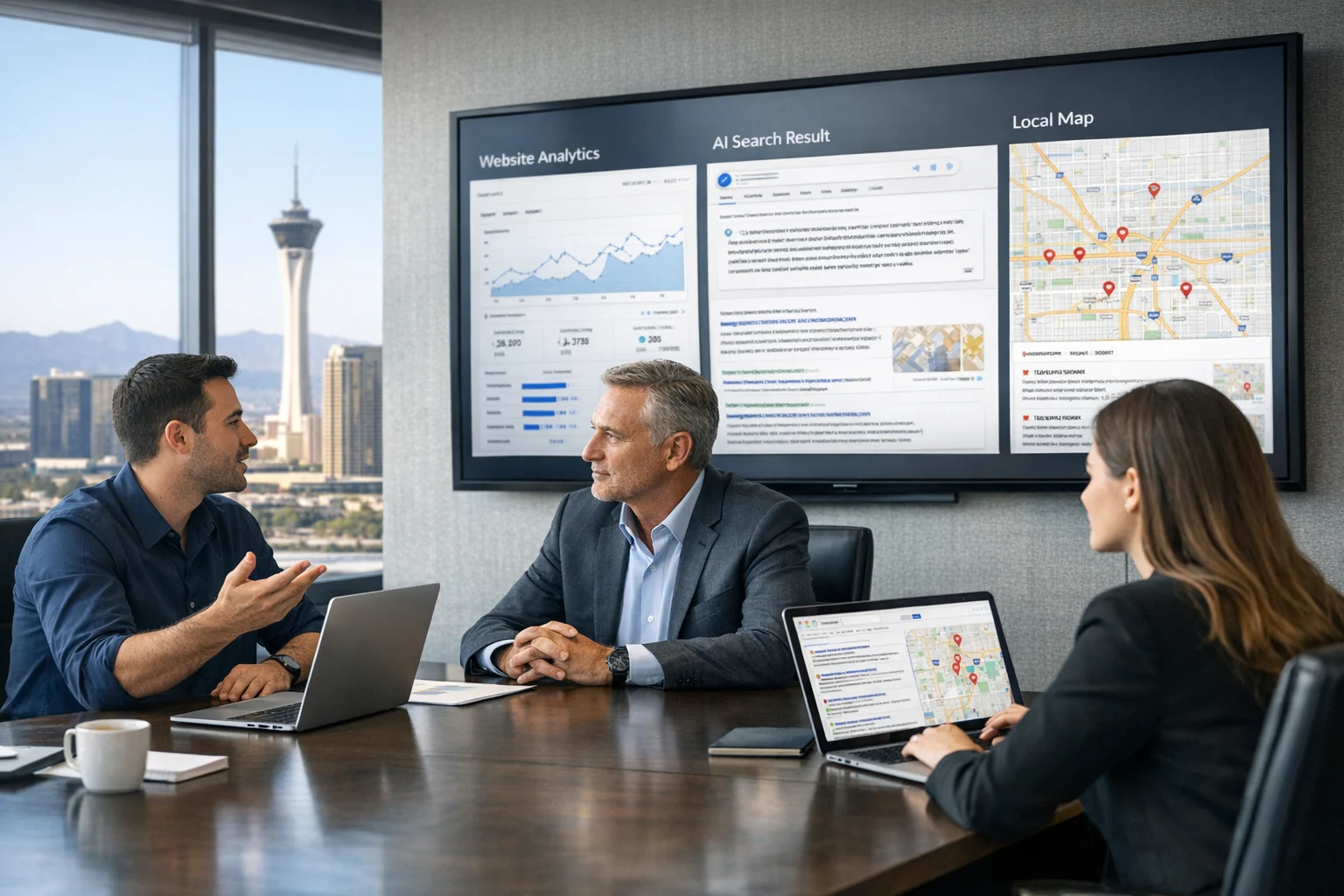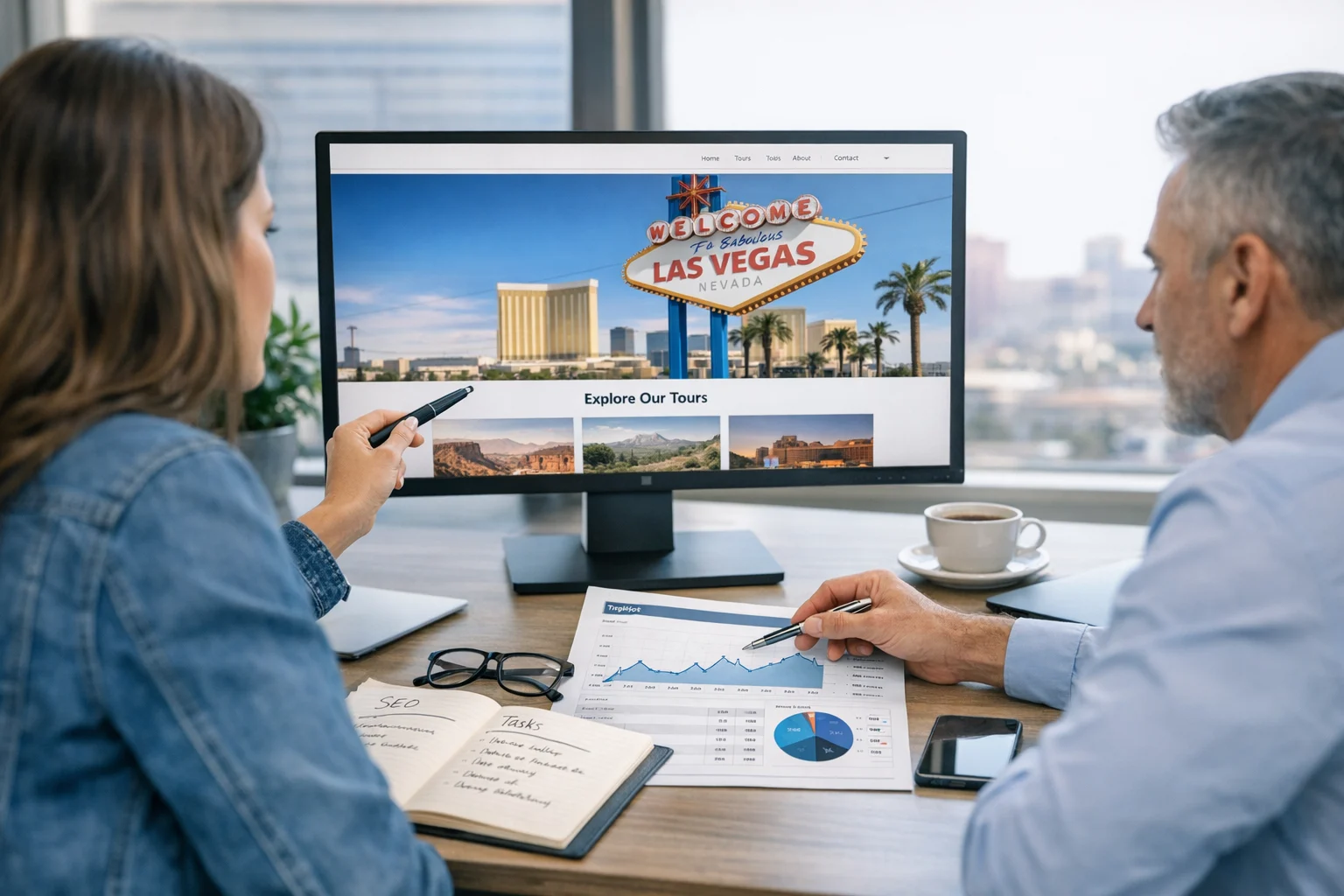
Search behavior has changed fast. People still use Google the old-fashioned way, but they also ask full questions in AI search tools, voice assistants, and search results that try to answer the question before a click ever happens. That shift is exactly why answer engine optimization matters now.
If your content is vague, bloated, or written only to chase rankings, it usually gets skipped when Google, Bing, AI assistants, and featured snippets look for the clearest response. If your content is well-structured, specific, and technically sound, you have a much better chance of becoming the source pulled into featured answers, AI summaries, and zero-click search experiences.
At SiteLiftMedia, we’ve seen this play out across local campaigns, service pages, city pages, and long-form content for companies that need better visibility without wasting budget. For a business owner or marketing manager, the opportunity is straightforward: create content that ranks, answers, and converts.
This article explains how to optimize content for answer engine optimization, often shortened to AEO, and how to improve your chances of earning featured answers. It’s written for nationwide brands, multi-location companies, and local businesses alike, with special attention to Las Vegas SEO and local intent where it matters most.
What answer engine optimization actually means
AEO is the practice of creating and structuring content so search engines and AI-driven tools can easily extract a direct answer from your page. Traditional SEO focuses heavily on rankings, traffic, and keyword targeting. AEO still depends on those fundamentals, but it goes a step further by asking whether your page can supply a clear, credible, machine-readable answer to a real question.
The best AEO content usually has a few traits in common:
- It answers a specific question directly near the top of the relevant section.
- It uses clean page structure with logical headings, short paragraphs, lists, and strong topical organization.
- It supports the answer with context, evidence, examples, and expertise.
- It is technically accessible so search engines can crawl, interpret, and trust the page.
- It aligns with search intent, including local intent for terms tied to geographic needs.
If you want a deeper look at the local side of this shift, SiteLiftMedia has also covered what AEO means and why it matters for local businesses.
Why featured answers matter for real business growth
Featured answers are valuable because they appear close to the decision point. When someone searches a question like “how much does web design cost in Las Vegas” or “what is included in technical SEO,” they’re often evaluating vendors, budgets, or next steps. If your content appears as the clearest answer, you gain trust before the user even lands on your site.
That visibility can support a few important outcomes:
- Higher brand authority in competitive search results
- More qualified clicks from users who already trust your expertise
- Stronger visibility for service pages, location pages, and educational content
- Better performance in voice search and AI-generated answers
- Improved top-of-funnel lead generation for agencies and service businesses
This is especially important in crowded markets. A company competing for terms like SEO company Las Vegas, web design Las Vegas, or local SEO Las Vegas is not just fighting for position in ten blue links anymore. It’s competing to become the answer source.
Start with question-driven keyword research
One of the biggest mistakes businesses make is building content around broad keywords without identifying the specific questions behind them. AEO starts with knowing what people are actually asking.
Instead of only targeting head terms like “technical SEO” or “custom web design,” break them into the question patterns users type or speak:
- What is technical SEO?
- How long does technical SEO take?
- What does custom web design include?
- How much does web design cost in Las Vegas?
- What is the difference between local SEO and national SEO?
- How do backlink building services work?
- Why does business website security affect SEO?
These question phrases can come from Google autocomplete, People Also Ask, Search Console, sales calls, customer support tickets, and competitor pages. If you’re a marketing manager planning Q1 growth strategies, go back through internal notes and ask your team what prospects keep asking before they sign. Those are often your highest-value AEO opportunities.
At SiteLiftMedia, we usually group these questions into search intent buckets:
- Definition intent, where users want a basic explanation
- Comparison intent, where users want differences, pros, or tradeoffs
- Transactional intent, where users are evaluating providers or services
- Local intent, where users want a solution in a city or service area
That structure helps you decide whether the answer belongs in a blog post, a service page, a location page, or an FAQ section.
Answer first, expand second
If you want to win featured answers, your content needs to get to the point faster than most websites do. A lot of pages bury the answer under long introductions, branding language, or unnecessary throat-clearing. Search engines do not reward that.
A practical approach looks like this:
Use a question-based subheading
For example, use an H2 or H3 like “What is answer engine optimization?” or “How can local businesses in Las Vegas improve featured snippet visibility?”
Follow it immediately with a direct answer
A strong answer paragraph is usually 40 to 60 words, though there’s no magic number. It should define, explain, or solve the question in plain English without wandering off topic.
Then add supporting detail
After the direct answer, expand with examples, bullet points, process steps, or caveats. This gives both search engines and human readers what they need.
Here’s the pattern in simple terms:
- Question heading
- Direct answer paragraph
- Expanded explanation
- List, table-style breakdown, or examples where useful
This one shift alone can dramatically improve your ability to earn featured snippets and AI-pulled citations.
Use formatting that makes extraction easy
Answer engines prefer clarity. That does not mean your content has to sound robotic. It means the layout should make key information easy to isolate.
Content that performs well for featured answers often includes:
- Question-based headings
- Short answer paragraphs near the top of each section
- Numbered steps for processes
- Bullet lists for definitions, benefits, or criteria
- Consistent terminology across the page
- Clear sentence construction without filler
For example, if you’re writing a page about penetration testing or cybersecurity services, a section titled “What does penetration testing include?” is far stronger than a vague heading like “Our comprehensive security approach.” Both may sound polished, but only one is easy for an answer engine to interpret quickly.
This is also where page design matters. Good structure is not just an SEO issue. It’s a user experience issue. If your content is hard to scan, both visitors and search engines will struggle with it. SiteLiftMedia has written about how content layout and visual hierarchy boost engagement, and the same principles strongly support AEO performance.
Build topical authority, not just isolated answers
One answer paragraph can win a snippet, but sustained visibility usually comes from topical depth. Search engines want confidence that your site knows the subject well, not that it accidentally produced one decent paragraph.
Your content should connect related concepts across your site. If you want to rank and surface for terms tied to Las Vegas SEO, your website should not only have one page targeting that phrase. It should also support the topic with related pages on local SEO Las Vegas, technical SEO, content strategy, website maintenance, custom web design, and backlink building services.
For an agency site, that topical network does two things at once:
- It strengthens semantic relevance around your primary services
- It gives answer engines more context about your expertise
For example, a business searching for an SEO company Las Vegas may also care whether that provider can handle website maintenance, business website security, server hardening, or system administration. A modern website is not just content and keywords. Trust also comes from operational stability.
That’s one reason SiteLiftMedia often approaches SEO, design, and infrastructure as connected disciplines. A page about local SEO can be stronger when it’s supported by pages about performance, design quality, and technical reliability.
Match the answer format to the query type
Not every question should be answered the same way. One of the easiest ways to improve AEO performance is to match your content structure to the type of answer users expect.
For definitions
Use a short paragraph. Example: “Technical SEO is the practice of improving a website’s crawlability, indexability, speed, structure, and overall search engine accessibility.”
For step-by-step queries
Use numbered lists or clearly sequenced bullet points. Example: “How to prepare a site for featured snippets.”
For comparisons
Use side-by-side distinctions in paragraph or list form. Example: “Local SEO versus national SEO.”
For pricing or scope questions
Use ranges, factors, and qualifiers. Be direct, but avoid fake precision if costs vary by market or complexity.
For local service questions
Use location qualifiers and practical context. Example: “Businesses in Las Vegas often need stronger local landing pages, map pack optimization, and review signals because of heavy market competition.”
When you align structure with intent, you make the page easier for both users and search systems to trust.
Strengthen local answer signals for Las Vegas intent
Nationwide businesses still need to respect local search patterns. If you serve Las Vegas clients, your content should reflect local language, local search behavior, and local competition.
That does not mean stuffing city names into every sentence. It means making your content genuinely relevant for users in the market.
Here are practical ways to do that:
- Answer location-specific questions such as pricing, timelines, and competitive factors in Las Vegas
- Create service pages that mention industries common in Southern Nevada when relevant
- Include clear service area language if you serve Las Vegas and nearby communities
- Support local SEO pages with map pack strategy and Google Business Profile optimization
- Reference local business realities like tourism, hospitality, home services, healthcare, professional services, or franchise growth
If local visibility is part of your growth plan, pair AEO with strong local SEO execution. That includes your Google Business Profile, review signals, local landing pages, and map pack strategy. SiteLiftMedia has also shared guidance on how Las Vegas businesses can improve map pack rankings.
Answer visibility and local pack visibility often reinforce each other. A business that becomes a trusted answer source can earn more branded searches, and stronger local prominence can improve confidence in your content.
Use schema and technical SEO to support answer extraction
Content quality is the foundation, but technical SEO helps search engines interpret that content correctly. If your site has crawl issues, poor page speed, weak internal linking, or sloppy structure, you’re making AEO harder than it needs to be.
Key technical areas to review include:
- Heading structure with logical H2 and H3 use
- FAQ schema where it genuinely matches visible content
- Article or service schema when appropriate
- Fast load times, especially on mobile
- Clean HTML output without bloated page builders breaking structure
- Strong internal linking to related support pages
- Indexation control so the right pages are eligible for search visibility
For many companies, this is where AEO efforts stall. The content team writes decent answers, but the website itself is underperforming. We see it often during redesigns, website refresh projects, and migrations. A company invests in new copy, but the site still has weak technical SEO, poor template structure, or internal linking gaps.
If you suspect that’s happening, a proper audit usually reveals it. A good starting point is understanding how to audit a website for organic traffic opportunities before publishing more content into a flawed system.
Trust signals matter more than people think
Answer engines are looking for clear answers, but they also care about source quality. A page is more likely to perform when it shows signs of real expertise, real business presence, and real operational credibility.
That can include:
- Specific author or brand expertise
- Detailed service explanations
- Case examples or firsthand observations
- Accurate contact and business information
- Strong review and reputation signals
- Relevant backlinks from credible sources
For service businesses, broader operational trust can shape perception too. If you offer technical services, your content should reflect real competence. A company discussing business website security should understand how security affects performance, uptime, and rankings. A page about cybersecurity services is stronger when it references practical realities like penetration testing, server hardening, website maintenance, and system administration instead of generic “we protect your site” language.
This is one area where brands gain an edge by speaking from experience. Shallow content is easy to spot. Practical content wins more often.
Write for featured snippets without sounding like a snippet factory
Some businesses overcorrect when they learn about AEO. They stuff every page with robotic question blocks and dry definitions. That usually creates weak content that neither converts nor builds trust.
The goal is not to make every page sound like a glossary. The goal is to make valuable pages easier to extract from.
A better balance looks like this:
- Keep the answer concise, but not lifeless
- Use natural wording that reflects how clients actually ask questions
- Add examples from real work when possible
- Move from direct answer into strategic insight
- Maintain a strong brand voice across the page
For example, a solid answer paragraph might define local SEO Las Vegas clearly, but the surrounding content can explain why the city’s market behaves differently, which tactics work, and where businesses waste money. That’s what makes the page useful, memorable, and commercially valuable.
Support AEO with strong on-page SEO fundamentals
AEO is not a replacement for on-page SEO. It’s an extension of it. If your title tags, headings, content depth, internal links, and entity relevance are weak, your direct answer paragraphs have less chance of being surfaced.
Strong on-page optimization still includes:
- Clear topic targeting
- Descriptive page titles and meta descriptions
- Intent-aligned headings
- Relevant supporting entities and related terms
- Helpful image alt text where appropriate
- Internal links to closely related pages
- Pages built around one strong primary topic
If your site already has content but it is underperforming, you may not need a full rebuild. In many cases, strategic edits can improve both traditional rankings and answer visibility. SiteLiftMedia has outlined useful on page SEO improvements that lift rankings without redesign.
Measure the right signals
AEO success is not always captured by one metric. You should still watch rankings and organic traffic, but answer optimization also affects visibility in ways that can look different from standard SEO reporting.
Useful indicators include:
- Growth in impressions for question-based queries
- Increased clicks from informational terms that later assist conversions
- Featured snippet ownership for target questions
- More branded search demand after answer exposure
- Stronger local engagement from city-based service pages
- Lead quality improvements from better educated prospects
For a Las Vegas business, you may also see gains in supporting areas such as map pack actions, more qualified calls, or better conversion rates on local landing pages. When content answers pre-sale questions well, sales conversations tend to get shorter and cleaner.
Common mistakes that keep businesses out of featured answers
We see the same issues repeatedly when companies try to improve AEO on their own.
- They write long intros before answering the question.
- They target broad keywords without mapping user questions.
- They use weak page structure with vague headings.
- They publish duplicate answers across multiple pages.
- They ignore technical SEO and page speed.
- They create content that sounds machine-written and generic.
- They fail to connect informational content to services and conversion paths.
Another big one is publishing educational content that never leads anywhere. If a reader lands on your article about custom web design, technical SEO, or social media marketing, the page should make it easy to explore related services. Informational content should help users move naturally toward action when they are ready.
Where agency support makes the difference
There’s a point where DIY content improvements stop being efficient. If you have a growing business, multiple locations, a competitive Las Vegas market presence, or a site that needs cross-functional help, the real win comes from coordinated execution.
That means content strategy, technical SEO, design, local optimization, analytics, and site reliability all working together. It also means protecting the asset you’re building. A site that earns answer visibility still needs business website security, website maintenance, and stable hosting practices. If your site gets compromised or slowed down by poor infrastructure, your content investment takes the hit.
That broader view is where SiteLiftMedia helps clients stand out. We work with businesses that need more than keyword placement. They need search visibility, better site performance, cleaner messaging, stronger local reach, and the confidence that their digital presence is secure and scalable.
If your team wants to improve featured answers, strengthen Las Vegas SEO visibility, or build a smarter content system that supports real leads, reach out to SiteLiftMedia. We can audit what you already have, identify the questions your market is asking, and turn your pages into assets that answer clearly and sell effectively.
Photo Gallery