If your business has seen social reach dip, engagement swing wildly, or paid campaigns get more expensive, you're not imagining it. Social media algorithm changes have become one of the biggest moving targets in modern marketing, and they now affect far more than likes and views. They influence lead quality, brand visibility, content planning, website traffic, and how quickly a prospect moves from discovery to inquiry.
For business owners and marketing managers, that matters because social media is no longer just a publishing channel. It's a distribution system controlled by platforms that constantly adjust what gets shown, to whom, and why. A post that performed well six months ago might now get buried. A short video that feels casual can outperform a polished ad. A local service company in Las Vegas might get more traction from proof-based content and strong landing pages than from the broad awareness campaigns that used to work.
At SiteLiftMedia, we've seen this firsthand across industries. One of the clearest patterns is that the businesses doing best right now are not relying on social media marketing alone. They're combining social content with strong websites, technical SEO, local SEO, fast-loading pages, better conversion paths, and tighter reporting. When algorithms shift, owned assets become even more valuable.
That is especially true for companies competing in high-intent local markets. If you're trying to grow in Las Vegas, you can't afford to treat social as a separate island. Social content should support your Las Vegas SEO strategy, help your web design Las Vegas pages convert, and create more branded search demand over time.
The biggest algorithm shift is simple: platforms care more about interest than followers
For years, brands were taught that growth meant building a follower base and posting consistently. Consistency still matters, but follower count has far less control over distribution than many businesses assume. Most major platforms now push content based on predicted user interest and satisfaction signals, not just who follows you.
That changes the marketing equation.
A business page with 20,000 followers can still underperform if its content doesn't generate quick engagement, hold attention, or send quality signals back to the platform. Meanwhile, a smaller brand can break out if its content is timely, useful, and matched to how users currently consume information.
For marketers, that means organic reach is less stable and less guaranteed. It also means content has to earn visibility every time. The platform is asking questions in real time:
- Will people stop scrolling for this?
- Will they watch, read, save, share, or comment?
- Does this content match what similar users have responded to recently?
- Does it create a positive session for the user?
Those are algorithm questions, but they should also become business marketing questions. If your content doesn't offer a clear value exchange, visibility gets harder to earn.
What platforms are rewarding now
While each network has its own logic, there are common patterns. Social algorithms increasingly reward content that keeps people engaged on-platform, feels native to the feed, and generates stronger interaction signals than passive impressions.
Watch time and completion rate matter more than vanity metrics
Video still drives outsized discovery, but not all video works. Platforms care less about the fact that a video exists and more about how long people actually stay with it. Businesses that open with weak intros, generic branding, or slow pacing often lose the viewer before the algorithm has enough positive data to keep pushing the post.
That's one reason short, useful, direct content often wins. If you're a law firm, med spa, contractor, restaurant group, or B2B service provider in Nevada, content that answers a real question quickly usually performs better than a broad corporate message.
Saves, shares, and comments beat empty reach
Not all engagement is equal. A quick like is easy to earn and easy for a platform to discount. Saves and shares suggest stronger relevance. Comments signal conversation. Direct messages often indicate serious buying interest, even if the public metrics don't look huge.
This is where many businesses misread performance. A flashy post can gather views without generating intent. A simple educational post can bring fewer views but better leads. The algorithm increasingly rewards the second category because it reflects a stronger user response.
Platform-native content tends to outperform repurposed content that feels out of place
Cross-posting can save time, but it often produces average results. A Reel copied to every channel with no edits, mismatched captions, or poor formatting usually underdelivers. Businesses need efficiency, yes, but they also need content that feels built for the environment it's in.
That's why we often tell clients to think in content themes instead of identical reposts. The same message can be adapted for LinkedIn, Instagram, YouTube, Facebook, and TikTok without feeling duplicated.
What this means for business marketing strategy
The practical takeaway is not that social media is broken. It's that social has become less predictable and more performance-driven. That pushes businesses toward a more connected marketing strategy.
If your social content is the top of the funnel, your website has to do more of the heavy lifting once people click. If social reach drops, your SEO and email list matter more. If paid social costs rise, your landing pages and offer clarity determine whether the spend is still profitable.
Businesses that adapt well usually make four changes:
- They stop posting just to stay active and start publishing around buyer questions, proof, trust, and intent.
- They connect social activity to stronger landing pages and conversion tracking.
- They invest in owned channels like search, email, and their website.
- They review performance based on leads and revenue, not just platform metrics.
That sounds simple, but in practice it's where many companies fall short. Social content gets handled by one person, the website by another vendor, analytics by nobody, and sales feedback stays in a separate silo. Then the business is surprised when social performance feels inconsistent.
Organic social can't carry the whole pipeline anymore
One of the most important business shifts is this: organic social by itself is rarely enough to support reliable growth. It can create awareness and trust, and in some industries it can generate direct leads, but it works best when supported by other channels.
That's why strong SEO is increasingly tied to social performance. Social content can create demand, but search captures intent. If someone sees your brand on Instagram or LinkedIn and later searches for your company, your service, or a local solution, your website needs to show up and convert.
For Las Vegas businesses, that connection is especially valuable. A customer might discover a brand socially, then search phrases like Las Vegas SEO, SEO company Las Vegas, web design Las Vegas, or local SEO Las Vegas when they're ready to compare providers. If your search presence is weak, the social touchpoint helped the market, but not necessarily your company.
We've covered related search changes in our article on SEO industry trends businesses should watch this year, and the overlap is real. Search and social are no longer separate tracks. They reinforce each other.
Your website matters more when algorithms tighten
When platforms reduce organic visibility or raise advertising costs, your site becomes the asset you control. That means the basics are not optional:
- Fast-loading pages
- Clear service positioning
- Strong calls to action
- Reliable analytics and event tracking
- Mobile-friendly layouts
- Technical SEO that supports indexation and visibility
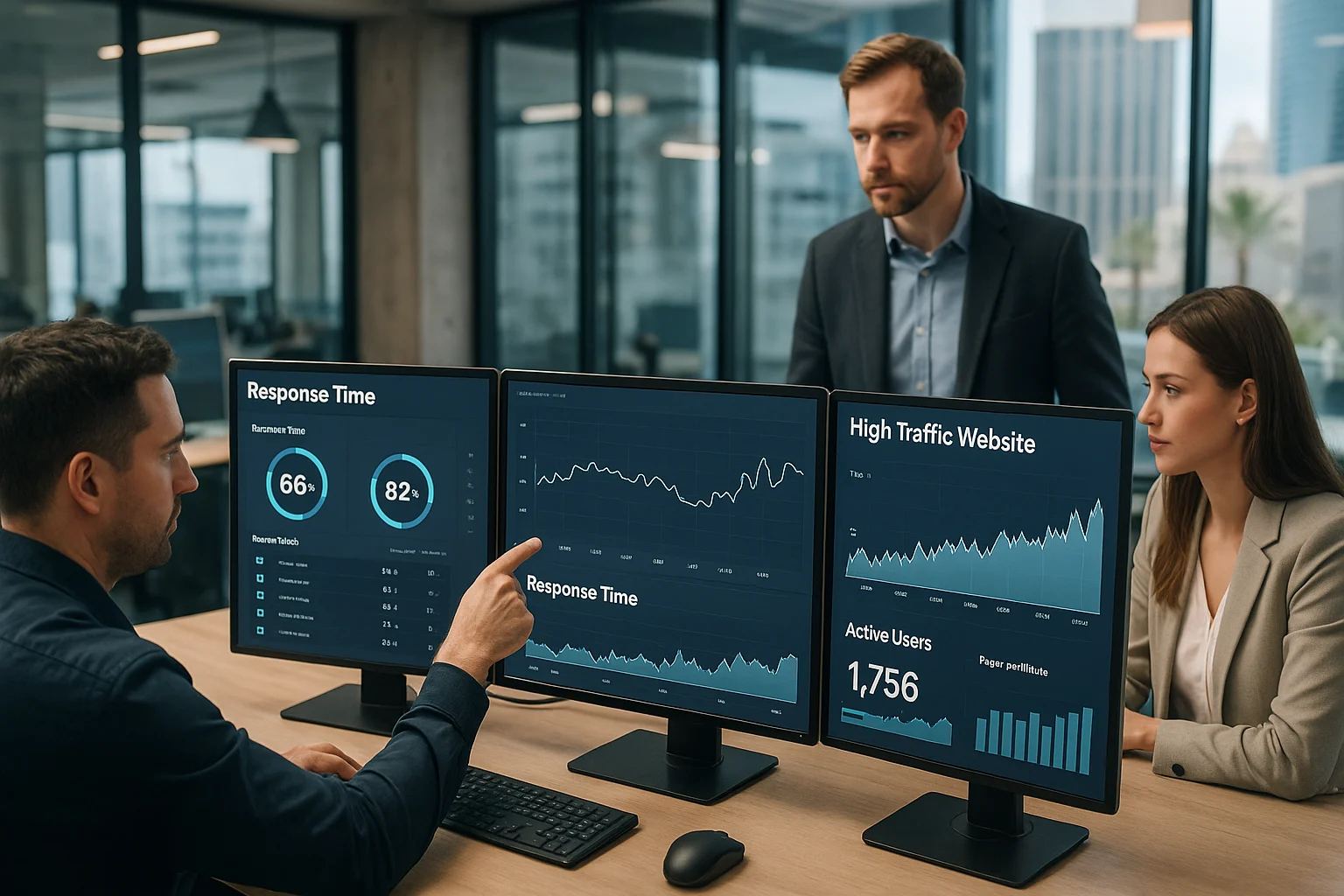
If your content gets traction but your site is slow or confusing, the algorithm didn't fail you. The funnel did. Businesses investing in social should revisit site performance regularly, especially during spring marketing pushes, redesign planning, or content expansion. If page speed is holding you back, this piece on why fast loading websites matter for Las Vegas businesses is worth a look.
Las Vegas businesses have a unique opportunity right now
Nationwide trends matter, but Las Vegas has its own marketing reality. It's competitive, visually noisy, and packed with businesses trying to win attention fast. That environment rewards companies that connect attention-grabbing social content with a stronger local search presence and polished digital infrastructure.
We've seen this across hospitality, home services, legal, fitness, health, and professional services. A company may produce solid social content, but if its site lacks location relevance, trust content, review integration, and local landing page structure, it leaves money on the table. Good social media marketing gets people curious. Strong local SEO and custom web design turn that curiosity into calls and form submissions.
For Las Vegas brands, a better response to algorithm changes often includes:
- Creating content around local customer questions and seasonal trends
- Publishing proof, before-and-after results, testimonials, and behind-the-scenes process content
- Sending traffic to service pages built for conversion
- Improving internal linking, schema, metadata, and technical SEO
- Expanding local content clusters to support map and organic visibility
That combination gives your business more than one chance to win the customer. If they don't convert from social right away, they can still find you later through branded or non-branded search.
The paid social side is changing too
Algorithm changes don't only affect organic posts. They also shape ad performance. As platforms prioritize relevance and user satisfaction, weak creative gets expensive faster. If your ads look like ads, your message is generic, or the post-click experience is poor, your cost per result can climb quickly.
That doesn't mean paid social is losing value. It means paid social now demands better creative testing, tighter audience strategy, and stronger landing page alignment. In many accounts, the brands getting the best return are using organic insights to guide paid decisions. They're watching which hooks, formats, and questions generate real engagement, then turning those into campaigns.
This is where agency support can save time and budget. A smart paid strategy doesn't live in a vacuum. It needs design input, offer positioning, tracking setup, and site-level conversion improvements. SiteLiftMedia often works across those layers because performance rarely comes from media buying alone.
The businesses winning now are publishing more useful content, not just more content
When algorithm volatility increases, many teams react by posting more often. That can help if quality is steady, but it can also create waste. The better move is usually to publish with sharper intent.
Useful content tends to fall into a few categories:
- Education: Answering common buyer questions in plain language
- Proof: Showing results, examples, process, or client outcomes
- Authority: Explaining how your team solves specific problems
- Trust: Addressing objections, timelines, pricing ranges, and expectations
- Local relevance: Speaking directly to the market you serve
That approach works for B2B and B2C. It also creates assets you can reuse in email, sales enablement, landing pages, and search content. One solid topic can become a short video, a carousel, an FAQ section, a blog post, and a service page update.
If your team needs ideas that connect content with lead generation instead of empty engagement, our article on social media tactics that actually bring inbound leads gets into that in more detail.
Why owned data, security, and infrastructure matter more than marketers think
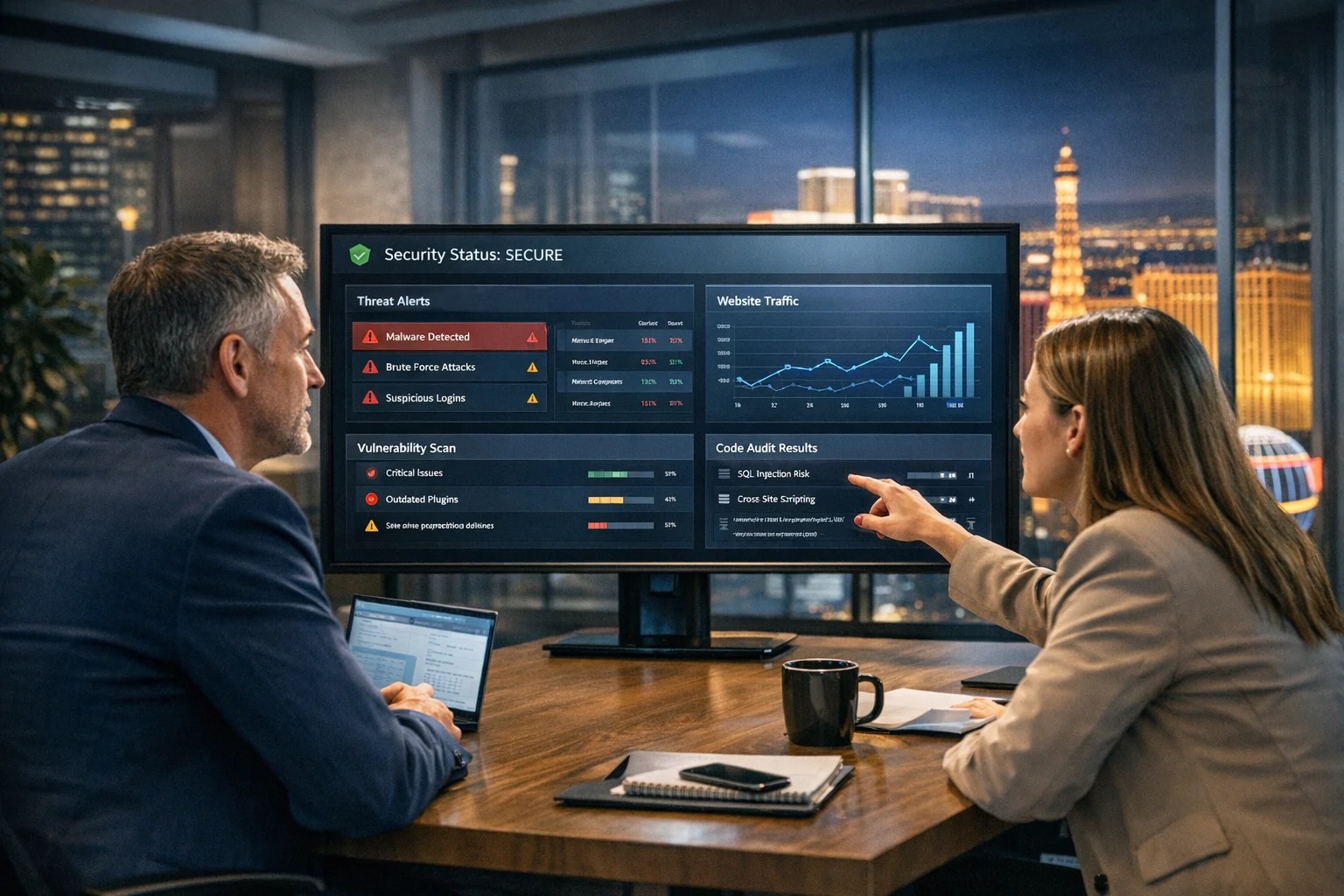
There is another side to algorithm changes that doesn't get enough attention. As social platforms become less predictable, businesses become more dependent on the systems they control. That means your website, CRM, analytics, forms, hosting environment, and security setup matter more than ever.
If a campaign succeeds and drives traffic to a site with unstable forms, poor mobile performance, or security issues, you're leaking value at exactly the wrong time. This is where digital growth stops being just a marketing conversation and becomes an operations conversation too.
Businesses scaling social traffic should be thinking about:
- Website maintenance so forms, plugins, and integrations keep working
- Business website security to protect lead data and site integrity
- Cybersecurity services for risk reduction as digital activity grows
- Penetration testing for sites handling sensitive data or high-traffic campaigns
- System administration and server hardening for performance and stability
This might sound outside the scope of social media, but it isn't. Strong distribution without secure infrastructure creates risk. If you're pushing more traffic through landing pages, forms, and customer portals, your digital foundation has to be reliable. For companies that need to tighten that side of the stack, our article on how penetration testing prevents costly website incidents is a good starting point.
Common mistakes businesses make after algorithm changes
When reach drops or results flatten, a lot of teams make the same mistakes. They're understandable, but expensive.
Chasing every platform update
Not every announcement requires a total strategy reset. The goal is to track patterns, not panic. Businesses that constantly pivot without reviewing data usually lose consistency and brand clarity.
Blaming the algorithm for weak offers
Sometimes the issue isn't distribution. It's positioning. If the message is vague, the audience is too broad, or the call to action is weak, no algorithm tweak will fix it.
Treating social as separate from SEO, web design, and conversion rate work
A campaign should not end at the click. Your custom web design, technical SEO, service page structure, and analytics setup all affect whether social effort turns into revenue.
Ignoring search intent created by social exposure
Branded demand often rises after strong social campaigns. If your business is not visible for service plus location searches, review queries, and comparison intent, you're missing the second half of the opportunity.
Underinvesting in proof
People trust evidence. Screenshots, case results, timelines, testimonials, walkthroughs, and real process content usually outperform generic brand statements, especially in competitive markets.
A practical 90 day response plan for businesses
If you're trying to respond to social media algorithm changes without wasting the next quarter, keep it focused. Here's a practical direction we recommend:
- Audit the last 90 days of content and sort by leads, not just engagement
- Identify the topics that generated direct messages, calls, form fills, or branded searches
- Build three to five content pillars around customer questions, proof, objections, and local relevance
- Refresh landing pages tied to your most important services
- Improve page speed, mobile UX, and tracking setup
- Support social campaigns with local SEO and service page optimization
- Review hosting, security, and maintenance before scaling spend
- Add remarketing and email follow-up so one missed social touchpoint doesn't end the journey
This is also a great time for infrastructure cleanup. If your business is planning a redesign, expanding content, or preparing for a spring marketing push, make sure the foundation can support more visibility. That might mean cleaner analytics, better lead routing, updated plugins, new landing pages, or stronger backlink building services to support search growth after social exposure creates demand.
Where SiteLiftMedia fits in
Most businesses don't need more random posting. They need a better system. That usually means aligning social media marketing with conversion-focused design, technical SEO, local visibility, paid strategy, and site reliability.
SiteLiftMedia works with businesses nationwide, with a strong focus on Las Vegas and Nevada companies that need sharper digital performance across channels. Whether you need a stronger content plan, a site rebuild, local SEO Las Vegas support, conversion improvements, cybersecurity services, or a more stable digital growth stack, the work should connect. That's how you reduce the risk of algorithm shifts and build a marketing engine that doesn't depend on one platform's mood.
If your team is seeing unstable social performance, rising ad costs, or weak conversion from otherwise solid campaigns, it's probably time to look beyond the feed. Contact SiteLiftMedia to identify the gaps between your content, your website, your search visibility, and the systems that turn attention into revenue.
Photo Gallery