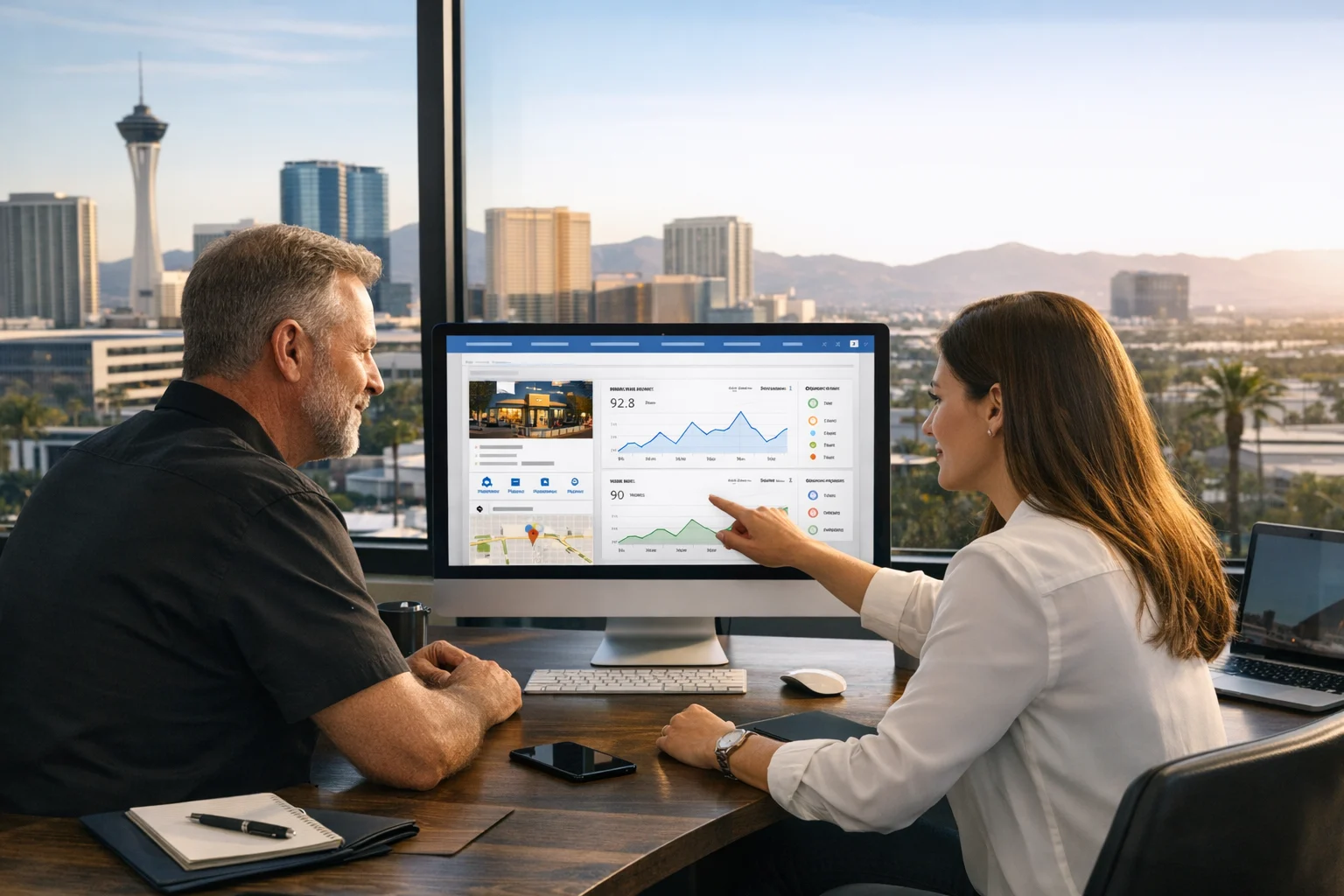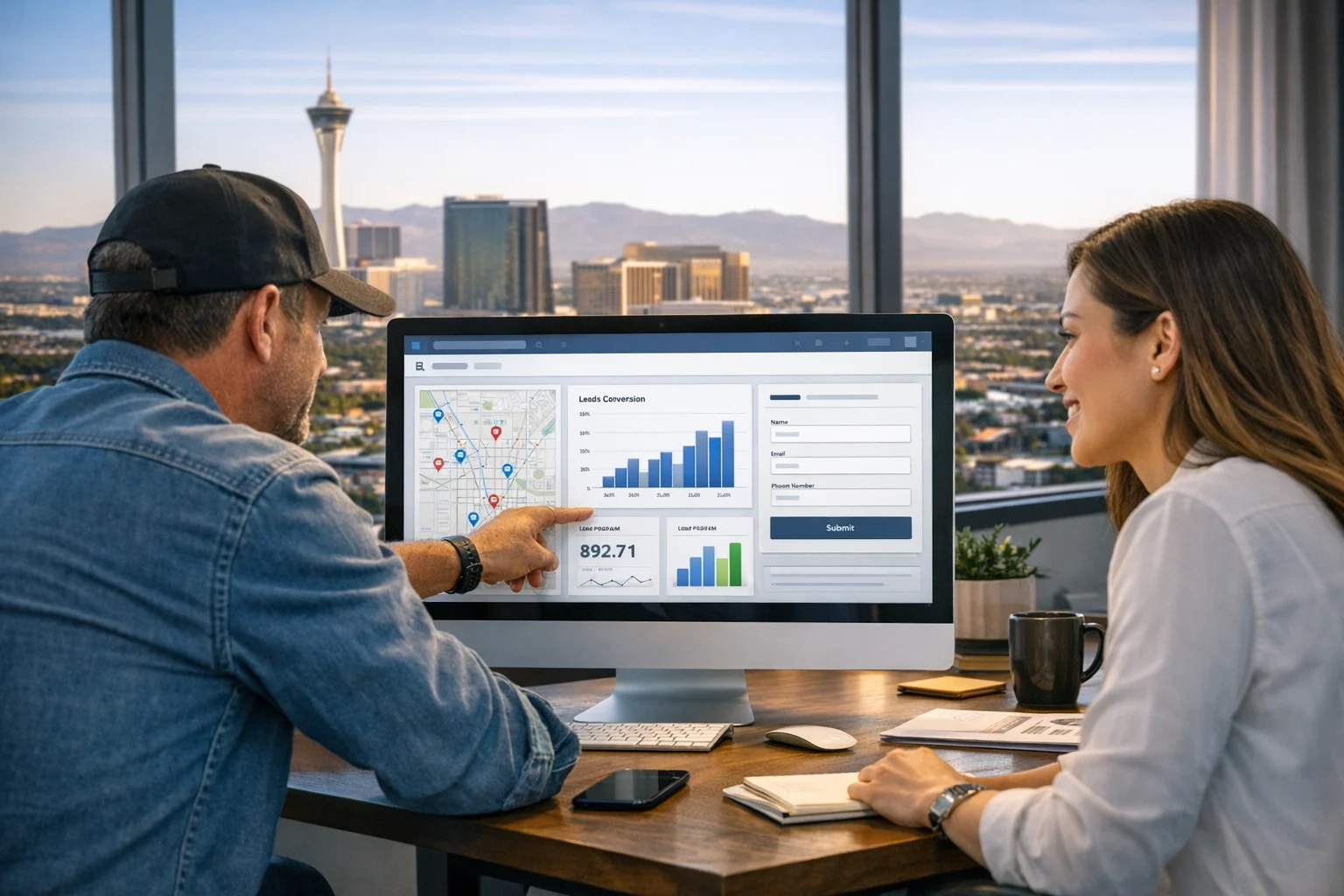
Facebook Ads can still drive excellent local leads, but only when the campaign is built to filter out weak prospects before they ever click. That is where most businesses get stuck. They launch a campaign, see traffic come in, collect a pile of form fills, and then realize half the leads are outside the service area, not ready to buy, or were never a fit in the first place.
At SiteLiftMedia, we have seen this happen with service businesses, medical practices, home service companies, legal firms, real estate teams, and multi-location brands. The problem usually is not that Facebook Ads do not work. It is that the strategy was built to generate more responses instead of better ones.
If your goal is more qualified local leads, the setup has to do more than grab attention. It has to pre-qualify, geo-filter, build trust, and connect the click to a landing experience that feels local and credible. That matters everywhere, but it matters even more in competitive markets like Las Vegas, where consumers have plenty of choices and very little patience for vague offers.
Whether you serve a single city or multiple regions nationwide, the tactics below can help turn Facebook Ads into a lead source that supports real sales conversations instead of creating busywork for your team.
Start by defining what a qualified local lead actually means
Before you touch audience targeting, creative, or budget, get specific about the type of lead you want. A qualified local lead is not just anyone who submits a form. It is someone who fits your service area, budget, problem, timeline, and likely buying intent.
That sounds obvious, but many campaigns fail because businesses optimize for the easiest metric to inflate. Cheap leads usually look great in a report and terrible in the sales pipeline.
For example, if you are a Las Vegas contractor, a qualified lead may be someone within a 20 mile service radius who owns a home, needs a project above a certain dollar amount, and wants an estimate within the next 30 days. If you run a B2B company offering technical SEO, website maintenance, or cybersecurity services, a qualified lead may be a business owner or marketing manager at a company with at least five employees and an active website.
Get those qualifiers on paper first. Once you know what a real opportunity looks like, every part of the campaign becomes easier to shape.
Use geo targeting that reflects how local buyers actually search
One of the biggest mistakes in Facebook Ads is choosing a city and calling it a day. Local lead generation needs tighter geographic control than that. If you serve Las Vegas, you may not want impressions going equally to Summerlin, Henderson, North Las Vegas, and every nearby area unless your pricing, logistics, and sales process support it.
Good geo targeting starts with service realities, not vanity reach.
- Use radius targeting around your office, showroom, or key service zones when that matches how you operate.
- Exclude areas where response quality is historically poor or travel costs cut too deeply into margins.
- Split campaigns by territory when messaging needs to change by neighborhood, city, or metro area.
- Write ads with location cues so the right person instantly sees local relevance.
In Las Vegas, this often means speaking directly to the part of the market you want. A luxury service brand should not run the same message citywide if its ideal clients are concentrated in specific areas. A local medical provider may want separate campaigns for different practice locations. A home service company might build ad sets around drive time and crew availability.
That local specificity also supports stronger search intent when users later research your brand. Many prospects first see a Facebook Ad, then search for terms like Las Vegas SEO, SEO company Las Vegas, web design Las Vegas, or local SEO Las Vegas before they convert. When your ads and landing pages align with those local signals, trust rises quickly.
Build audiences around buying signals, not broad interest stacks
Facebook gives advertisers a lot of audience options, but not all of them are equally useful for local lead quality. Broad interest targeting can still work, especially with strong creative, but relying on a random pile of interests usually produces weak leads. Better campaigns start with audience logic tied to actual buyer behavior.
Use customer data first
Your best audience often begins with the people who already know you. Upload customer lists, qualified lead lists, or closed deal lists where permitted and privacy compliant. Then build lookalikes from the data source that most closely matches revenue, not just lead volume.
If you create a lookalike from every form fill, you may train the platform to find more low quality form fillers. If you build it from closed clients, high value consultations, or booked appointments, the algorithm gets a much better signal.
If you want a deeper breakdown of audience structure, SiteLiftMedia has covered Facebook Ads audiences for local businesses in more detail.
Layer in business reality
Audience strategy should reflect the kind of company you are and the value of the service being sold.
- For higher ticket home services, pair homeowner indicators with local geography and strong qualification messaging.
- For B2B services like custom web design, backlink building services, technical SEO, or system administration, focus on business decision makers and remarketing audiences from your site.
- For specialized services like penetration testing, server hardening, or business website security, trust and education matter more than broad top of funnel reach.
That last point matters. Sophisticated services usually perform better when the ad attracts fewer people, but better people.
Pre qualify in the ad copy instead of hiding the details
A lot of advertisers worry that adding specifics will reduce clicks. It will. That is often a good thing.
When your goal is more qualified local leads, the ad should do some filtering before the click. Clear offers, clear pricing cues, and clear service limitations save time for both your team and your prospects.
Here is what tends to improve lead quality:
- Name the location in the headline or primary text when local relevance matters.
- Call out the service type so casual browsers do not mistake your offer for something else.
- Reference the ideal fit such as business owners, homeowners, property managers, or established companies.
- Set expectations about timing, budget range, or consultation process where appropriate.
- Show proof with ratings, client outcomes, years in business, or portfolio examples.
For example, if SiteLiftMedia is promoting digital growth services in Las Vegas, a stronger ad might say we help local businesses improve lead quality with SEO, paid ads, and custom web design, rather than simply saying we do marketing. The more precise the ad is, the more the wrong users will filter themselves out.
If your campaigns are attracting clicks but not sales conversations, this is usually one of the first areas to inspect. SiteLiftMedia also breaks down why Las Vegas ad campaigns get clicks but no leads, which ties closely to this issue.
Use creative that matches local intent and buyer awareness
Creative is not just decoration. It is a qualification tool. The right image or video helps the prospect understand what you do, where you operate, and whether you feel legitimate.
For local lead generation, generic stock images underperform more often than businesses expect. Prospects respond better when creative reflects reality. Show your team, your location, your work, your client environment, or a clear before and after outcome.
In a city like Las Vegas, that can mean using recognizable local cues without overdoing it. If you are a local service provider, subtle visual relevance can reinforce that you understand the market. If you serve clients nationwide, you can still localize campaign sets with geography-specific creative and copy for major metros while keeping the core brand consistent.
Creative should also match awareness stage:
- Cold audiences need simple problem-solution messaging.
- Warm audiences respond well to proof, case studies, and objection handling.
- Hot audiences need a direct path to book, call, or request a quote.
One practical tip here, if your sales team keeps hearing the same objections, use your ad creative to address them before the lead comes in.
Choose the right conversion path for your offer
Lead forms inside Facebook can work, but they are not automatically the best option for qualified local leads. In many cases, instant forms increase quantity while lowering intent because they reduce friction too much.
There are times when Facebook lead forms make sense, especially for fast follow up offers, event registrations, quote requests, or mobile-heavy campaigns. But for services that require more trust, a dedicated landing page often does a better job of qualifying the prospect.
When to use a Facebook lead form
- You need a low friction first step
- Your sales team can respond quickly
- You use custom questions to filter bad fits
- The offer is straightforward and familiar
When to send traffic to a landing page
- The service needs explanation
- You want to show reviews, work samples, or credentials
- You need stronger local trust signals
- You want better tracking and remarketing control
A business selling custom web design, local SEO Las Vegas services, or cybersecurity reviews will usually benefit from a strong landing page more than a bare lead form. The prospect wants to know who they are dealing with. They may want to review your process, read client proof, or compare options before contacting you.
Make the landing page do the heavy lifting
If the ad gets the click, the landing page decides whether the lead is worth having. This is where many businesses waste good media spend. They run decent ads to a weak page with vague copy, poor mobile performance, or no local proof.
Your landing page should answer five things fast:
- What do you offer?
- Who is it for?
- Where do you provide it?
- Why should the visitor trust you?
- What should they do next?
For local campaigns, add clear service area references, location-specific testimonials, recognizable project examples, and friction-reducing calls to action. If you serve Las Vegas businesses, say so. If your team also supports clients nationwide, say that too, but keep the page tightly aligned with the audience that clicked the ad.
This is also where related service credibility helps. A business looking for help with Facebook Ads may be more likely to convert if they see you also understand web design Las Vegas projects, technical SEO, social media marketing, website maintenance, and business website security. Buyers want a partner who sees the bigger picture, not just a platform operator.
We often tell clients that ad performance is tied directly to site quality. Fast pages, strong UX, and clear trust signals matter. If the site is outdated, slow, or hard to use, the campaign pays the price.
Ask better questions so the lead qualifies themselves
If you are using lead forms or consultation requests, the form itself should help screen prospects. A short form may improve volume, but a slightly smarter form improves sales efficiency.
Instead of asking only for name, email, and phone, consider adding one or two strategic questions:
- What service are you looking for?
- What is your timeline?
- What city are you located in?
- What is your estimated budget range?
- What type of business do you run?
Do not overdo it, especially on mobile. The goal is not to interrogate people. The goal is to help your team prioritize follow up and reduce junk submissions.
For higher value services, these extra fields are often worth the small drop in form completion rate. A smaller number of serious leads will usually outperform a larger number of low-intent contacts.
Retargeting is where local lead quality often improves
Not every local buyer converts on the first interaction. Some need to see your brand two or three times, visit the site, check reviews, compare providers, and come back when the timing is right. That is why retargeting remains one of the highest value tactics in Facebook Ads.
Retarget users based on actions that indicate intent, such as visiting a service page, starting a form, watching a video, or spending meaningful time on the site. Then show them messaging that addresses trust, urgency, or common objections.
For example:
- People who visited your Las Vegas service page but did not convert can see a testimonial-based ad.
- People who started a form can see a reminder with a stronger offer or scheduling prompt.
- People who visited your SEO or web design pages can see a local case study or audit offer.
If you want to tighten that system, SiteLiftMedia has also covered how Facebook Ads retargeting improves conversions.
Track lead quality, not just cost per lead
This is where serious advertisers separate from the rest. Cost per lead is useful, but it does not tell you enough. You need to know which campaigns produce booked calls, qualified opportunities, closed deals, and real revenue.
That means connecting ad data with CRM outcomes whenever possible. If your marketing team and sales team are not comparing notes regularly, weak campaigns can linger for months because the platform dashboard looks fine.
At a minimum, track:
- Lead source by campaign and ad set
- Qualified versus unqualified lead rate
- Response time
- Appointment booking rate
- Close rate
- Revenue per campaign
Good tracking matters even more when your business runs multiple channels. Facebook may assist conversions that later come through branded search, direct traffic, or organic search. This is common for firms investing in Las Vegas SEO, local SEO Las Vegas, or broader digital campaigns. A prospect may click an ad today and convert after searching your brand next week.
For a deeper look at setup and attribution, see SiteLiftMedia's resource on Facebook Ads tracking and attribution.
Align Facebook Ads with the rest of your local marketing
Qualified local leads do not come from ads alone. They come from alignment. If someone clicks your ad and then checks your site, your reviews, your Google presence, and your social channels, the entire brand experience has to feel consistent.
This is especially true for competitive local markets like Las Vegas. Businesses there are often comparing multiple providers quickly. Strong Facebook Ads perform better when supported by:
- Clear local landing pages
- Solid review generation
- Fast and credible web design
- Local SEO support
- Consistent social media marketing
- Reliable website maintenance
- Trust signals around cybersecurity services and data handling
That last point is becoming more important. If you are capturing lead data online, buyers notice trust markers. Secure forms, business website security, routine website maintenance, and professional hosting practices matter. For some industries, mentioning stronger technical controls like system administration, server hardening, and cybersecurity reviews can improve confidence before the first call.
At SiteLiftMedia, we often find that the best ad results happen when the campaign is part of a broader growth plan. That might include redesign planning, year-end audits, next-year SEO strategy, or tightening technical SEO so paid traffic lands on a site that actually converts.
Budget allocation should follow signal quality
More spend does not solve a qualification problem. It just buys more of the same issue faster. Instead of scaling early, put budget behind the audiences, creatives, and conversion paths that are producing the strongest downstream results.
A smart local campaign structure often includes:
- A prospecting layer for new local audiences
- A remarketing layer for warm site visitors and engagers
- A branded credibility layer when search behavior supports it
- Testing budget for new offers, hooks, and local angles
As results come in, shift spend based on quality indicators, not only surface metrics. If one campaign has a higher cost per lead but a far better close rate, that is often the campaign to expand.
What works especially well in Las Vegas
Las Vegas is competitive, fast moving, and filled with businesses trying to stand out in crowded categories. That makes lazy advertising easy to spot. Buyers there tend to respond better when the marketing feels specific, credible, and immediate.
Some of the strongest Facebook Ad patterns we see for Las Vegas businesses include:
- Localized offers that clearly mention the city or service area
- Strong proof elements like reviews, photos, and case examples
- Fast mobile landing pages built for immediate action
- Retargeting sequences that stay visible during short comparison windows
- Clear differentiation so the ad does not sound like every other local provider
This applies whether you are promoting a law office, med spa, contractor, auto service, or digital agency. If you are a Las Vegas business trying to improve lead quality from paid social, the fix usually is not one magic tweak. It is a tighter system from ad targeting to landing page to sales follow up.
If your current Facebook campaigns are bringing in weak inquiries, SiteLiftMedia can audit the funnel, tighten the local targeting, improve the creative, and connect the campaign with stronger web design, SEO, and conversion tracking. Reach out if you want a practical review of what is costing you qualified leads right now.
Photo Gallery