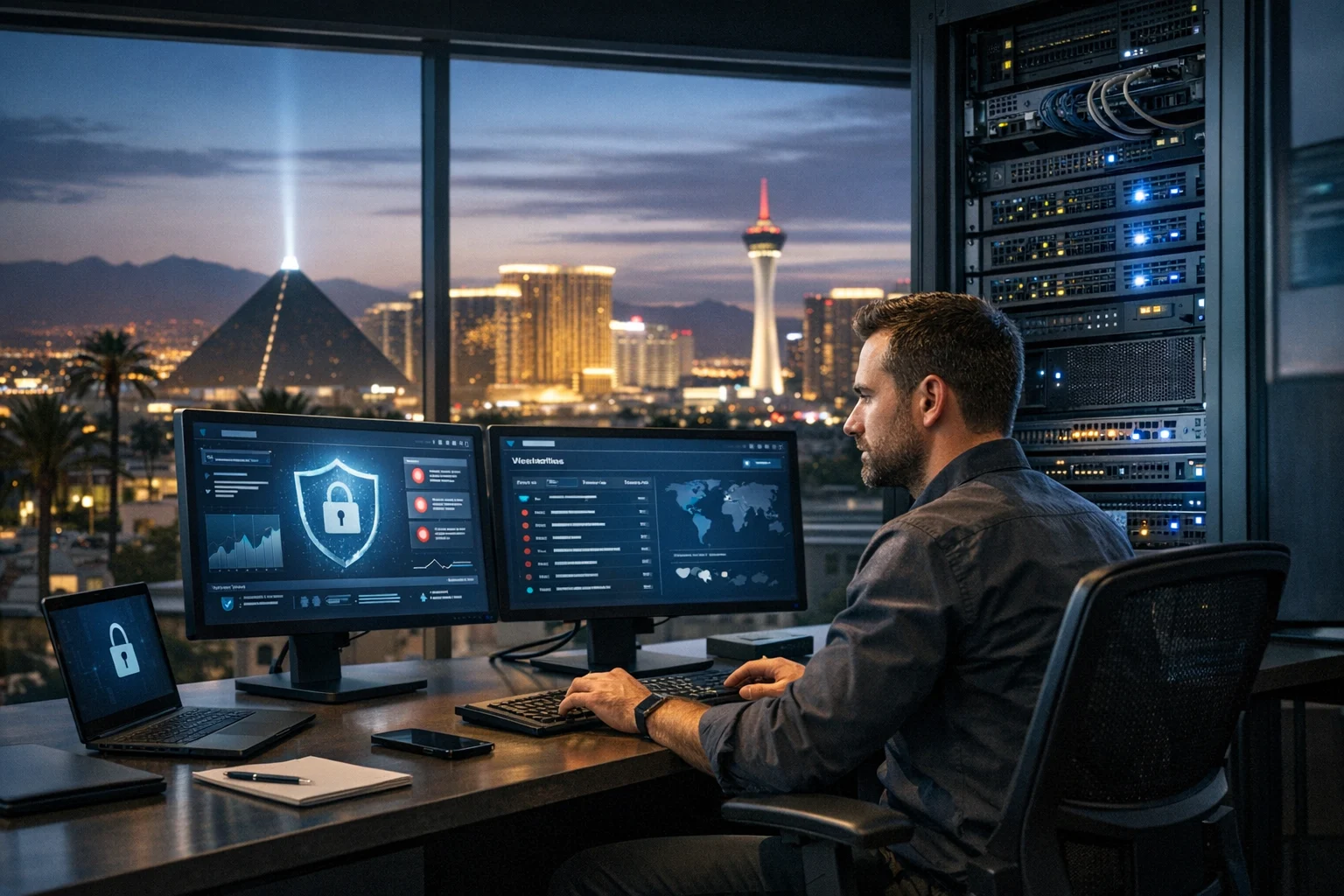
A hacked business website creates two problems at once. One is technical. The other is commercial. You may be dealing with malware, unauthorized access, spam pages, broken functionality, or even a server-level compromise, while also losing leads, trust, rankings, and ad efficiency. For many companies, that damage starts before anyone on the team realizes something is wrong.
At SiteLiftMedia, we have seen this happen in real time. A site looks normal on the front end, but hidden spam pages are being indexed. Contact forms quietly stop working. Admin users get added in the background. A business keeps paying for PPC traffic while infected landing pages leak conversions. A local company in Las Vegas can lose high-intent searches fast in a market where competition is already tight, especially during summer campaigns, seasonal promotions, or peak tourism periods.
If your website has been hacked, speed matters, but random action can make things worse. The right response is controlled, documented, and focused on containment first, cleanup second, and hardening third. Whether you run a service company, ecommerce brand, medical practice, law firm, restaurant group, or multi-location operation, the response plan should protect revenue, customer data, and search visibility at the same time.
This guide walks through how to respond when a business website has been hacked, what mistakes to avoid, how to protect your SEO and lead generation pipeline, and when it makes sense to bring in an agency with hands-on cybersecurity services, website maintenance, technical SEO, and system administration experience.
Start with containment, not panic
The first goal is to stop the attacker from doing more damage. That means containing access and preserving evidence before anyone starts deleting files or reinstalling plugins. Business owners often want to jump straight to restoring a backup, but that can erase clues you need to understand what happened.
If you have internal technical staff, assign one person to coordinate the response. If not, bring in a qualified team immediately. For many companies, especially those without in-house system administration support, this is where outside help saves both time and money.
- Take screenshots of obvious issues such as defaced pages, browser warnings, spam redirects, or strange admin accounts.
- Put the site into maintenance mode if possible, or temporarily restrict access to prevent further abuse.
- Contact your hosting provider and ask for recent access logs, file change logs, backup details, and any malware alerts.
- Change passwords for hosting, CMS admin accounts, database access, SFTP, control panels, email accounts tied to the domain, and DNS providers.
- Enable multi-factor authentication anywhere it is available.
- Record the time the issue was discovered and any recent site changes, plugin installs, developer access, or vendor logins.
If you need a quick action list, SiteLiftMedia has also covered what to do right after you discover a website hack in more detail.
Why isolation matters
One infected website can affect more than one site if accounts share the same server, user permissions, or control panel access. We have seen small businesses on low-cost hosting plans discover that the website was only part of the problem. The attacker had also touched email, cron jobs, backup directories, and neighboring installs on the same account.
That is why isolation matters. If you run multiple websites under one hosting environment, separate them quickly. If your developer uses one reused password across staging, production, and cloud tools, change it everywhere. If there is any sign of a server-level compromise, basic cleanup is not enough. You may need a full rebuild with proper server hardening.
What not to do after a website hack
Plenty of businesses make the incident worse by taking shortcuts. One of the most common mistakes is assuming the problem is limited to the page that looks broken. Attackers rarely leave behind one obvious symptom and nothing else.
- Do not just delete the suspicious file and call it fixed.
- Do not restore an old backup without identifying the original entry point.
- Do not keep running paid traffic to the compromised site.
- Do not ignore hidden spam URLs or cloaked redirects because the homepage looks normal.
- Do not leave old admin accounts active while you investigate.
- Do not trust a cheap malware scan as a complete answer.
Another costly mistake is overlooking the marketing side. A hacked website is not only an IT issue. It affects lead generation, analytics integrity, search rankings, brand trust, and even sales follow-up if forms or CRM integrations are compromised. For a company investing in Las Vegas SEO, local SEO Las Vegas campaigns, or regional PPC, every day of downtime can get expensive fast.
Find the real scope of the compromise
Once initial containment is in place, the next step is figuring out what the attacker actually touched. This is where many businesses underestimate the problem. A website hack might involve:
- Core CMS files
- The database
- Theme or custom code
- Plugins or third-party integrations
- Admin users and permissions
- Hosting configuration
- Scheduled tasks or cron jobs
- DNS changes
- Email accounts
- Tracking scripts and tag managers
- Google Search Console or Google Ads access
We have seen cases where the malware itself was removed, but injected database content kept recreating infected pages. We have also seen attacks where the website was cleaned, yet the attacker still had access through a compromised email account that controlled password resets.
That is why real cleanup goes beyond a surface scan. It requires forensic thinking. You need to inspect file integrity, compare timestamps, review newly created users, check modified database tables, audit plugins and themes, and inspect server logs for suspicious requests and IP activity. SiteLiftMedia has written about why proper cleanup requires file and database review, because partial remediation is one of the main reasons hacked sites get reinfected.
Check the places businesses often forget
Marketing managers and owners usually focus on the website itself. That makes sense, but attackers often move laterally into connected tools. Review these areas too:
- Google Search Console for malware notices, indexing spikes, and rogue URLs
- Google Analytics and tag management for unknown scripts or altered events
- PPC landing pages and ad destinations
- Form handlers and CRM integrations
- Cloud storage with website backups or source files
- Social media management tools linked to the domain email
If your company also relies on social media marketing to drive traffic into local landing pages, a hacked form or infected booking flow can quietly waste spend across multiple channels.
Decide whether to clean or rebuild
Not every hacked website should be cleaned in place. Sometimes rebuilding is faster, safer, and cheaper in the long run. This is especially true when the compromise is deep, the site is outdated, or no one can confidently explain what has changed over the years.
In our experience, cleanup may be reasonable when:
- The infection is contained to a known plugin, theme file, or user account
- You have recent clean backups
- There is clear logging and evidence of the entry point
- The hosting environment itself is not compromised
A rebuild is often the better move when:
- The server shows signs of root or account-level compromise
- The website runs on unsupported software or heavily modified legacy code
- There are repeated reinfections
- Backups are unreliable or likely already contaminated
- No one knows which plugins, scripts, or users are still truly necessary
This decision is not just technical. It affects operations, design, speed, and future marketing performance. A company already planning a redesign may benefit from using the incident as the trigger to move to a cleaner platform with custom web design, faster hosting, stronger security controls, and better technical SEO foundations.
That is especially relevant for businesses competing in local search. If your site is old, slow, and difficult to maintain, a rebuild can improve security and conversion performance at the same time. For companies looking for web design Las Vegas support or a more reliable SEO company Las Vegas businesses can trust, the smartest recovery plan often combines security remediation with structural improvements.
Protect your SEO before rankings slide further
One of the biggest hidden costs of a website hack is SEO damage. This is where many business owners get blindsided. The site may come back online, but organic performance keeps falling because Google has already indexed spam pages, flagged malware, or lost trust in the domain.
We regularly see these SEO side effects after a compromise:
- Spam pages generated in bulk and indexed under your domain
- Japanese SEO spam, pharma spam, casino spam, or doorway pages
- Hidden redirects that send users to malicious sites
- Malware warnings in search results or browser alerts
- Canonical tags or robots directives altered to suppress key pages
- Structured data manipulation
- Backlink profile distortion from hacked page creation
If your company depends on local-intent traffic, this can hit hard. A Las Vegas service business ranking for high-value terms can lose map visibility, local landing page authority, and trust signals right when competitors are pushing harder. We have seen brands spend months building momentum with technical SEO, content, and backlink building services, only to lose it because the hack went unnoticed for weeks.
After remediation, audit your search footprint carefully:
- Review indexed pages in Google
- Remove spam URLs and request reindexing where needed
- Check for security actions in Search Console
- Validate core landing pages, title tags, canonicals, and redirects
- Test forms, phone links, and conversion tracking
- Monitor ranking volatility on brand and service terms
This is where security and SEO overlap more than most agencies admit. A hacked website recovery plan should not stop at malware removal. It should restore trust, crawlability, page performance, and conversion paths. That is one reason SiteLiftMedia handles cleanup with both cybersecurity services and SEO impact in mind.
Understand how the site got hacked in the first place
If you do not identify the root cause, the next incident is often only a matter of time. For many business websites, the problem starts with ordinary neglect rather than a dramatic attack. A plugin goes unpatched. A developer account stays active after a project ends. A site sits on shared hosting with weak isolation. A custom feature never gets reviewed after launch.
Common entry points include:
- Outdated CMS core files
- Outdated plugins or themes
- Weak or reused passwords
- Missing multi-factor authentication
- Poorly written custom code
- Compromised third-party scripts
- Insecure hosting environments
- Exposed admin URLs and brute force attacks
WordPress is a common target because it powers so many business websites. The platform itself is rarely the problem as often as poor maintenance is. If your team wants a deeper look at this issue, SiteLiftMedia has covered how outdated WordPress plugins create serious risks for growing businesses.
We also see hacks tied to rushed growth. A company launches a microsite for a summer promotion, adds a booking plugin, connects a marketing tool, and forgets to update anything for months. That kind of temporary project can become a permanent vulnerability. Strong lead generation depends on strong maintenance.
Build a recovery plan that supports the business, not just the server
Once the site is cleaned or rebuilt, the work is not finished. Recovery should include communication, validation, and operational follow-through.
Internal recovery checklist
- Confirm the site is clean through manual review and trusted scanning tools
- Reset all privileged credentials again after remediation
- Remove unknown users, API keys, and scheduled tasks
- Update the CMS, plugins, themes, server packages, and firewall rules
- Restore only verified clean backups
- Validate forms, ecommerce checkout, phone tracking, chat, and CRM syncing
- Review ad destinations before reactivating campaigns
- Submit security review requests in Google if warnings were triggered
Business and brand recovery checklist
- Notify affected stakeholders if customer data or account access may have been involved
- Coordinate with legal or compliance advisors where necessary
- Watch branded search results for spam artifacts
- Monitor review platforms and support inboxes for trust concerns
- Review sales pipeline drops that happened during the compromise window
Business owners often ask when they can turn ads back on. The answer is simple. Only after the website is verified clean, the conversion path is tested, and tracking is confirmed accurate. There is no point paying for traffic if forms fail, pages redirect, or browser warnings remain active.
Prevention is a maintenance discipline, not a one-time fix
Good security is rarely glamorous. It looks like disciplined maintenance, visibility, and access control. The companies that avoid repeat incidents are usually the ones that treat business website security as an ongoing operating requirement, not a cleanup project they hope never returns.
A strong prevention plan should include:
- Routine patching for the CMS, plugins, server software, and dependencies
- Limited admin access with role-based permissions
- Multi-factor authentication
- Daily monitored backups with offsite retention
- Web application firewall and malware monitoring
- Server hardening and account isolation
- Regular log reviews and anomaly alerts
- Scheduled plugin and code audits
- Staging workflows for site changes
- Documented incident response procedures
For growing businesses, penetration testing can also uncover weaknesses before attackers do. SiteLiftMedia has a useful overview of penetration testing basics for growing businesses if you want to understand how proactive testing fits into a broader security program.
This matters even more for organizations trying to scale search visibility and lead generation at the same time. If you are investing in Las Vegas SEO, technical SEO improvements, custom web design, fast hosting, PPC, and backlink building services, your website becomes a larger business asset and a larger target. Security has to keep pace with growth.
When it makes sense to call an agency right away
Some website issues are manageable in-house. A confirmed hack usually is not. If revenue depends on the site, delays cost money. If rankings matter, hidden damage can spread while the homepage still looks fine. If you are not sure whether the compromise is limited to a plugin or has moved into hosting, email, or DNS, you need experienced eyes on it.
SiteLiftMedia works with businesses nationwide and has a strong focus on Las Vegas, Nevada companies that need fast, practical support. That includes hacked website response, malware cleanup, server hardening, website maintenance, system administration, and post-incident SEO recovery. We also help businesses use the moment wisely. Sometimes the right move is not just getting the old site back online. Sometimes it means rebuilding smarter with more secure infrastructure, a cleaner codebase, stronger web design, and a better growth strategy.
If your business website has been hacked, do not guess, do not patch blindly, and do not keep sending traffic into a compromised environment. Contact SiteLiftMedia for a technical review, a cleanup plan, and a recovery path that protects both your systems and your pipeline.
Photo Gallery