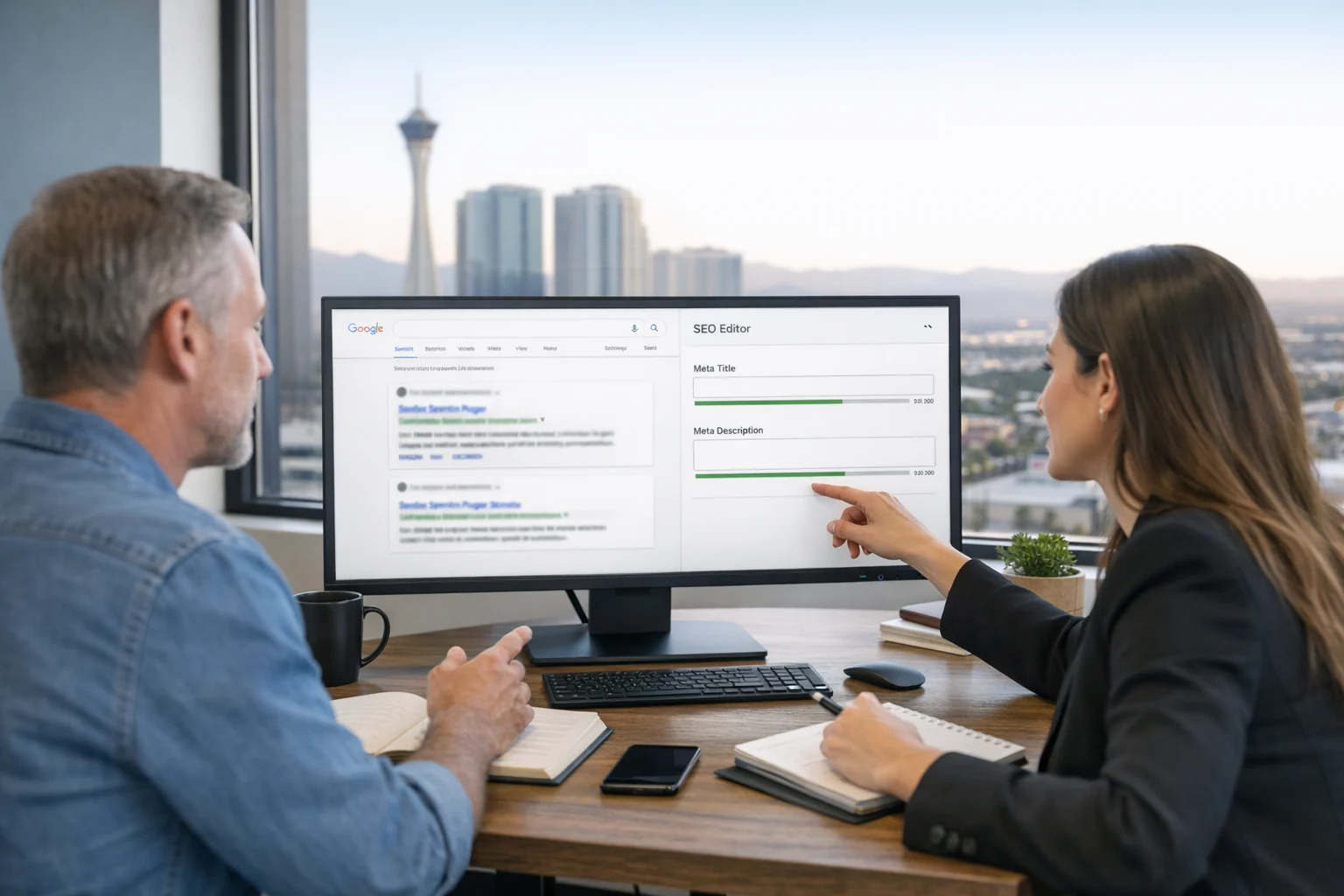
Meta titles and meta descriptions may look small, but they do a lot of heavy lifting for service pages. They shape first impressions in search results, influence click-through rate, and help Google understand what a page is actually about. When they are weak, even a strong page can underperform. When they are written well, they can turn the right searcher into the right lead.
At SiteLiftMedia, we see this all the time. A company invests in web design, content, technical SEO, and even paid ads, but the service page metadata is generic, duplicated, or clearly an afterthought. That usually leads to fewer clicks, lower quality traffic, and fewer qualified inquiries. For businesses targeting national leads and local visibility, especially in competitive markets like Las Vegas, that is a missed opportunity.
If you want better performance from your service pages, start treating your title tag and meta description like sales copy guided by SEO discipline. They should match the page, match the search intent, and give people a clear reason to click.
Why service page metadata matters more than people think
A lot of business owners assume meta titles and descriptions are mostly technical fields. They are technical in the sense that they live in your SEO settings, but their real job is strategic. A strong title can improve relevance for a search query. A strong description can filter out weak clicks and attract stronger ones.
That matters even more on service pages because these pages sit close to the money. Someone searching for SEO company Las Vegas, web design Las Vegas, local SEO Las Vegas, or cybersecurity services is not looking for general information. They are comparing providers, scanning results, and deciding who looks credible enough to contact.
If your metadata says something vague like “Home | Company Name” or “Professional Services for Your Business,” you are asking searchers to guess. Most will not.
Good metadata improves three things at once:
- Visibility, by reinforcing the core topic of the page
- Click appeal, by making the result look relevant and useful
- Lead quality, by attracting people looking for the exact service you provide
That last point gets overlooked. More clicks are not always better. Better clicks are better. The goal is not to get everybody. The goal is to get the people most likely to convert.
Start with search intent, not character count
Most metadata advice starts and stops with length. Keep titles around 50 to 65 characters. Keep descriptions under 160. That is helpful, but it is not where the real work begins.
The first question is simpler: What is the searcher trying to find, and what page are you putting in front of them?
A service page title should reflect the searcher’s intent as closely as possible. If your page is about local SEO for Las Vegas businesses, the title should not be broad and fluffy. If your page is about penetration testing for multi-location companies, the title should not sound like a general IT support page.
Before you write anything, clarify these five items:
- The exact service on the page
- The primary audience or business type
- The main geographic target, if local intent matters
- The commercial angle, such as pricing, expertise, speed, or specialization
- The action you want the searcher to take after clicking
Once those are clear, the title and description become much easier to write.
Match the page to the search stage
Service pages usually attract people in the buying or comparison stage. That means your metadata should not read like a blog post title. It should read like a useful answer to a practical need.
For example:
- Someone searching technical SEO agency wants a specialist, not a beginner’s guide
- Someone searching website maintenance services wants reliability, scope, and trust
- Someone searching business website security wants confidence that their site will be protected
- Someone searching custom web design wants a business outcome, not just visuals
That is why the best metadata usually blends keyword relevance with a concrete value proposition.
How to write meta titles that earn clicks
Your meta title has one main job: tell both Google and the searcher what the page is about in a way that feels specific and worth clicking.
In practice, the strongest service page titles usually include:
- The primary service keyword
- A location when local intent matters
- A differentiator or qualifier
- Your brand name, often at the end if space allows
A simple formula that works well is:
Primary Service + Location or Audience + Value Angle | Brand
Here are a few examples:
- Las Vegas SEO Services for Growth-Focused Businesses | SiteLiftMedia
- Custom Web Design Las Vegas Companies Can Actually Grow With | SiteLiftMedia
- Technical SEO Services for National and Local Businesses | SiteLiftMedia
- Penetration Testing and Business Website Security | SiteLiftMedia
These work because they do not try to be clever. They are clear, aligned with real search behavior, and tell the searcher what to expect.
Put the most important words early
Google may rewrite titles, and mobile results often show less space than desktop. That is why the front half matters most. If the core keyword is buried at the end, you increase the chance that users only see the least useful part.
Compare these two:
- SiteLiftMedia | Helping Businesses Grow With Better Search Visibility Through SEO Services in Las Vegas
- Las Vegas SEO Services for Local and National Growth | SiteLiftMedia
The second one is stronger because it leads with the search intent. The first makes the user work too hard.
Use location only when it belongs
If the page targets a local market, use the location naturally. For a Las Vegas service page, include Las Vegas in the title if it matches the page content and the page is actually built to serve that search intent.
If the page is national, avoid forcing a city into the title unless the page has a local version or a strong regional angle. A nationwide cybersecurity or system administration page does not need “Las Vegas” just because the brand has local strength there. A local landing page does.
This is where many agencies get sloppy. They duplicate one service page and swap city names into metadata without changing the actual page. That rarely holds up. The better approach is to write metadata that reflects the real market focus of each page.
If you are improving page targeting more broadly, this guide on making service pages better for AI search and SEO pairs well with metadata cleanup.
How to write meta descriptions that support the click
Meta descriptions do not directly control rankings the way some people think, but they do affect how your result is perceived. A weak description can waste a ranking. A strong description can make your result look sharper than the one above it.
The best service page descriptions usually include three things:
- The service and who it is for
- A benefit or outcome
- A gentle call to action or trust signal
A useful formula is:
Service + Audience or Location + Outcome + CTA
Examples:
- Need Las Vegas SEO that drives qualified leads? SiteLiftMedia builds search strategies for local and national growth. Talk with our team.
- Custom web design for Las Vegas businesses that need speed, clarity, and stronger conversions. See how SiteLiftMedia can help.
- Protect your business with penetration testing, server hardening, and cybersecurity services built for real operational risk.
Descriptions work best when they sound like a confident next step, not a list of keywords. They should feel like real ad copy written by someone who understands what the buyer cares about.
Focus on the click, not just the keyword
I have seen a lot of service pages with descriptions like this:
We offer SEO services, web design services, digital marketing services, and local SEO services for businesses in Las Vegas.
Technically, it mentions services. Strategically, it is weak. It sounds stuffed, generic, and easy to ignore.
A better version would be:
Looking for an SEO company in Las Vegas that can improve rankings and lead flow? SiteLiftMedia builds practical campaigns around growth, not fluff.
That version speaks to outcome, local intent, and credibility. It is more likely to attract a serious prospect.
Examples of stronger metadata for common service pages
This is where the difference becomes obvious. Below are simple before-and-after examples for agency and IT-focused services that businesses actually search for.
SEO services page
Weak title: SEO Services | SiteLiftMedia
Better title: Las Vegas SEO Services for Local and National Growth | SiteLiftMedia
Weak description: We provide SEO services for businesses of all sizes. Contact us today.
Better description: Need Las Vegas SEO that improves visibility and lead quality? SiteLiftMedia builds practical campaigns for local and nationwide businesses.
Web design page
Weak title: Web Design Company
Better title: Custom Web Design Las Vegas Businesses Can Grow With | SiteLiftMedia
Weak description: We create websites for businesses and organizations.
Better description: Get custom web design built for speed, search visibility, and conversions. Trusted by Las Vegas businesses that want more from their site.
Local SEO page
Weak title: Local SEO Services
Better title: Local SEO Las Vegas Companies Use to Win More Calls | SiteLiftMedia
Weak description: We help local businesses improve their online visibility.
Better description: Improve map visibility, service page rankings, and lead flow with local SEO Las Vegas businesses can actually measure.
Technical SEO page
Weak title: Technical SEO Experts
Better title: Technical SEO Services for Faster, Cleaner Site Performance | SiteLiftMedia
Weak description: We fix technical SEO issues on websites.
Better description: Resolve crawl issues, indexing problems, and site structure gaps with technical SEO support built for serious growth.
Cybersecurity services page
Weak title: Cybersecurity Services
Better title: Cybersecurity Services for Business Website Security | SiteLiftMedia
Weak description: We offer cybersecurity solutions for your business.
Better description: Protect your site and infrastructure with cybersecurity services, server hardening, and testing designed for real business risk.
Penetration testing page
Weak title: Penetration Testing
Better title: Penetration Testing Services for Business Risk Reduction | SiteLiftMedia
Weak description: Learn about our penetration testing services.
Better description: Identify exploitable weaknesses before attackers do. SiteLiftMedia provides practical penetration testing and actionable remediation guidance.
Website maintenance page
Weak title: Website Maintenance
Better title: Website Maintenance Services for Reliable Business Sites | SiteLiftMedia
Weak description: We maintain websites for businesses.
Better description: Keep your website secure, updated, and performing smoothly with maintenance support that prevents avoidable downtime.
You can apply the same approach to backlink building services, social media marketing, system administration, and server hardening. The key is to name the service clearly, then give the user a reason to believe your result is more relevant than the next one.
How to support Las Vegas search intent without sounding forced
Las Vegas is competitive across digital services. Whether someone is looking for a Las Vegas SEO partner, a web design Las Vegas agency, or local support for infrastructure and security, they will often compare multiple options quickly. Metadata needs to reflect that local context while still sounding natural.
Here is what works:
- Use Las Vegas when the page is truly local or regionally focused
- Pair the city with a service or result, not just a city name
- Keep the wording readable for humans first
- Avoid repeating “Las Vegas” in both title and description unless it sounds natural
For example, this is too much:
Las Vegas SEO Company Las Vegas Businesses Trust for Las Vegas SEO Services
It is awkward and easy for Google to rewrite.
This is much better:
SEO Company Las Vegas Businesses Trust for Measurable Growth | SiteLiftMedia
The local phrase is there, but it still reads like something a professional would actually say.
If your business serves both local and national markets, you do not need to choose one forever. Build dedicated local pages where it makes sense, and let broader service pages target national intent. That gives you cleaner metadata and more relevant traffic.
For teams running both paid and organic campaigns during redesign planning or spring marketing pushes, it also helps to align search messaging across channels. This piece on how to combine PPC and SEO for better long term growth is useful if you want your SERP messaging to work harder on both sides.
Common mistakes that weaken service page metadata
Most underperforming metadata fails for a few predictable reasons. These show up on small business websites and enterprise sites alike.
1. Every service page uses the same template with barely any changes
If every title looks like “Service Name | Brand” and every description says “We offer professional solutions for your business,” you are leaving too much opportunity on the table. Each page should have its own search intent, angle, and conversion focus.
2. The title promises one thing, but the page delivers another
If the title says “Las Vegas SEO Services” but the page is really a broad digital marketing page with a few paragraphs about SEO, that mismatch hurts both clicks and conversions. Searchers notice. Google notices.
3. The description is written for the algorithm, not the buyer
Keyword-heavy descriptions almost always sound weak. They also tend to attract the wrong click or get ignored completely. Your description should sound like a credible pitch, not a tag cloud.
4. There is no differentiator
Many service pages name the service but never answer the obvious question: why this provider? Mentioning speed, strategy, local market knowledge, security focus, or business outcomes can make a real difference.
5. Nobody revisits old metadata
Metadata should change when a service changes, when search behavior shifts, or when your offer gets sharper. If you have gone through content expansion, infrastructure cleanup, or a site redesign, old titles and descriptions may no longer fit the page.
Strong page structure also supports stronger metadata because it clarifies what the page is really trying to rank for. If your page copy feels messy, this article on why article structure drives SEO, readability, and sales is worth reading next.
A practical workflow for writing better titles and descriptions
If you are updating a batch of service pages, do not improvise each one from scratch. Use a simple process.
Step 1: Identify the primary keyword and page intent
Pick the main phrase the page should target. Then define whether the page is local, national, or both through segmented versions.
Step 2: Review the actual SERP
Search the query. Look at what competitors are emphasizing. Are they leading with location, speed, trust, pricing, specialization, or outcomes? You do not want to copy them, but you do want to understand the market conversation.
Step 3: Write three title options
Do not stop at the first draft. Write one straightforward version, one value-driven version, and one slightly more commercial version. Then choose the clearest.
Step 4: Write two description options
One can focus on the core result. The other can lean on trust, specialization, or local knowledge. Pick the one that matches the page best.
Step 5: Check alignment with the page headline and copy
Your title tag, page headline, and opening section should feel connected. If they do not, revise.
Step 6: Monitor click performance
Use Google Search Console to review impressions, clicks, and click-through rate. If a service page ranks but does not get clicked enough, metadata is one of the first places to look.
This process works especially well during seasonal updates, spring marketing pushes, service expansion, or redesign planning. It is also useful after technical cleanup, especially when pages have changed due to migrations, CMS updates, or site architecture improvements.
When agency support makes sense
Some teams can handle metadata updates internally. Others are already juggling too much. If your site also needs technical SEO, stronger conversion copy, better local targeting, design improvements, or security work like server hardening and business website security reviews, metadata should be part of a bigger service page strategy, not a disconnected task.
That is usually where SiteLiftMedia steps in. We help businesses tighten the message, improve rankings, and make sure service pages are built to earn clicks from the right people. That might mean rewriting a title for a local SEO Las Vegas page, sharpening descriptions for backlink building services, improving page UX for custom web design, or aligning search copy with technical cleanup across hosting, system administration, and site security.
If you want a second set of eyes on your service pages, or you need a smarter SEO and content strategy that works for Las Vegas and nationwide audiences, contact SiteLiftMedia and make sure those small metadata fields are doing real work for your business.
Photo Gallery