Local visibility used to feel more straightforward. If your business showed up in the map pack, had a decent website, and collected a steady stream of reviews, you were in the game. That still matters, but it is no longer enough, especially in crowded markets where everyone is bidding on the same clicks, chasing the same service keywords, and trying to look more established than they are.
The shift is not just on Google’s side. Buyer behavior has changed too. People compare faster, search in more specific ways, and make trust decisions based on a mix of local listings, organic results, website quality, reviews, social proof, and technical credibility. In competitive industries, local visibility is no longer about a single ranking position. It is the full experience.
At SiteLiftMedia, we see this across a wide range of service categories, from home services and law firms to healthcare, hospitality, professional services, and high competition retail. We work nationwide, but Las Vegas is one of the clearest examples of how quickly local competition exposes weak marketing. If you want stronger results from Las Vegas SEO, local SEO Las Vegas campaigns, or a broader digital growth strategy, the standards are higher than they were even a year ago.
Local visibility now lives across several search surfaces
One of the biggest shifts is that users are no longer relying on a single result type. A potential customer might see your Google Business Profile, your website, third party review sites, a social media profile, a video result, and an AI generated search summary before they ever contact you. Visibility is fragmented now, and every surface has to reinforce the others.
In practical terms, businesses are being judged on more than rank. They are being judged on completeness, clarity, speed, trust, and ease of action. If your listing appears but your site loads slowly, or your reviews are solid but your service pages feel thin, or your mobile experience is poor, visibility may not turn into leads.
That is why strong local performance usually comes from a coordinated stack:
- Google Business Profile strength with accurate categories, services, photos, and review activity
- Relevant organic pages that align with real search intent
- Technical SEO that makes the site crawlable, fast, and mobile friendly
- Custom web design that helps users trust the business quickly
- Authority signals such as quality links, mentions, and branded searches
- Operational reliability including website maintenance and security
Businesses that still treat local visibility as a citation problem or a one page optimization task are falling behind.
Competitive industries are feeling the pressure first
Some sectors are seeing these changes faster than others. Law, dentistry, med spas, HVAC, roofing, restoration, plumbing, real estate, moving, hospitality, and financial services are all dealing with heavier competition and smarter searchers. These buyers are not just asking, “Who is nearby?” They are asking, “Who looks credible, responsive, and clearly better than the rest?”
That creates a real problem for businesses that all sound the same online. We still see plenty of websites using nearly identical service copy, generic city pages, weak calls to action, and stock imagery that does nothing to build trust. In a less crowded market, that might limp along. In a place like Las Vegas, it gets exposed quickly.
Paid search makes this even more obvious. As click costs rise, companies lean harder on organic visibility. But if organic traffic lands on a website that does not answer key questions, visitors bounce and the opportunity is gone. Local visibility is now tied directly to conversion quality, not just traffic volume.
This is one reason searches such as SEO company Las Vegas and web design Las Vegas are becoming more competitive. Businesses are not just shopping for vendors. They are looking for partners who understand how design, SEO, trust, and infrastructure work together.
Las Vegas is a clear example of where local search is getting sharper
Las Vegas is a unique market because it compresses several kinds of intent into one city. You have locals, tourists, convention traffic, residents relocating from other states, service area businesses covering multiple neighborhoods, and brands trying to win both immediate leads and long term visibility. Search behavior moves quickly here, and businesses feel ranking shifts fast.
A company trying to grow in Summerlin, Henderson, North Las Vegas, Spring Valley, or the central Las Vegas market cannot rely on vague local messaging. The content, service pages, offers, and proof points all need to be more specific. Users want to know whether you actually serve their area, whether your team is experienced, whether pricing is transparent enough to start the conversation, and whether your site feels current.
We have also seen Las Vegas users become more selective about who they contact. They compare multiple providers in one session, especially on mobile. That makes first impression quality a ranking issue and a sales issue at the same time. If you want a closer look at that shift, our article on what changing search behavior means for Las Vegas SEO breaks down how these intent patterns are affecting local campaigns.
Although this article has a strong Las Vegas focus, the same pattern applies nationwide in any dense metro or high value service market. Las Vegas just makes the changes easier to spot because competition is so immediate.
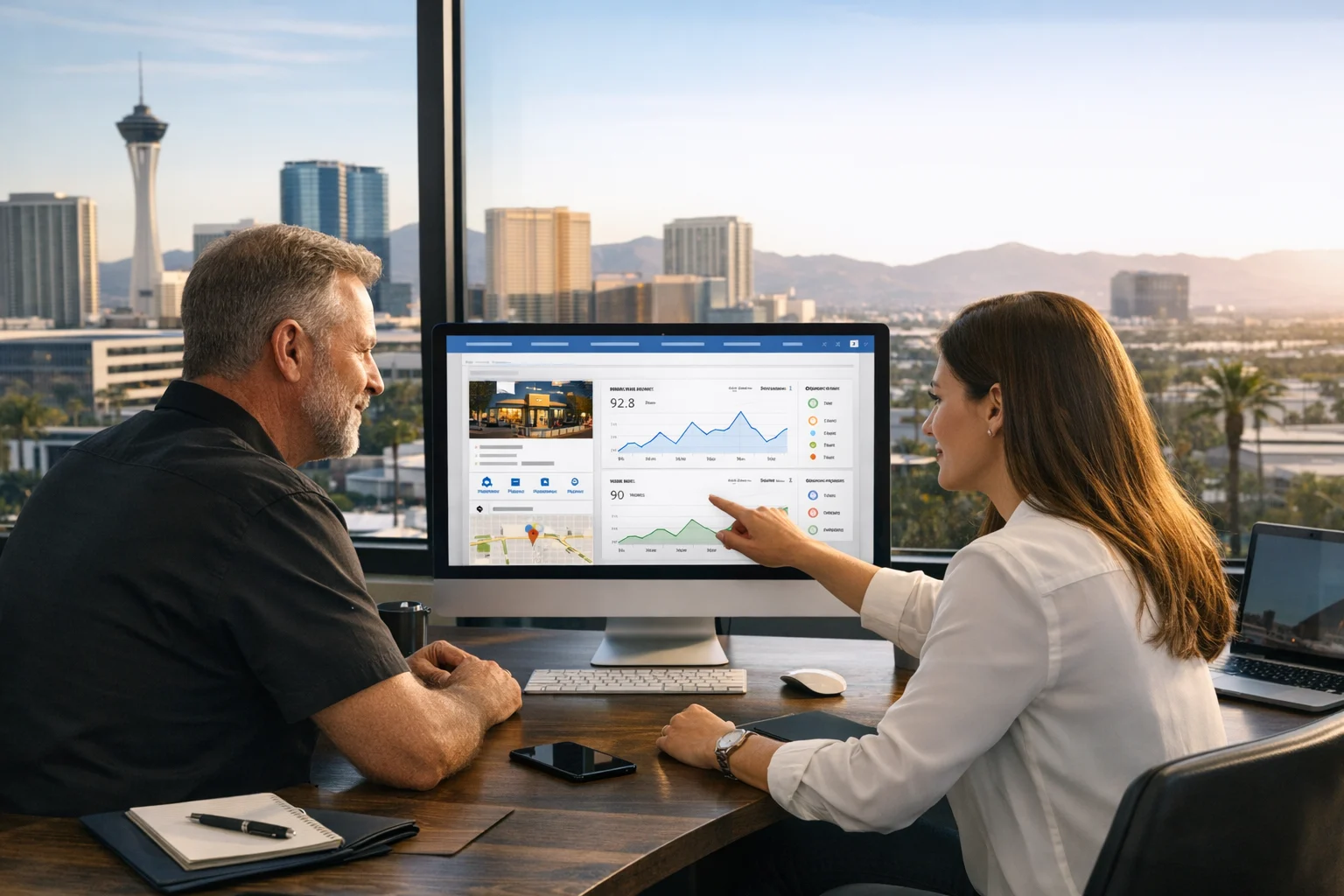
Google Business Profile still matters, but it cannot carry the whole load
There is still no serious local strategy without a well managed Google Business Profile. That part has not changed. What has changed is how much pressure gets put on the profile to perform alongside everything else.
In competitive categories, the strongest profiles tend to have more than a name, address, and phone number. They are actively maintained. They use the right primary and secondary categories. Their services are filled out carefully. Their images look current. Reviews mention real work. Questions get answered. Updates support seasonal offers, service changes, or spring marketing pushes. The business appears active and responsive.
Even then, the listing usually does not win on its own. If a searcher clicks through to a dated site, sees weak service detail, or hits a broken form, the visibility falls apart. Businesses need to think about their listing and their site as one system, not as separate tasks handled by different people who never talk.
For a deeper look at where this is heading, we recommend reading our piece on the future of Google Business Profile and local search.
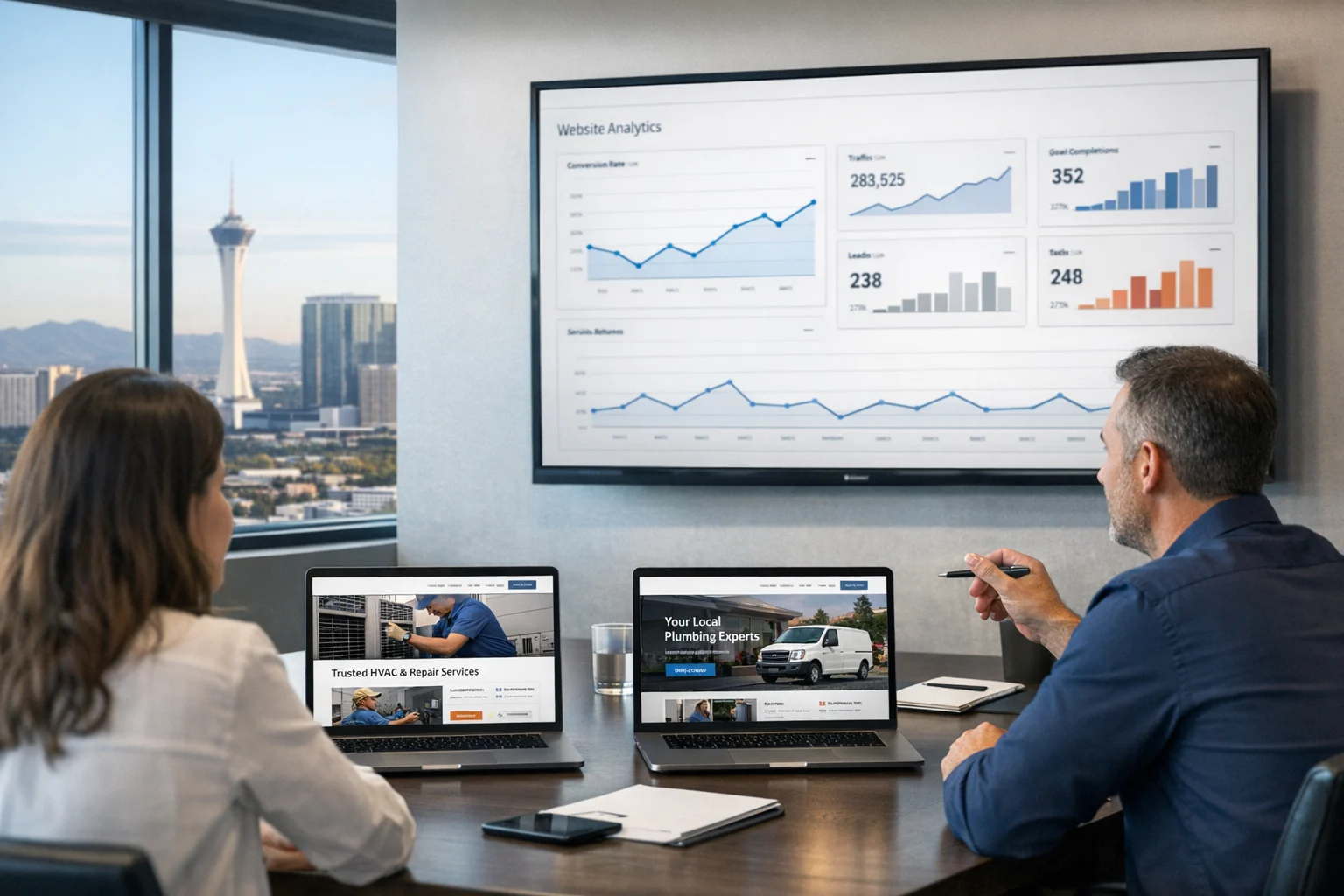
Your website now determines whether visibility turns into revenue
There was a time when some local businesses could get away with a basic brochure site. Those days are fading quickly. A modern local website has to do three jobs at once. It has to rank, build trust, and convert action.
That is where technical SEO and custom web design start working together. Search engines need clean architecture, indexable content, fast load times, mobile usability, internal relevance, and clear topic structure. Users need confidence. They want to understand what you do, where you work, why they should choose you, and how to contact you without friction.
For businesses investing in Las Vegas SEO or web design Las Vegas services, we usually find the same weak points:
- Service pages that are too short to compete
- Location pages built only for keywords, not real users
- Slow mobile performance
- Weak page hierarchy and confusing navigation
- Forms that ask too much or fail silently
- No local proof such as project photos, testimonials, neighborhoods served, or market specific messaging
Businesses often assume their traffic problem is purely an SEO problem. Sometimes it is. But just as often, the real issue is that the website does not support the buying decision. Better design can improve lead quality just as much as a ranking gain can. That is why performance focused site work matters so much now. Our article on performance driven design dives deeper into how websites are being built to support business outcomes instead of simply looking polished.
The websites gaining ground usually do a few things well
- They match page content closely to actual service intent
- They load quickly on mobile, even on weaker connections
- They make trust visible with reviews, certifications, local photos, and team details
- They offer clear conversion paths such as calls, forms, quote requests, and booking options
- They support ongoing content expansion instead of staying a static five page site forever
The website has become part of local visibility itself, not just the place people land after they find you.
Authority matters more when every competitor looks similar
When several companies in the same market offer similar services at similar price points, search engines look harder at trust and authority signals. That is where link quality, brand mentions, and topical credibility can separate businesses that otherwise appear equal on the surface.
This is one reason backlink building services are still relevant, but the way they should be handled is far more disciplined than it was in the past. Cheap directory blasts and random low quality links rarely help serious businesses anymore. In many cases, they create cleanup work later.
The links that matter most in local and regional competition are usually tied to legitimacy. Think industry associations, local media, chambers of commerce, suppliers, sponsorships, reputable business directories, strategic partnerships, and well earned coverage. These signals reinforce that the business is real, active, and connected to its market.
We have had clients come to SiteLiftMedia after investing in aggressive link packages that produced lots of numbers and very little movement. Once we cleaned up the profile and focused on stronger, more relevant authority building, rankings stabilized and lead quality improved. Fewer links, better sources, and tighter alignment with service intent almost always outperform noisy volume.
Content has to answer buying questions, not just fill space
Another major change in local visibility is the type of query people use before they convert. Searchers are getting more specific. They search by problem, urgency, budget, service variation, neighborhood, and trust concern. They ask whether you provide same day help, financing, maintenance plans, emergency service, bilingual support, commercial options, or project examples.
That means businesses need content that reflects how people actually evaluate providers now. A single service page and a home page cannot cover enough ground in competitive markets. Content expansion has to be intentional, useful, and tied to real revenue opportunities.
A stronger local content plan often includes:
- Primary service pages with deeper detail and stronger proof
- Location pages for real service areas, not endless thin city variations
- FAQ sections built from actual sales and support questions
- Comparison content that helps users choose between options
- Blog or news articles tied to seasonal demand, regulation changes, or buyer concerns
- Support content for commercial, residential, emergency, or premium service segments
This is also where social media marketing can support local visibility without replacing SEO. Social channels often reinforce credibility, highlight recent work, and help users confirm that the company is active. In competitive industries, buyers may not convert from social directly, but they do use it as part of their trust check.
AI driven search features are pushing this even further by rewarding clearer entities, stronger content organization, and better answer quality. If that shift is on your radar, our piece on AI search trends shaping Las Vegas marketing this year is worth a read.
Security and infrastructure are becoming visibility issues too
This is the part many businesses underestimate. Local visibility is not only a marketing problem. It is also an operations problem.
If your website goes down during peak hours, if forms stop working, if malware gets injected into pages, if hosting is unstable, or if browsers flag the site as unsafe, your local visibility takes a direct hit. Even when rankings hold, conversions suffer immediately. In serious cases, indexing and trust can take a hit too.
That is why website maintenance, system administration, and business website security are no longer side tasks. They are part of keeping revenue channels open. For businesses with customer data, booking systems, quote tools, or custom integrations, the stakes are even higher.
We increasingly see local growth strategies include:
- Penetration testing to identify exploitable weaknesses
- Cybersecurity services to reduce risk across websites and infrastructure
- Server hardening for better resilience and performance
- Routine updates, backups, uptime checks, and form testing
- Faster hosting environments that support Core Web Vitals and real user speed
For companies running aggressive campaigns, especially in Las Vegas where lead volume can spike around seasonal demand or promotional pushes, infrastructure cleanup is not optional. If the site cannot handle traffic, the marketing budget gets wasted.
What businesses should prioritize in the next 90 days
If you are in a competitive market and your local visibility feels inconsistent, do not start by chasing random tactics. Start by tightening the full system. The businesses that gain momentum usually make a few smart fixes in sequence instead of trying ten disconnected things at once.
- Audit your Google Business Profile for categories, services, photos, review activity, and accuracy
- Rework your top money pages so they align with actual search intent and sales questions
- Improve mobile speed and technical SEO before pushing more traffic to weak pages
- Review conversion paths including forms, click to call, booking steps, and thank you page tracking
- Plan content expansion around real service areas, seasonal demand, and missed search opportunities
- Clean up authority gaps with better local mentions and relevant backlink building services
- Check security posture with maintenance, updates, backups, and, if needed, penetration testing
- Align channels so SEO, PPC, and social media marketing reinforce each other instead of competing for direction
Spring is a strong time for many businesses to tackle this work because it naturally lines up with redesign planning, content expansion, campaign launches, and infrastructure cleanup before heavier summer demand. That is especially true in Las Vegas, where seasonality and competition can both intensify quickly.
If your business is ready to improve local visibility with a strategy that covers SEO, web design, technical performance, security, and growth planning in one place, SiteLiftMedia can help. Whether you need a sharper local SEO Las Vegas campaign, a stronger website, better infrastructure, or a more complete digital strategy, reach out and we will show you where the biggest opportunities are first.
Photo Gallery