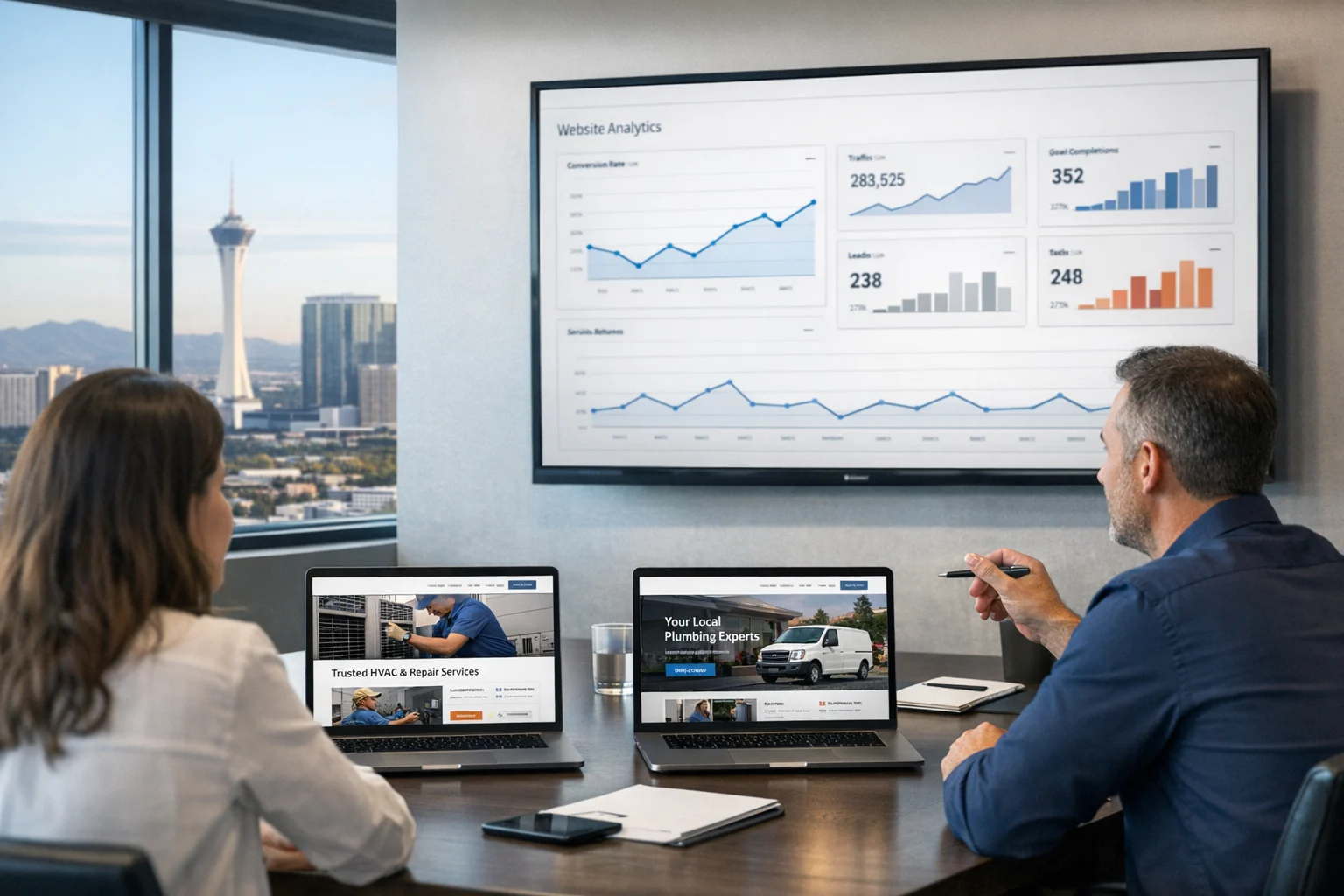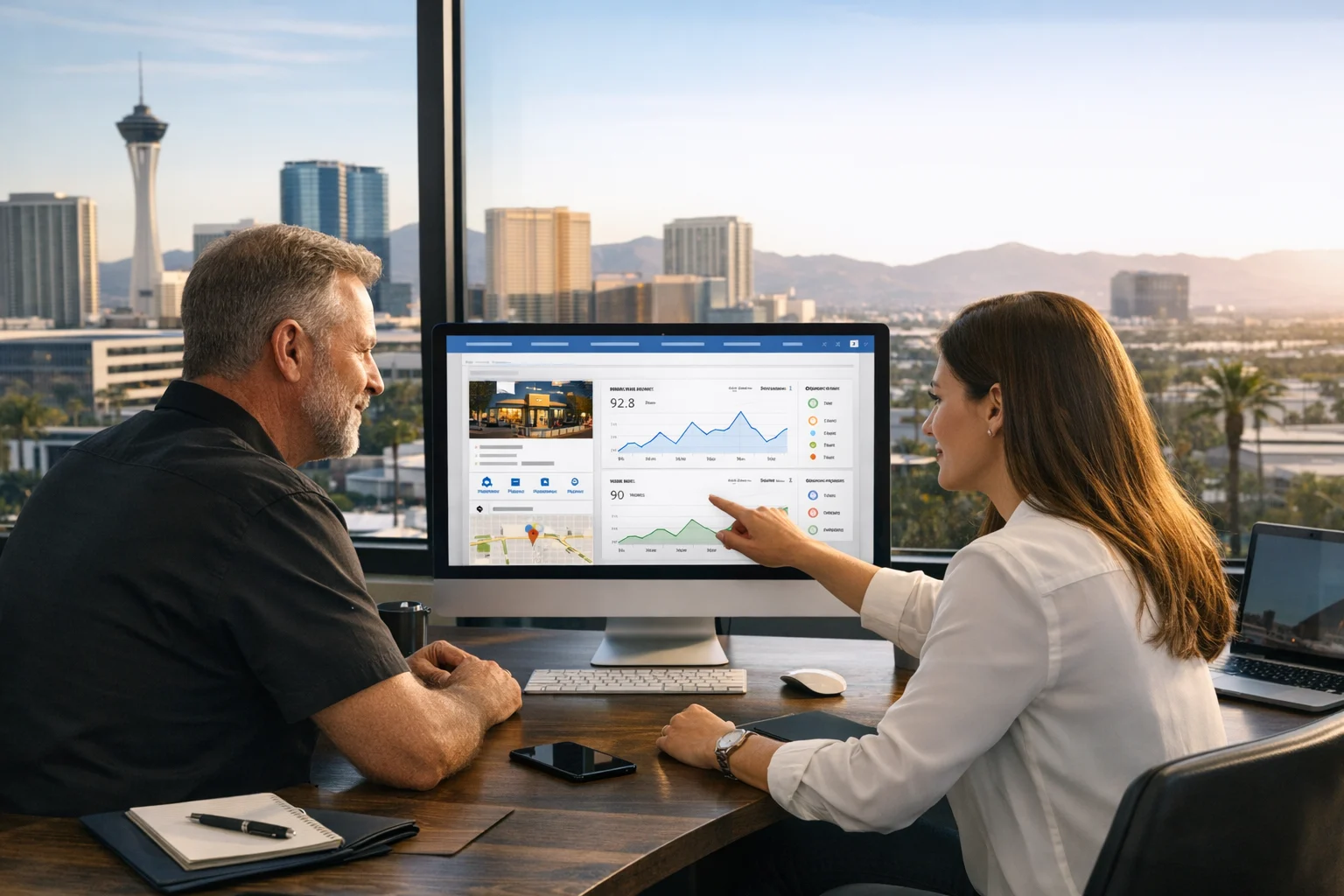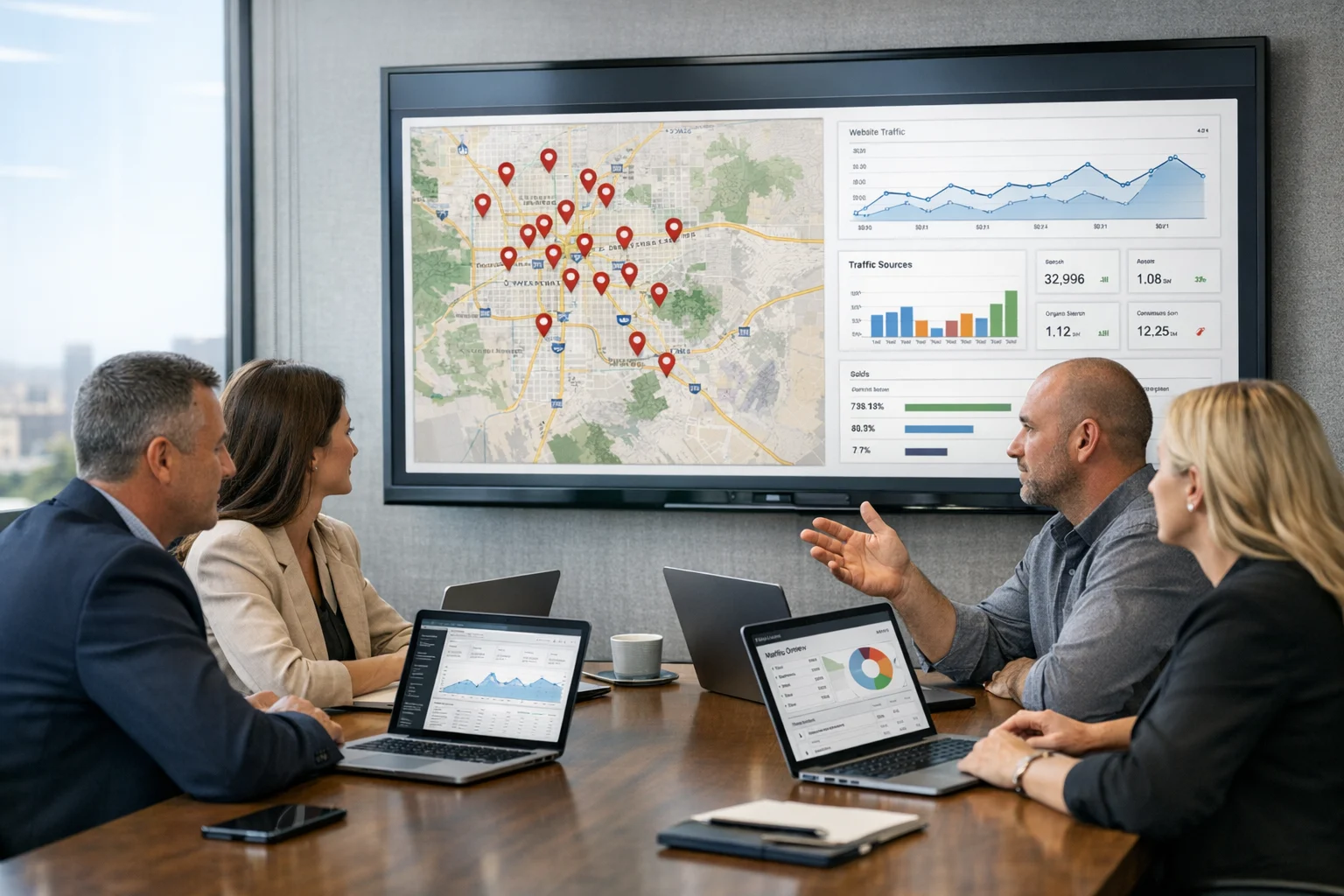
Search behavior has changed more in the past couple of years than many businesses realize. People still use Google, but they don’t search the same way they did even a short time ago. They ask longer questions. They compare options faster. They expect immediate answers. They move between maps, organic results, AI generated summaries, videos, reviews, and social platforms without thinking twice. For businesses trying to win local visibility, that shift matters.
For companies targeting Las Vegas customers, the stakes are even higher. This is a competitive market with heavy service demand, strong tourism overlap, and a constant mix of residents, new movers, event driven traffic, and urgent mobile searches. A local SEO Las Vegas campaign built around simple city plus service keywords a few years ago may not be enough now. Ranking still matters, but visibility today depends on intent coverage, credibility, speed, usability, and trust.
At SiteLiftMedia, we’ve seen this firsthand across campaigns for local service businesses, multi location companies, and brands that need to turn search demand into real leads. The agencies and in house teams getting the best results are not chasing old SEO checklists. They’re adapting to how people actually search today.
This matters for any business owner or marketing manager evaluating Las Vegas SEO, but it also matters nationwide. Las Vegas is simply a sharp example of where local intent, urgency, competition, and digital expectations collide. If your business depends on local discovery, appointment bookings, phone calls, or map visibility, search behavior changes should already be shaping your SEO strategy.
Search is shifting from keyword matching to intent resolution
Search engines have become much better at understanding what people mean, not just what they type. That changes campaign strategy in a big way.
A person looking for a “roof repair company” may search in completely different ways depending on context. One user may type “roof leak repair las vegas.” Another may search “who fixes emergency roof damage near me.” Someone else may ask “best roofing company for storm damage insurance claim.” Those are different phrases, but the engine increasingly groups them around the same underlying need.
Your pages can’t be built around one keyword variation at a time. They need to show topical relevance and solve the real question behind the search. Businesses still need strong page targeting, but a modern SEO company Las Vegas clients can rely on has to think beyond exact phrase repetition. Pages need substance, location context, trust signals, and conversion clarity.
This is also why thin location pages are losing ground. A page that simply swaps city names and repeats a service phrase over and over is far less useful than one that explains the service, addresses local conditions, answers common questions, shows proof, and makes it easy to contact the business.
If your local SEO campaign still measures success mostly by whether one phrase moved from position seven to position four, you’re probably missing the bigger shift. Search visibility is becoming broader, more contextual, and more intent driven.
Why Las Vegas businesses feel this shift faster
Las Vegas is not a typical local market. Search demand here includes local residents, visitors, convention traffic, last minute service needs, luxury buying behavior, and highly competitive service categories. Search intent can change by time of day, season, and device type faster than in many other cities.
Think about the difference between a resident searching for a family dentist in Summerlin and a hotel guest searching for urgent care near the Strip. Both are local searches, but the behavior behind them is completely different. One is research heavy. The other is immediate and action based. A business that wants to show up for both types of local demand needs a smarter content and technical structure.
That’s one reason Las Vegas SEO campaigns need tighter alignment between service pages, local landing pages, Google Business Profile optimization, review generation, mobile performance, and reputation content. Another is competition. In many Vegas categories, a business is not just competing against similar providers. It’s competing against directories, national aggregators, map pack dominance, strong ad placement, and increasingly, AI assisted search experiences.
SiteLiftMedia has been emphasizing this with clients because Las Vegas searchers often make fast decisions. They scan ratings. They look at photos. They compare page speed. They abandon slow sites. They trust businesses that look established, secure, and easy to reach. Search behavior here rewards businesses that remove friction from the journey.
If you want a deeper look at how AI is affecting regional visibility, this piece on AI search trends shaping Las Vegas marketing this year is worth reading alongside your local SEO planning.
Local SEO campaigns now need broader content coverage
One of the clearest implications of changing search behavior is that local campaigns need more than a homepage and a few service pages. Businesses need content architecture that reflects how real customers investigate, compare, and decide.
That usually means building out:
- Strong service pages that explain what you do, who it’s for, and why your process is credible
- Location relevant pages when you serve multiple areas around Las Vegas, Henderson, Summerlin, North Las Vegas, or broader Nevada markets
- FAQ driven content that addresses the questions people ask before they call
- Supporting educational content that helps search engines connect your brand to the wider topic area
- Review and proof content that reinforces trust and conversion intent
Businesses that rely on old school local SEO sometimes ignore this because they want quick rankings for head terms. But searchers are no longer following a simple path. Someone might first search a problem. Then read a guide. Then compare providers. Then search your brand name. Then check reviews on their phone. Then come back through maps. Your campaign has to support that full journey.
This is where answer focused optimization matters more. Search engines increasingly pull short, direct answers into featured elements and AI generated experiences. If your site never answers real questions clearly, you may lose visibility even when your brand is relevant. SiteLiftMedia has been encouraging clients to think about this crossover between local SEO and answer engine optimization. This article on what AEO means for local businesses explains why that shift matters.
For business owners, the takeaway is simple. Your content should not just target searches. It should help people make decisions.
Google Business Profile and map visibility are more influential than ever
When searchers want something nearby, they often never reach traditional organic listings first. They see the map pack, business profiles, reviews, service menus, call buttons, booking links, and directions. In many local categories, that interaction becomes the first and most important impression.
Local SEO Las Vegas work can’t stop at website optimization. Google Business Profile management is now central to performance.
Businesses should be paying attention to:
- Primary and secondary categories
- Accurate business information across platforms
- Service descriptions and service areas
- Fresh photos and local proof
- Review volume, quality, and response strategy
- Q and A coverage
- Regular updates and content activity
Why does this matter more now? Because search behavior has become more impatient. People want enough trust to act without doing extensive research. A weak profile, limited reviews, outdated hours, or vague service descriptions can cost leads before they ever reach your site.
For a Las Vegas business, profile quality is especially important because people often search while mobile, in transit, or under time pressure. If your listing looks neglected or inconsistent, users move on quickly.
Your website experience now affects SEO more directly
Local search campaigns used to treat the website as the destination after rankings. Today, the website itself is part of the ranking and trust equation. Search engines have better ways to evaluate performance, structure, and user experience. Searchers are also less forgiving than they used to be.
If your site loads slowly, jumps around on mobile, hides core service details, or makes phone numbers hard to click, your traffic quality will suffer even when rankings look decent. That’s why technical SEO has become inseparable from user experience.
A modern website supporting Las Vegas SEO should include:
- Fast page load times on mobile networks
- Clean crawlable architecture
- Strong internal linking between services and related topics
- Schema where appropriate
- Clear heading structure and content hierarchy
- Prominent calls to action
- Accessible design and readable formatting
- Secure hosting and reliable uptime
This is where many businesses discover that SEO and web design Las Vegas strategy are more connected than they thought. A dated site may still technically function, but if it doesn’t align with how people browse now, it won’t support growth the way it should. In competitive markets, custom web design can materially improve both conversion rate and organic performance because it reduces friction at key moments.
Speed is a particularly big issue for local campaigns. If your pages are slow during peak hours, paid clicks become less efficient, organic users bounce faster, and map profile traffic converts worse. SiteLiftMedia has covered this in more depth in our article on why website speed matters for Las Vegas local businesses.
For decision makers, this means SEO should not live in a silo. If your site needs performance tuning, design improvements, or better content flow, those changes are not separate from search. They are part of search.
Authority signals are getting more nuanced
Backlinks still matter. Local citations still matter. Brand mentions still matter. But search behavior changes have raised the bar on what authority actually looks like.
Years ago, some campaigns could lean heavily on directory listings and generic link acquisition. Now, search engines and users alike are better at judging whether a business appears genuinely established. Authority needs to be reinforced across multiple signals.
Useful authority building for local campaigns often includes:
- Relevant local and industry backlinks
- Strong review profiles on trusted platforms
- Consistent brand references across the web
- Clear expertise shown on site content
- Real project examples, case studies, and photos
- Media mentions or community involvement where applicable
Businesses evaluating backlink building services should be careful here. Cheap, high volume links rarely support long term local performance. The better approach is relevance, quality, and strategic diversity. A local service business in Las Vegas benefits more from meaningful local and industry authority than from hundreds of low value placements.
This also affects brand search demand. Search engines notice when users search for your company by name, engage with your profile, read your reviews, and choose your listing. Strong SEO increasingly overlaps with strong brand presence.
That’s why local content and social media marketing can support organic visibility, even if they are not direct ranking shortcuts. They increase familiarity, branded searches, engagement, and trust, all of which help a local campaign perform better over time.
AI overviews and zero click behavior are changing traffic patterns
Not every good SEO result looks like a website click anymore. Some searchers get part of their answer before they ever visit a page. AI overviews, map features, rich snippets, and direct answer boxes can satisfy surface level intent quickly.
That can feel frustrating if you’re only measuring raw traffic, but it doesn’t mean SEO is losing value. It means SEO value is shifting toward visibility quality and conversion readiness.
If your business shows up in AI influenced search environments, your brand may still gain awareness, credibility, and assisted conversions. To benefit from that, your site content has to be clear, well structured, trustworthy, and specific enough to be cited or reflected in search features.
Businesses should look at more than sessions now. Track calls, form leads, map interactions, branded search lift, assisted conversions, and qualified landing page behavior. Those indicators often tell a much more accurate story than traffic alone.
For many local businesses, the right response is not to produce more content blindly. It’s to create more useful content with stronger structure and clearer answers, while making sure high intent pages are conversion ready. SiteLiftMedia has also explored the impact of AI overviews and organic traffic changes for businesses, which is useful if your team is trying to interpret shifts in reporting.
Security and reliability are now part of local SEO performance
This is one area that decision makers often underestimate. Search behavior has become more trust sensitive, and search engines increasingly reward sites that are reliable, secure, and technically sound. Users notice security problems quickly. Browsers warn them. Slow or broken pages lose them. Hacked sites can destroy visibility overnight.
For that reason, business website security is no longer just an IT issue. It’s a marketing and revenue issue too.
If your site has outdated plugins, weak hosting, poor patching habits, or exposed admin paths, your SEO campaign is sitting on a fragile foundation. The same goes for neglected infrastructure. Website maintenance, system administration, and server hardening directly affect site stability, speed, crawlability, and user confidence.
For businesses preparing for Q4 traffic, holiday promotions, or seasonal surges, this becomes even more important. Higher traffic periods expose weaknesses. If your hosting environment struggles under load, forms fail, pages time out, or malware appears, the damage goes beyond one bad week of leads.
That’s why some of the strongest digital growth strategies now combine SEO, development, and security readiness. A business investing in Las Vegas SEO should also ask whether its platform is being maintained properly. Cybersecurity services, penetration testing, uptime monitoring, and server level hardening may seem outside a normal marketing discussion, but they’re often essential for protecting the gains a campaign creates.
At SiteLiftMedia, this integrated view is one reason clients stay ahead. Search visibility is much easier to defend when the underlying website and hosting environment are built for performance and resilience.
What business owners should ask their agency right now
If you’re already working with an agency, or evaluating one, this is the right time to ask more pointed questions. A strong partner should be able to explain how they’re adapting to modern search behavior, not just sending ranking screenshots.
Ask questions like:
- How are you adjusting our local SEO strategy for AI influenced search behavior?
- Which pages are built for high intent conversions, and which are built for discovery?
- How are we improving Google Business Profile engagement?
- What technical SEO issues are limiting local performance?
- Is our website fast enough and strong enough for mobile users in competitive local search?
- How are reviews, local authority, and backlink building services being handled?
- Are security, uptime, and website maintenance part of the growth strategy?
- What should we be doing before Q4 or peak seasonal demand?
If the answers feel vague, outdated, or too focused on one narrow metric, that’s a warning sign. Search has become more connected. The businesses winning now are the ones treating SEO as part of a larger digital performance system that includes content, design, development, analytics, and trust.
That’s especially true in markets like Las Vegas, where competition is intense and searchers make fast decisions. A modern SEO company Las Vegas businesses can depend on should understand local intent, technical execution, conversion strategy, and digital infrastructure, not just keywords.
If your current campaign isn’t keeping up with how people search now, SiteLiftMedia can help you audit the gaps, improve local visibility, strengthen your website, and build a strategy that fits the way customers actually find and choose businesses today. If you want a practical next step, ask for a review of your local SEO, technical SEO, web design, and security readiness before your next traffic surge hits.
Photo Gallery