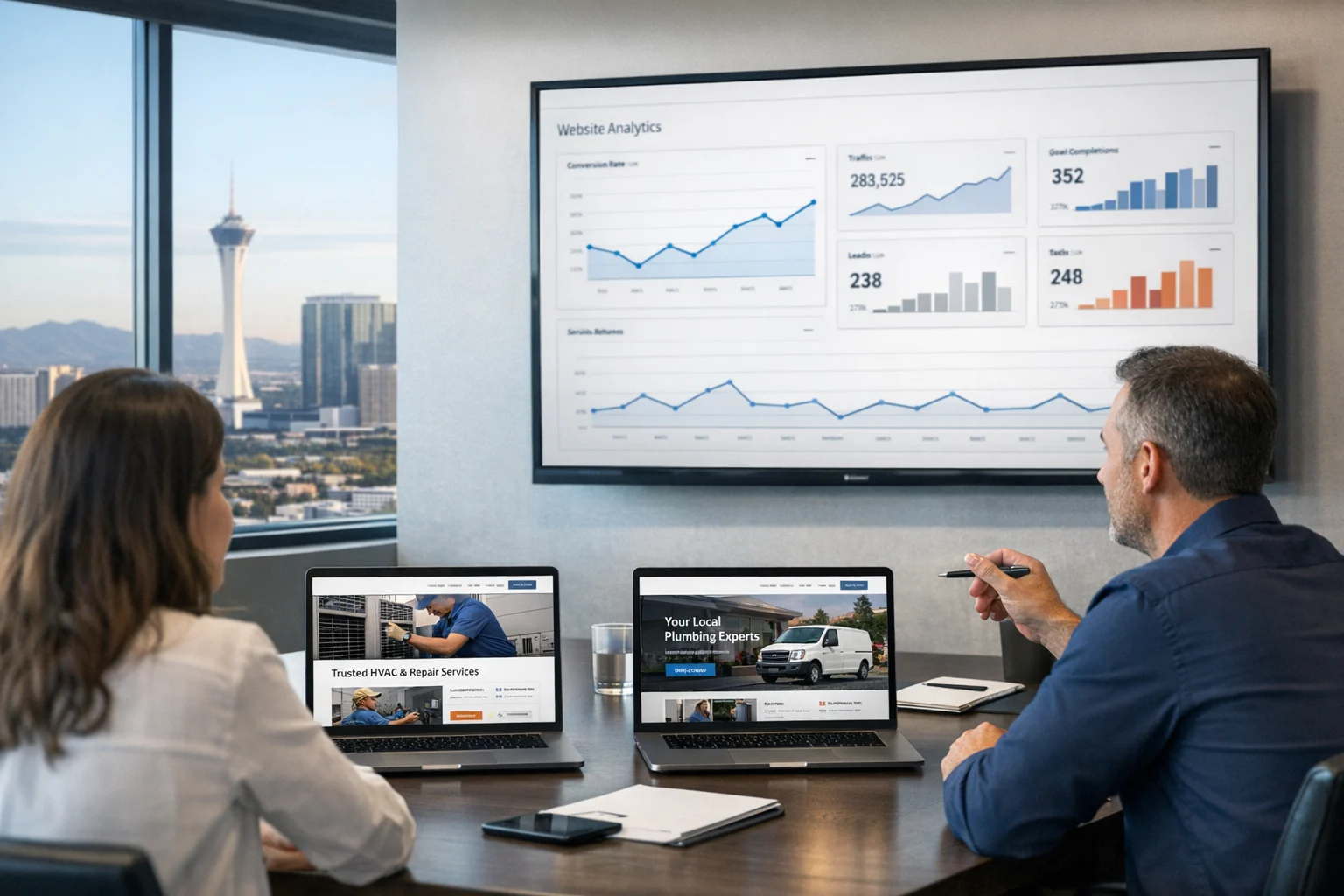
Business websites are changing faster than many companies expected. A few years ago, a redesign usually meant updating colors, swapping in better photos, and making sure the site looked decent on a phone. That approach is not enough anymore. Design decisions now affect search visibility, lead quality, trust, security, conversion rates, and even how well your content performs in AI influenced search experiences.
At SiteLiftMedia, we see this firsthand with businesses in Las Vegas and across the country. Owners and marketing teams are not just asking for a better looking website. They want a site that loads fast, supports SEO, fits their brand, protects customer data, and helps sales teams close more business. That shift is why modern web design matters so much right now. It is no longer a standalone creative project. It is a growth tool.
If you are planning a redesign, cleaning up an outdated site, or getting ready for a spring marketing push, the trends below deserve your attention. Some are visual. Most are operational. The best business websites right now bring both together.
Performance first design is no longer optional
Fast websites win. That sounds simple, but it still gets overlooked in redesign projects where visual ideas take over too early. Strong web design today starts with performance. Heavy animations, oversized video backgrounds, bloated plugins, and poorly structured templates can hurt the user experience before a visitor even reads a headline.
For business websites, speed affects more than user patience. It affects organic visibility, paid traffic efficiency, and conversion rates. If someone clicks your ad, searches your brand, or lands on a service page from Las Vegas SEO results, every extra second of load time adds friction. In competitive local markets like Las Vegas, that friction costs leads.
Performance first design means building pages with intent. Images are compressed correctly. Scripts are limited to what is actually needed. Mobile layouts are prioritized early, not treated as an afterthought. Hosting, caching, and code quality matter just as much as layout. In many cases, the design conversation has to include website maintenance, system administration, and server hardening because front end improvements alone cannot fix unstable infrastructure.
Businesses that want a site to support search and sales should be looking at page templates, media handling, plugin usage, and technical SEO at the same time. If you want a deeper look at where this is heading, SiteLiftMedia recently covered performance driven design and why it is reshaping how successful business sites are built.
Custom web design is replacing template fatigue
There is nothing wrong with using proven design systems. The problem starts when businesses rely on generic templates that make them look interchangeable. Buyers are getting better at spotting websites that feel recycled, and when that happens, credibility drops fast.
One of the strongest shifts right now is the move toward custom web design that actually reflects the business behind it. That does not always mean starting from a blank canvas. It means creating a site structure, visual language, messaging hierarchy, and user flow that fit your audience and your sales process.
For a law firm, healthcare practice, contractor, SaaS company, or hospitality brand, the trust signals are different. The site should feel like it belongs to that business, not like it was assembled from a theme library. Custom photography, smarter typography, purposeful white space, and real brand positioning are replacing the old pattern of stuffing every section with stock icons and vague marketing copy.
Las Vegas businesses benefit from this in a big way. Local markets are crowded with companies that say the same things. If a prospect searches web design Las Vegas and lands on three similar looking sites, the one with a cleaner identity and more confident structure usually feels safer to contact. Better design supports better perception, and better perception often shortens the buying cycle.
Conversion focused user experience is getting sharper
Design trends are not just about appearance. The strongest business sites right now reduce friction on purpose. That means fewer dead ends, clearer next steps, and tighter alignment between user intent and page content.
High performing websites are using cleaner navigation, shorter forms, stronger page hierarchy, and more visible calls to action. They are also paying closer attention to mobile behavior. On a desktop, a visitor might browse multiple service pages before converting. On a phone, that same visitor often wants one of three things immediately: call, book, or verify trust.
That is why we are seeing smarter sticky contact elements, simplified quote request forms, service pages built around common buyer questions, and testimonials placed closer to the action. Instead of pushing visitors through bloated funnels, better sites help them make decisions faster.
There is also more focus on intent based layouts. A page for local SEO Las Vegas should not be structured the same way as a national software service page. A company offering backlink building services should not bury deliverables under broad agency language. A business selling cybersecurity services should not make visitors hunt for compliance, protection, or risk mitigation details. The best web design right now is intentional about matching structure to buying behavior.
Search informed design matters more than before
Web design and SEO used to be treated like separate projects. That split is expensive now. Search performance depends heavily on how content is organized, how pages are linked, how fast the site loads, and how clearly services are presented. In other words, it depends on design decisions.
The websites gaining traction are designed with search architecture in mind from day one. That includes clean URL structures, strong internal linking, schema opportunities, crawlable content, and landing pages that align with specific search intent. It also includes clear service segmentation so Google and users both understand what the business actually offers.
For example, if your company handles SEO, PPC, social media marketing, app development, and custom web design, each of those services needs its own well built destination. If you serve specific geographic markets, local pages matter too. A generic services page is rarely enough. The same applies if you want to rank for terms like Las Vegas SEO, SEO company Las Vegas, or web design Las Vegas. Search visibility usually comes from depth and clarity, not broad catch all pages.
AI driven search changes are also influencing how websites should be structured. Content has to be easier to interpret, easier to quote, and easier to connect to a business entity with real services and experience behind it. SiteLiftMedia has already been tracking AI search trends in Las Vegas marketing, and one pattern is clear: websites that answer practical questions clearly are in a better position than sites that rely on vague promotional copy.
That shift is pushing more businesses to rethink their navigation, service page depth, FAQ structure, and supporting content. Design now has to make information easier to discover for both people and search systems. That is where technical SEO and UX increasingly overlap.
Accessibility is becoming part of good business design
Accessible design used to be discussed mostly in compliance terms. Now it is being recognized for what it really is, better usability. When websites improve contrast, keyboard navigation, text scaling, heading structure, form labels, and image descriptions, they work better for more people. They also tend to feel clearer and more professional.
This matters for every business, especially for organizations with broad audiences, public facing services, or heavy mobile traffic. A site that is difficult to read, navigate, or interact with does not just create frustration. It loses trust and conversions.
Accessibility is also tied to brand maturity. Decision makers notice when a business has invested in making its website more usable. It signals that the company pays attention to details, respects user needs, and thinks beyond surface level design.
We are seeing more redesigns include accessibility audits earlier in the process, which is a smart move. It is much easier to build accessible page patterns from the start than to patch them later. For businesses reviewing their redesign roadmap, these website accessibility trends are worth factoring into planning.
Business website security is showing up in design conversations
Security is not usually the first thing people think about when they hear the phrase web design trends, but it should be. A business website is not just a digital brochure anymore. It often connects forms, CRM tools, payment systems, analytics platforms, email services, and customer data. That makes it part of your operating environment, not just your marketing stack.
Because of that, secure design choices are getting much more attention. Businesses are asking better questions about plugin risk, form protection, user permissions, hosting environments, login hardening, update workflows, and backup systems. They are also starting to understand that cybersecurity services and design are not separate worlds. A poorly maintained site can undermine even the best looking redesign.
For companies handling sensitive data, or simply trying to protect lead flow and reputation, security should be addressed early. That might include penetration testing, malware monitoring, firewall configuration, SSL enforcement, server hardening, and tighter admin controls. It also includes practical content decisions, such as making trust and privacy information easy to find.
SiteLiftMedia has covered cybersecurity trends affecting websites in more depth, and the takeaway is straightforward: modern design has to support business website security, not compete with it. If your redesign introduces risk, it is not an upgrade.
Local intent pages are getting more strategic
One of the clearest trends for agencies and service businesses is the growth of geographically targeted design. Companies want to rank nationally, but they also want to win in high value local markets. That means the website has to support both.
For Las Vegas businesses, this is especially important. Search behavior in local service categories is highly intent driven. People search for immediate solutions, compare providers quickly, and make contact decisions fast. If your site does not clearly speak to your local market, you are making that choice harder than it needs to be.
That is why more businesses are building dedicated city and service pages with local proof points, relevant case examples, local imagery, area specific copy, and better conversion paths. A page built to rank for local SEO Las Vegas should not read like a generic agency page. It should reflect how companies in the market actually search, compare, and buy.
This does not mean stuffing city names everywhere. It means building pages that deserve to rank because they are useful. A strong Las Vegas service page might include local business challenges, examples of search competition, content built around neighborhood and service area relevance, and clear pathways into related services like PPC, social media marketing, website maintenance, or technical SEO support.
Nationwide agencies can still do this well. In fact, the ones that do it best usually balance scalable systems with local specificity. SiteLiftMedia works with businesses across the country, but we also know that Las Vegas search intent has its own patterns and competitive pressures. Designing for that reality improves both search performance and conversion quality.
Design systems and content expansion are replacing one time redesign thinking
Another major shift is the move away from treating websites as finished projects. Businesses are building sites that can evolve. That means modular page sections, cleaner CMS setups, reusable layouts, and content frameworks that make expansion easier.
This is a big deal for marketing teams. A site should not become harder to use after launch. If adding a service page, location page, case study, or resource article requires developer intervention every time, growth slows down. Smart design systems prevent that by giving teams structure without turning the site into a visual mess.
It also helps during seasonal planning. Many businesses use spring to clean up infrastructure, refresh messaging, and prepare for more aggressive campaign activity. If the website is rigid or outdated, those pushes get delayed. If the site is modular and well managed, content expansion happens faster and campaigns launch with fewer bottlenecks.
That is why redesign planning now often includes backend cleanup along with visual work. Businesses are consolidating duplicate plugins, reviewing hosting quality, removing outdated code, improving CMS workflows, and aligning website maintenance with broader digital operations. In many cases, system administration becomes part of the website conversation because the site is closely tied to lead routing, internal notifications, integrations, and uptime expectations.
Brand and design are getting tighter alignment
Strong websites do a better job of expressing who the company is, not just what it sells. That sounds obvious, but many business websites still lead with generic claims instead of a clear identity. Buyers notice the difference.
Better design now pulls branding into the experience more deliberately. Voice, visuals, tone, iconography, photography, and page pacing are working together. The result is a site that feels more coherent and more trustworthy. This is especially important in crowded service categories where every competitor claims expertise, responsiveness, and results.
When branding and design align, the site becomes easier to remember. It also tends to perform better in sales conversations because the visual experience reinforces the value proposition. That matters whether you are selling enterprise services nationwide or local lead generation in Nevada.
For marketing managers, this alignment has another benefit. It makes cross channel work easier. Landing pages, ads, organic content, email campaigns, and social media marketing become more consistent when the website sets a strong brand standard.
What decision makers should ask before starting a redesign
Before investing in a new website, it helps to ask a few direct questions. These tend to reveal whether the project is being approached strategically or just cosmetically.
- Is the current site slow because of design choices, infrastructure problems, or both?
- Are service pages built around real search intent, including local terms like Las Vegas SEO or web design Las Vegas where relevant?
- Can users reach the main conversion action quickly on mobile?
- Does the site reflect the brand clearly, or does it look like everyone else in the market?
- Are accessibility, security, and maintenance part of the scope from the start?
- Can the internal team update and expand the site easily after launch?
- Is the site ready to support content growth, backlink building services pages, local expansion, and future campaigns?
If too many of those answers are unclear, the redesign probably needs more than visual direction. It needs strategy, technical planning, and a realistic view of how the site supports revenue.
That is where working with an experienced agency helps. SiteLiftMedia approaches web design as part of a larger digital system, not as a disconnected creative exercise. For businesses in Las Vegas and nationwide, that means combining design with SEO strategy, content structure, security awareness, maintenance planning, and the infrastructure needed to keep the site performing after launch. If your website feels outdated, underpowered, or difficult to grow, now is a good time to map out what the next version needs to do. If you want a team that can handle the design, the technical layers, and the growth strategy behind it, contact SiteLiftMedia and start with a real website audit.
Photo Gallery