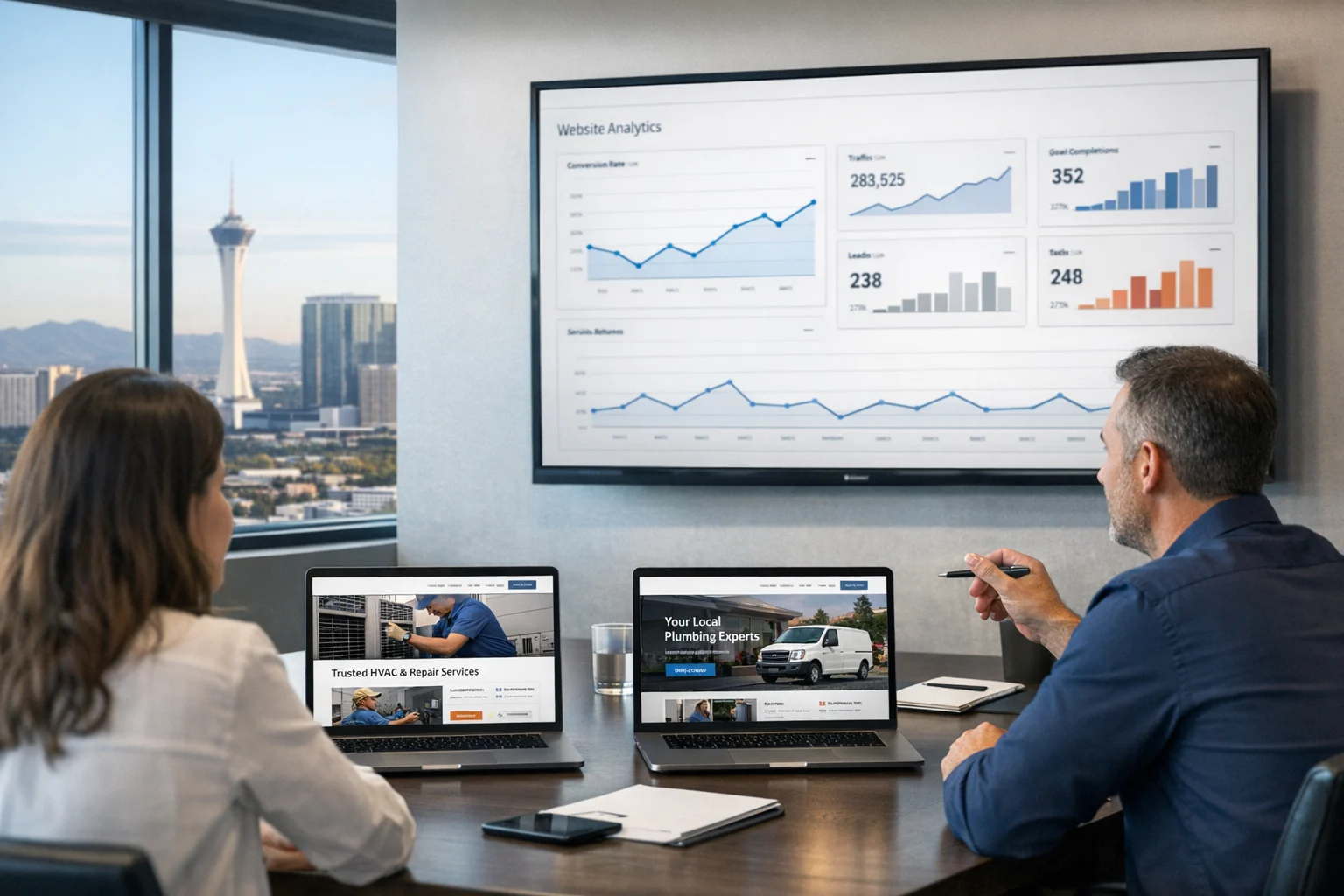
Conversion rate optimization has moved far beyond simple button tests and generic advice. For businesses investing in SEO, paid ads, social campaigns, and website redesigns, CRO is one of the clearest ways to improve revenue without increasing traffic costs. That matters even more this year, with ad spend rising, search behavior shifting, and buyers showing less patience for confusing websites.
At SiteLiftMedia, we've seen the same pattern across industries. A company can spend heavily on Las Vegas SEO, paid campaigns, and custom web design, yet still leave money on the table because the website doesn't guide visitors toward action. In many cases, the traffic is already there. The problem starts after the click.
For business owners and marketing managers, that changes the conversation. Conversion rate optimization is no longer a side project for large ecommerce brands. It's part of how service businesses, local companies, healthcare groups, contractors, law firms, and multi location brands compete. If your site can't turn visits into calls, quote requests, demo bookings, or purchases, the rest of your marketing becomes more expensive than it should be.
And for companies targeting Las Vegas, Nevada, the stakes are even higher. Search competition is aggressive, user intent is immediate, and local buyers often make decisions on mobile while comparing multiple options at once. If your business is showing up in search but not generating enough leads, CRO deserves a closer look.
Conversion rate optimization is broader than most businesses think
A lot of people still hear CRO and picture split testing two headlines. Testing matters, but modern conversion optimization is really about reducing friction across the full customer journey. It includes how your message matches the search, how quickly the page loads, how easy the form is to complete, and whether the visitor trusts your company enough to take the next step.
CRO sits at the intersection of marketing, design, analytics, and technical performance. It's closely tied to technical SEO, paid landing page strategy, website maintenance, and even infrastructure decisions that affect speed and reliability.
- Message clarity: Does the page instantly explain what you do and who it's for?
- User flow: Can visitors move from interest to action without confusion?
- Mobile usability: Are forms, menus, and calls to action easy to use on a phone?
- Trust: Do reviews, credentials, local signals, and security details support the sale?
- Technical performance: Is the site fast, stable, and free of obvious errors?
- Measurement: Are you actually tracking leads, calls, and conversion steps correctly?
Once businesses start looking at CRO this way, better decisions usually follow. Instead of asking whether a green button will outperform a blue one, they ask whether the entire landing experience is doing its job.
Traffic quality is part of CRO now
One of the biggest mistakes we still see is treating traffic generation and conversion optimization as separate efforts. They aren't. If you're attracting visitors with weak intent, low relevance, or mismatched expectations, your conversion rate will suffer no matter how polished the page looks.
Good CRO starts with traffic quality. A page built for branded searches will behave differently from a page targeting first time local discovery. A paid ad visitor comparing options is in a different mindset than someone who found you through a referral or a Google Business Profile listing.
Businesses investing in Las Vegas SEO, local SEO Las Vegas, and PPC should pay close attention to this. If the keyword, ad copy, and landing page don't line up, users bounce fast. When they do line up, conversion rates often improve before any major redesign happens.
We've covered why more Las Vegas businesses are investing in SEO, and one reason is simple: search traffic often carries strong intent. But that only turns into pipeline when the page delivers what the search promised.
Even services like backlink building services and content production should be viewed through that lens. More visibility helps, but qualified visibility is what moves revenue.
Local intent changes what a conversion should look like
For a local business, a conversion isn't always a completed form. It might be a phone call, a directions tap, an appointment request, a text message, or a booked consultation. In Las Vegas especially, many users are moving quickly. They want confirmation that you're nearby, available, credible, and easy to contact.
Local service pages should make practical details obvious. Hours, service area, response time, financing options, review counts, and clear contact methods often have a bigger impact than clever branding language. Businesses that hide this information behind vague copy usually underperform.
Your website has seconds to prove it's relevant
Most decision makers already know attention spans are short. What often gets missed is how quickly visitors make a credibility judgment. In many cases, you have only a few seconds to answer three questions: Are you the right fit? Can I trust you? What do I do next?
This is where custom web design matters. Good design isn't decoration. It's the structure that helps users understand, trust, and act. Some of the highest converting pages we've worked on were not flashy. They were simply clear, fast, and built around the user's immediate needs.
For companies evaluating web design Las Vegas providers, that distinction matters. A visually impressive site that buries the call to action or overloads users with motion can easily convert worse than a simpler page with better hierarchy.
If you're already planning a redesign, it's worth reviewing the web design trends Las Vegas businesses should watch and filtering them through one question: will this improve decision making for the user, or just make the site look newer?
- A clear headline: It should match the visitor's intent, not force them to interpret vague brand language.
- A direct call to action: Quote request, consultation, booking, or purchase options should be visible early.
- Proof near the decision point: Reviews, case studies, certifications, and results should appear where hesitation usually happens.
- Readable layout: Good spacing, strong contrast, and short sections help users keep moving.
- Obvious next steps: Never make visitors guess whether they should call, fill out a form, or schedule online.
Mobile CRO is where a lot of wins are hiding
On paper, many business websites are mobile friendly. In practice, a lot of them are still frustrating. Small tap targets, long forms, sticky elements that block content, slow image loads, and clumsy menus quietly kill conversions every day.
This matters even more for local search. Someone finding your business through a map result or a service query on mobile often has immediate intent. If your page takes too long to load or makes them pinch, zoom, and hunt for contact details, they'll move on.
We regularly see mobile conversion issues in three places:
- Forms that ask for too much: If you only need a name, phone, and a few details, don't ask for ten fields.
- Poor click to call design: Phone numbers should be prominent and tappable, not buried in the footer.
- Weak above the fold content: If the mobile header takes over the screen, users never reach the real value quickly enough.
For Las Vegas service businesses, this can be the difference between a booked job and a lost lead. A plumbing company, med spa, law office, or home services brand doesn't need a visitor to admire the layout. It needs them to act.
Speed, technical health, and infrastructure still shape conversion rates
Page speed is one of those topics everyone says they care about, but many businesses still treat it like a minor development issue. It isn't. Slow performance directly affects bounce rate, user trust, conversion completion, and even paid traffic efficiency.
The important part is understanding where speed problems come from. Sometimes it's oversized media or bloated plugins. Other times it's poor hosting, bad caching, outdated themes, weak database performance, or server side issues that never get addressed. That's why CRO often overlaps with technical SEO, website maintenance, and system administration.
At SiteLiftMedia, we've seen lead generation sites gain measurable conversion lift from fixes that had nothing to do with copywriting. Cleaning up scripts, improving image delivery, tightening forms, optimizing code, and fixing infrastructure issues can make the whole funnel work better.
Businesses should be asking practical questions here:
- Are important landing pages loading quickly on mobile networks?
- Are forms, scheduling tools, and chat widgets slowing down the site?
- Is your hosting setup built for reliability during traffic spikes?
- Do you have ongoing website maintenance, or are issues only fixed after something breaks?
- Has anyone reviewed server hardening and performance settings recently?
That last point matters more than many people realize. A site that is technically unstable doesn't just rank worse. It converts worse too.
Trust signals are converting more visitors than clever copy
Buyers have become more skeptical. AI generated content is everywhere, thin websites are common, and consumers have been trained to look for signs that a business is legitimate before they hand over contact details. That has made trust one of the most important CRO factors this year.
Trust comes from a combination of presentation and proof. Reviews help, but they aren't enough on their own. Businesses also need visible contact information, real team or company details, current credentials, local references, clear policies, and page level signals that the company is established and accountable.
For service businesses, these elements often influence conversion more than aggressive sales copy:
- Recent reviews and testimonials
- Case studies with real outcomes
- Service area details and local relevance
- Clear pricing approach or quote process
- Professional visual presentation
- Secure browsing and trustworthy form handling
Security belongs in that conversation. If your site shows warnings, loads mixed content, sends spammy emails, or behaves unpredictably, trust disappears fast. Businesses should be paying attention to cybersecurity trends affecting websites and digital businesses this year because the impact isn't limited to IT risk. It can quietly damage conversion performance too.
Security issues can undermine CRO before anyone notices
We've seen sites with compromised forms, suspicious redirects, broken analytics scripts, and spam injections that reduced lead volume long before the company realized a security problem existed. This is one reason CRO and business website security shouldn't live in separate silos.
If your business depends on web leads, you should know whether your current setup includes SSL management, plugin updates, form protection, monitoring, backup practices, penetration testing where appropriate, and broader cybersecurity services. For more complex sites and web applications, API handling matters too. If lead data flows between systems, weak security can create both business and compliance problems.
Better analytics usually beat more analytics
A surprising number of businesses don't have a traffic problem or even a design problem. They have a measurement problem. Their dashboards look busy, but nobody can confidently answer basic questions like which landing pages produce qualified leads, where users drop off, or which campaigns drive booked revenue instead of low quality inquiries.
Strong CRO relies on clean analytics. That includes accurate event tracking, call tracking, CRM attribution, form submission validation, and a clear definition of what counts as a real conversion. Without that, testing gets messy fast.
We also recommend using AI assisted analysis carefully. Session replay summaries and behavior clustering can be helpful, and we've written about how AI tools are reshaping website strategy for brands, but automated insights still need human judgment. A tool may tell you where users hesitate. It won't always tell you why that hesitation matters commercially.
For business owners, the main point is simple: don't let vanity metrics distract from the conversion path. More sessions, higher impressions, and long reports mean very little if sales quality isn't improving.
The best tests right now are practical, not flashy
High performing CRO programs tend to focus on a short list of high impact opportunities. They start with the pages and actions that matter most, then test the friction points closest to the conversion. That approach consistently beats random experimentation.
Some of the most useful tests for service businesses this year include:
- Headline and offer alignment: Match the page headline more closely to the keyword, ad, or local search intent that brought the visitor in.
- Shorter forms: Remove fields that aren't essential for first contact and compare completion rates and lead quality.
- Trust placement: Move reviews, badges, case studies, or client logos closer to the form or booking button.
- CTA wording: Test action based language like request a quote, book a consultation, or get pricing instead of generic submit buttons.
- Local proof: Add Las Vegas specific service examples, neighborhoods, or area testimonials where local credibility matters.
- FAQ positioning: Place common objections near the call to action instead of hiding them on a separate page.
The key is choosing tests that address real buyer hesitation. If users are unsure whether you serve their area, adding local proof will outperform a cosmetic change almost every time.
SEO and CRO work better when they are planned together
Businesses often make one of two costly mistakes. They build SEO pages that rank but don't convert, or they redesign pages for conversion and accidentally damage search visibility. The better path is to treat SEO and CRO as connected work.
That means aligning keyword intent, page structure, internal linking, speed, authority signals, and calls to action from the start. It also means understanding how local search behavior influences conversion design. A page targeting emergency services in Las Vegas should not look or behave like a page targeting a national research query.
For companies working with an SEO company Las Vegas, ask how they approach post click experience. Do they consider lead flow, trust signals, and user behavior after rankings improve? Or are they only reporting position changes? The strongest SEO strategies this year are the ones built to create business outcomes, not just traffic graphs.
That's also why technical SEO matters in CRO conversations. Crawlability, indexing, page performance, internal structure, and schema influence not just visibility, but the quality of the experience users land on.
Las Vegas businesses need a sharper local CRO playbook
Las Vegas is a unique market. Competition is dense, consumer attention is fragmented, and local businesses are often trying to attract a mix of residents, visitors, and relocating customers. That changes how conversion strategy should be handled.
A local company may need separate messaging for immediate service leads, appointment based buyers, and high value consultations. It may need landing pages tailored to neighborhoods, visitor intent, or service urgency. It may also need stronger review management, map visibility, and social proof than a similar business in a less crowded market.
That is where local SEO Las Vegas, strong landing page design, and even social media marketing can support CRO together. Social campaigns can build familiarity, search can capture intent, and the website has to close the gap between attention and action.
For many Las Vegas brands, the winning formula isn't just more traffic. It's better alignment between local search visibility, page relevance, and a conversion path built for mobile users who want answers fast.
What businesses should audit before the next quarter
If conversion performance hasn't been reviewed recently, now is a good time to run a practical audit. This doesn't need to be complicated, but it should be honest.
- Review your top landing pages: Are they clear, current, and aligned with search intent?
- Test forms and call flows: Make sure every lead path works properly on desktop and mobile.
- Check speed and technical issues: Look for layout shifts, slow media, broken scripts, and plugin problems.
- Evaluate trust signals: Are reviews, credentials, and local proof visible where users need them?
- Validate analytics: Confirm that form submissions, calls, and booked appointments are tracked accurately.
- Run a cybersecurity review: Security, uptime, and form reliability affect conversions more than most teams realize.
- Plan year end audits and redesign priorities: Use current performance data to shape next year SEO strategy instead of guessing.
That last point can save a lot of wasted budget. Businesses often jump into redesign planning without identifying what is already working, what is blocking conversions, and which pages actually drive revenue.
When outside CRO help is worth it
There comes a point where internal teams know something is off but don't have the time or specialized depth to fix it. Maybe the traffic is healthy but leads are flat. Maybe ad costs are climbing. Maybe sales says lead quality is inconsistent. Or maybe nobody fully trusts the data. Those are all signs that a focused CRO review can pay for itself quickly.
SiteLiftMedia helps businesses connect the dots between traffic, design, technical performance, and conversion outcomes. That can include landing page strategy, custom web design, Las Vegas SEO, technical SEO, PPC support, website maintenance, system administration, server hardening, and broader cybersecurity services when trust and performance issues overlap.
If your website is getting visitors but not enough calls, forms, bookings, or qualified leads, start with a conversion audit. Reach out to SiteLiftMedia to identify the friction, prioritize the right fixes, and make better use of the traffic you're already paying for.
Photo Gallery