AI search is no longer a side topic for marketers. It's changing how people research services, compare vendors, and decide who gets the inquiry. For agencies and brands, that means SEO strategy can't stay stuck in a rankings-only mindset. Search visibility still matters, but the way it turns into traffic and leads is shifting fast.
At SiteLiftMedia, we've been watching this change from both sides of the table. We see it in analytics, lead quality, client expectations, and the way search engines now present information before a user ever clicks a website. Business owners and marketing managers are noticing it too. Some are seeing impressions rise while clicks flatten. Others are finding that branded searches increase after users encounter their company inside AI-generated search summaries. The surface is changing, but the real issue goes deeper than a new feature rollout.
AI search is changing what SEO needs to accomplish. It is no longer just about getting your page into position three or four and hoping the click comes through. Now your content has to be understood, trusted, summarized, cited, and chosen. If you're a national brand, that changes your content production and authority strategy. If you're a local business competing in a market like Las Vegas, it changes how you approach local SEO, service pages, reviews, technical SEO, and even website performance.
AI search is reshaping what organic visibility means
Traditional SEO revolved around ranking web pages for specific keywords. That still matters, but AI-powered search experiences are layering new behavior on top of that model. Google AI Overviews, AI answer engines, conversational search tools, and assisted browsing are all trying to do one thing faster than a human can, synthesize the web into a direct answer.
That changes the value of a search result. A user may get a summary, a short list of options, or a recommended next step without opening ten tabs. Sometimes they still click. Sometimes they don't. The user journey is becoming shorter on simple questions and more selective on high-intent queries. If you haven't been tracking how this affects click behavior, SiteLiftMedia recently covered AI Overviews and organic traffic changes for businesses in more detail.
For agencies and in-house teams, SEO strategy now has to support two goals at once. First, you still want strong rankings for traditional organic listings. Second, you want your brand and content to be the kind of source AI systems pull into answers. Those goals are related, but they are not identical.
A page can rank reasonably well and still fail to become part of AI-generated responses if the content is thin, vague, poorly structured, or unsupported by broader trust signals. On the other hand, a brand with solid authority, clear service pages, and useful expertise can earn mentions in AI search experiences even when a single keyword ranking doesn't tell the full story.
Why the old SEO playbook is losing leverage
A lot of SEO tactics that once moved the needle are losing power because they were built for a simpler search environment. You could publish dozens of narrow posts, build thin location pages, tighten title tags, and rely on exact-match targeting to gain traction. In some niches, that still works at the margins. It just doesn't work as reliably, and it rarely builds a durable advantage.
AI search rewards clarity, depth, and confidence. It favors content that answers a user need directly, shows signs of real experience, and fits into a broader ecosystem of trust. That includes your website, your brand mentions, your reviews, your technical foundation, your off-site authority, and how well your content matches intent.
We've seen many businesses invest heavily in traffic pages that attract visitors but don't help move a buying decision forward. That's a problem now. If the page is generic, AI systems can summarize the concept without sending the click. If the page is stronger, more specific, and closer to the sales conversation, it has a much better chance of driving qualified leads.
This is especially important in competitive local markets. A company chasing terms like Las Vegas SEO, SEO company Las Vegas, web design Las Vegas, or local SEO Las Vegas is no longer competing only against the ten blue links on page one. They're competing against map results, review signals, AI summaries, directories, ads, local packs, and increasingly selective users who want the shortest path to a trustworthy vendor.
What strong SEO strategy looks like in the AI search era
Build pages that solve real decisions
The safest move right now is to build content that helps someone make a real business decision, not just earn a vague informational click. That means stronger service pages, comparison pages, pricing guidance, process pages, implementation timelines, FAQs based on sales calls, and content that answers what happens after someone hires you.
For agencies, this is a major shift. A page about technical SEO should not stop at a definition. It should explain what technical SEO includes, when a site needs it, how it affects crawling and conversions, how long fixes take, and what business impact to expect. A page about custom web design should not just show pretty layouts. It should address conversion strategy, speed, accessibility, CMS flexibility, maintenance needs, and how design supports search intent.
Brands that do this well are easier for AI systems to interpret because the content is complete, structured, and genuinely useful. Users also trust it more when they do click through.
Earn mentions AI systems can trust
SEO has always involved authority, but AI search makes authority more visible. If your company is cited, reviewed, linked, discussed, and associated with a topic across the web, you become easier to surface as a credible source. That makes off-site work more important, not less.
This is where smart digital PR, industry citations, and backlink building services still matter. The difference is that low-quality volume won't carry the same weight. You want relevant links, strong local signals, branded mentions, and partnerships that reinforce expertise. For teams refining that part of the mix, these link building outreach tactics for agencies and brands align well with how authority needs to be built now.
A brand mentioned in industry publications, backed by solid customer reviews, referenced by local organizations, and publishing useful original content sends a much stronger trust signal than a site trying to brute-force rankings with isolated on-page tweaks.
Technical SEO is now a visibility multiplier
Technical SEO used to be treated like the maintenance basement of digital marketing. Important, but easy to ignore until something broke. In AI search, technical SEO is closer to infrastructure. If search systems can't reliably crawl, understand, render, and interpret your pages, your content quality won't reach its potential.
That means clean architecture, smart internal linking, proper canonical handling, structured data where appropriate, fast page delivery, mobile stability, and indexation discipline. It also means reducing clutter. Many sites have too many weak pages, overlapping topics, inconsistent headings, bloated scripts, and outdated templates that make content harder for both users and search systems to process.
Businesses investing in AI-era SEO should think less about publishing more and more about making the right pages stronger, faster, and easier to understand. Brands that pair content strategy with technical cleanup usually see better results than brands doing either one alone.
For companies that want a deeper playbook for AI-era visibility, SiteLiftMedia also published practical generative engine optimization tactics for AI visibility. It's a useful next read if your team is trying to connect content production to newer search experiences.
Las Vegas businesses are feeling this shift fast
Las Vegas is a great example of why AI search changes local SEO strategy. It's a city with aggressive competition, transient search behavior, heavy mobile usage, and a wide mix of industries fighting for local attention. Law firms, med spas, contractors, restaurants, event companies, real estate groups, medical practices, hospitality brands, and B2B providers all need to win trust quickly.
When someone searches for a service in Las Vegas, they often want a short list right away. They don't want ten vague websites. They want the best fit, close by, credible, and available. AI-assisted search experiences are designed to support exactly that behavior.
That raises the bar for local SEO Las Vegas campaigns. Your Google Business Profile signals, review quality, service page depth, local landing pages, map relevance, schema, location consistency, and localized authority all matter more when search engines are summarizing options instead of simply displaying links.
For a business trying to rank as an SEO company Las Vegas or a provider of web design Las Vegas services, generic claims are not enough. Searchers want proof. They want examples, case studies, process detail, local understanding, and confidence that the provider knows how people in Southern Nevada actually search. A Las Vegas law firm does not have the same query behavior as an eCommerce brand. A Henderson home services company does not need the same content strategy as a Strip-adjacent hospitality vendor.
This is why local strategy now has to be more specific. Strong location pages need unique local context. Service pages need to reflect real buyer questions. Content should speak to neighborhoods, service areas, urgency, seasonality, and industry concerns. In practice, that's where many campaigns separate. The companies that win local intent tend to sound like they actually work in the market, because they do.
Your website has to do more than rank
One of the biggest mistakes we still see is treating SEO as traffic acquisition only. That approach was never ideal, but AI search makes it even riskier. If users are clicking fewer pages and making decisions faster, the page they land on has to do real work. It needs to reassure, educate, and convert.
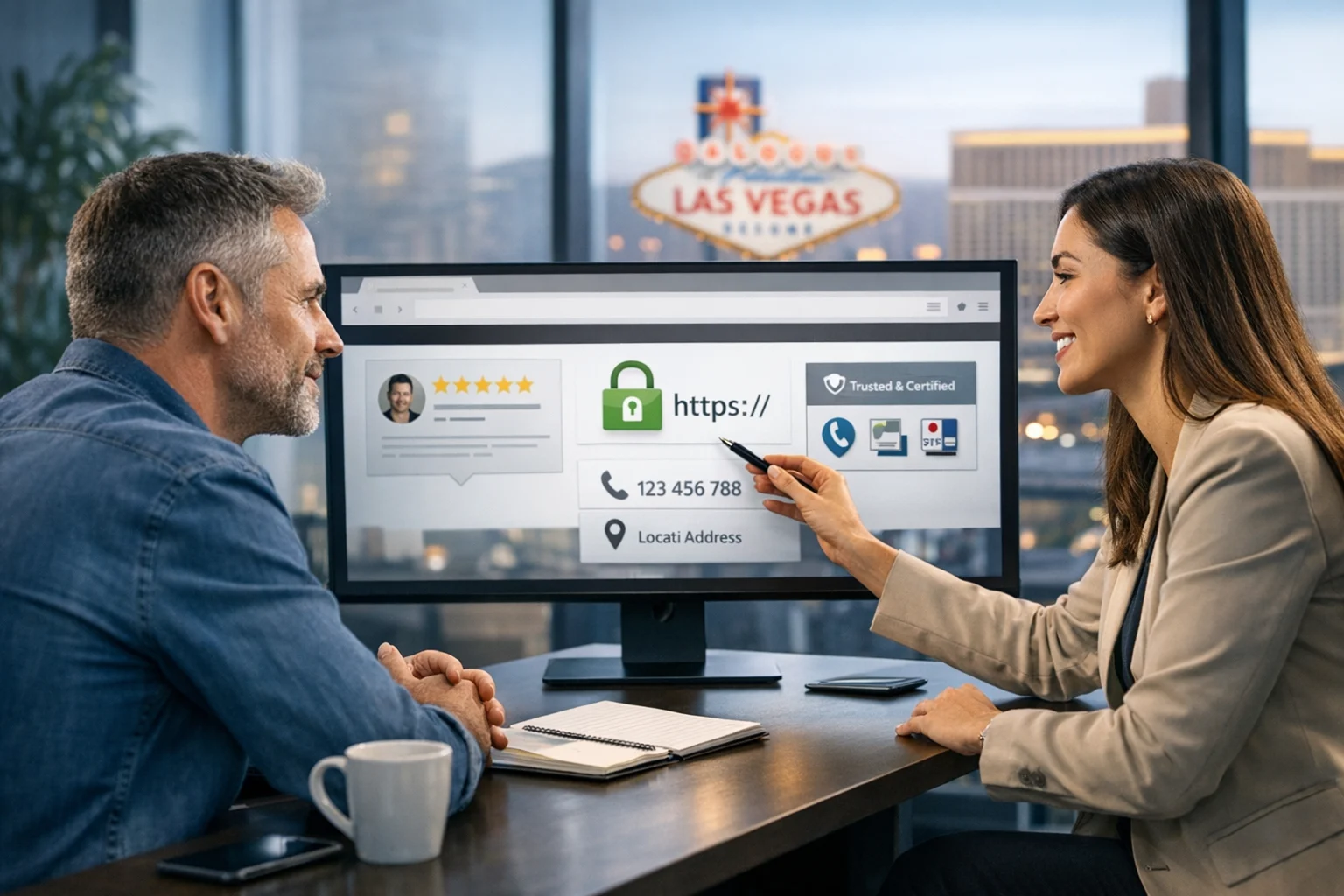
That puts pressure on design, UX, copy, security, and performance. A dated site can undercut great rankings. Slow templates can waste paid and organic opportunities. Weak forms can kill lead flow. Thin trust signals can make users bounce even after strong visibility.
For many brands, this is where SEO and development finally have to work together. Custom web design, better service architecture, conversion-focused landing pages, and strong website maintenance are now directly tied to search performance because they affect usability, engagement, and business outcomes.
Security is part of that equation too. A business site that gets compromised, loads malware warnings, suffers uptime issues, or runs on neglected infrastructure loses trust fast. That affects rankings, conversion rates, and reputation. It is why we often talk with clients about cybersecurity services, business website security, penetration testing, system administration, and server hardening in the same planning sessions as SEO and redesign work.
Search performance depends on reliability more than many teams realize. Secure hosting, patching discipline, WAF controls, application updates, monitoring, and access management are part of the digital growth stack now. If your infrastructure side needs attention, these system administration best practices for secure website hosting are a solid starting point.
In real terms, a brand with good technical SEO, strong content, and poor business website security is still exposed. A brand with modern design and no content depth is still underperforming. The strongest results come from integrated execution.
How agencies should measure success now
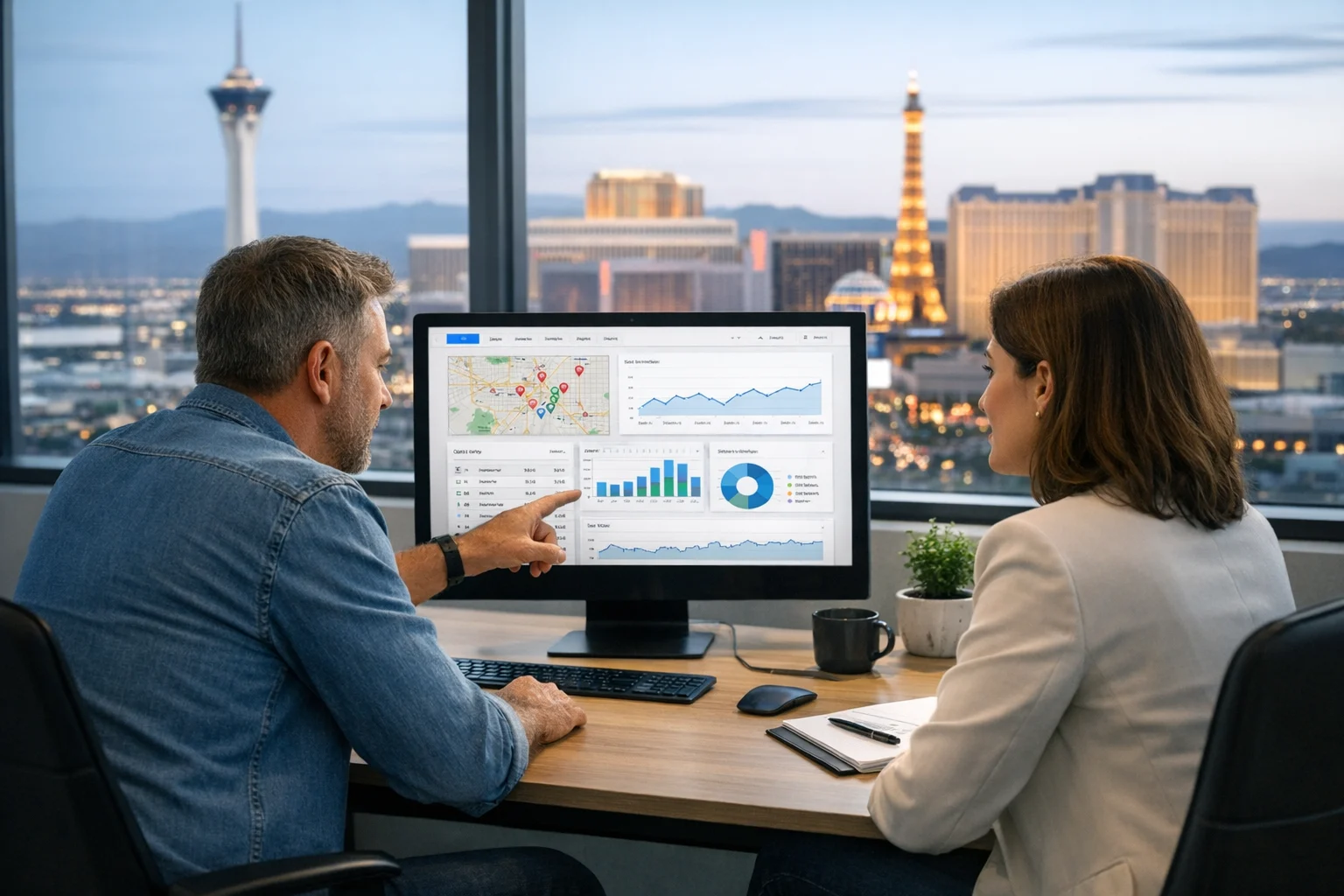
If AI search is changing the path to a lead, measurement has to change too. Rankings still matter. Organic sessions still matter. But they are no longer the whole story.
Agencies and marketing teams should be watching a wider set of signals:
- Qualified organic leads, not just traffic volume
- Branded search growth, especially after content campaigns or PR activity
- Service page engagement, including time to inquiry and assisted conversion paths
- Local visibility indicators, including map interactions, review velocity, and location page performance
- Authority signals, such as quality mentions, earned links, and referral traffic from relevant sources
- Technical health, including crawl efficiency, page speed, index coverage, and uptime
This matters for budget planning too. A company may see flat blog traffic and assume SEO is stalling, when in reality service page engagement and branded searches are climbing because users are meeting the brand earlier through AI-generated search experiences. Another brand may see impressions spike but lead quality drop because the content attracting visibility is too broad and not aligned with commercial intent.
What matters is not vanity metrics. What matters is understanding how discovery, trust, and conversion are happening now.
Where SiteLiftMedia is focusing right now
At SiteLiftMedia, we're approaching this shift by tightening the connection between SEO, development, content, local strategy, paid acquisition, and security. That sounds simple, but in practice it's where a lot of businesses get stuck. One vendor handles content, another touches the site, another runs ads, and nobody owns the full path from impression to lead.
For clients preparing annual planning or Q1 growth strategies, we're prioritizing a few things first. We audit whether the site can actually support modern search visibility. We review high-intent service pages before expanding content volume. We look for pages that should be consolidated, upgraded, or repositioned. We assess local intent opportunities for Las Vegas and Nevada markets. We identify authority gaps that affect competitive terms. And when needed, we align website refresh projects with stronger technical SEO, faster templates, and cleaner conversion paths.
In many cases, the best next move is not publishing twenty new posts. It's rebuilding the pages that matter most, improving trust signals, cleaning up site structure, and connecting SEO to what your sales team hears every day. For some businesses, it's also time to modernize infrastructure, invest in website maintenance, or address security hardening so the site can support growth without creating unnecessary risk.
If your team is seeing changes in organic traffic, wondering how AI search is affecting lead flow, or planning a stronger Las Vegas SEO push while still targeting national visibility, SiteLiftMedia can help map the right next step. Reach out and we'll review your current search presence, technical SEO, local opportunities, website performance, and conversion gaps so you know where to move first.
Photo Gallery